science and discovery
2,000-year-old ritual bath lifted intact to safety
A 2,000-year-old Jewish ritual bath has been lifted intact from the ground in southern Israel and moved into temporary storage, keeping it safe while a new residential neighborhood is built.
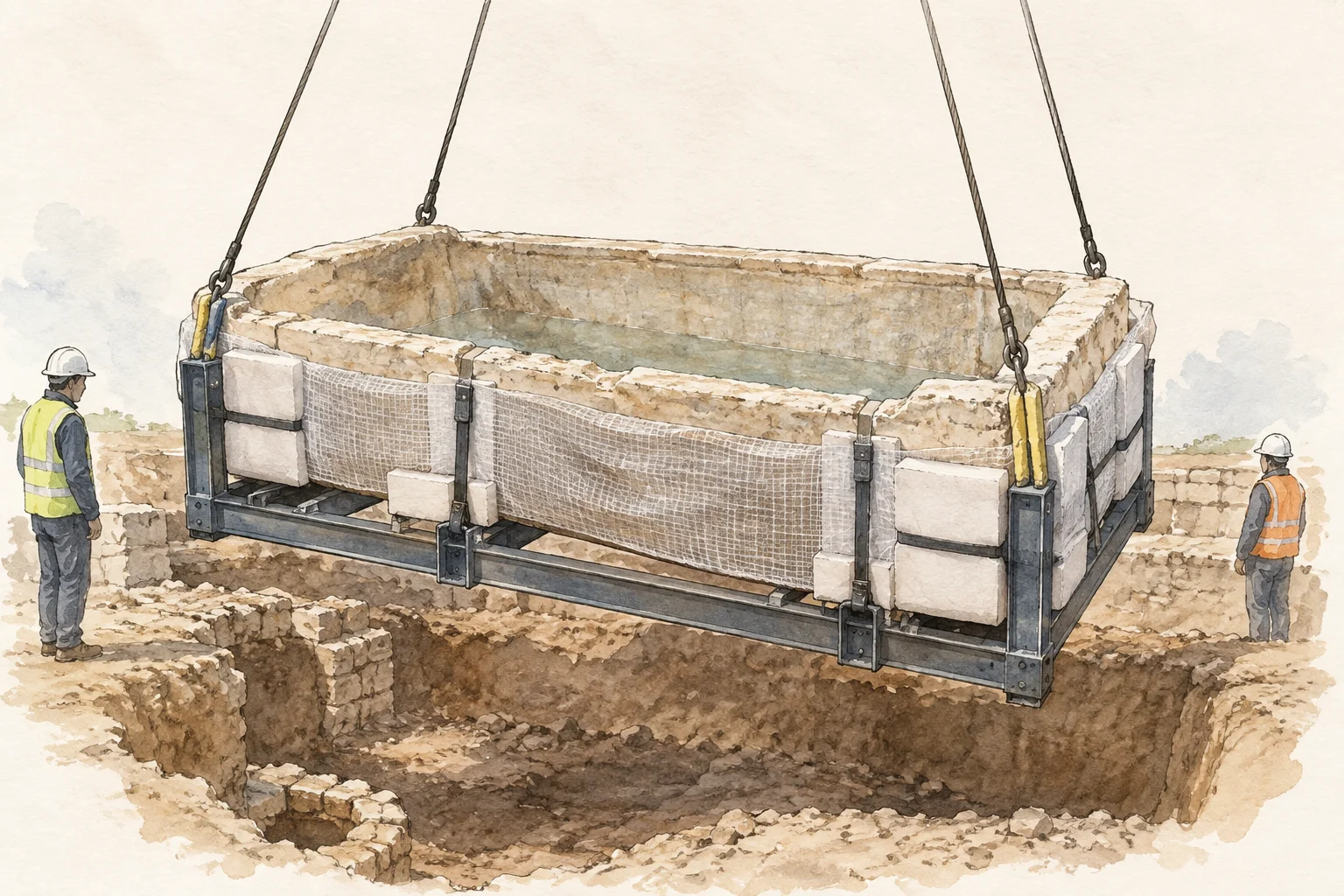
Discovered during excavations in Kiryat Gat’s Carmei Gat neighborhood, the bath is a mikveh, a pool used for ritual purification in Judaism. Four conservation specialists spent two weeks uncovering and preparing the roughly four-meter-wide structure for its move.
Steel beams inserted underneath supported the bath, while gauze and adhesive secured its fragile ancient plaster. Foam cushioning helped protect it from jolts. A crane lifted the 25-ton structure onto a specialist truck for the journey to a storehouse in nearby Beit Guvrin. The road was closed, with escort vehicles accompanying the unusual cargo.
The find also fills a gap in the region’s history. Together with stone measuring vessels discovered at the site, the bath provides the first known evidence of an ancient Jewish settlement in this stretch between the Judean Lowlands and the northern Negev, according to the Israel Antiquities Authority.
Once construction is complete, the authority plans to bring the bath back to the neighborhood and incorporate it into an open public space, allowing residents and visitors to encounter this surviving part of life 2,000 years ago.