science and discovery
4,000-year-old painted stone offers rare evidence of Austronesian migration
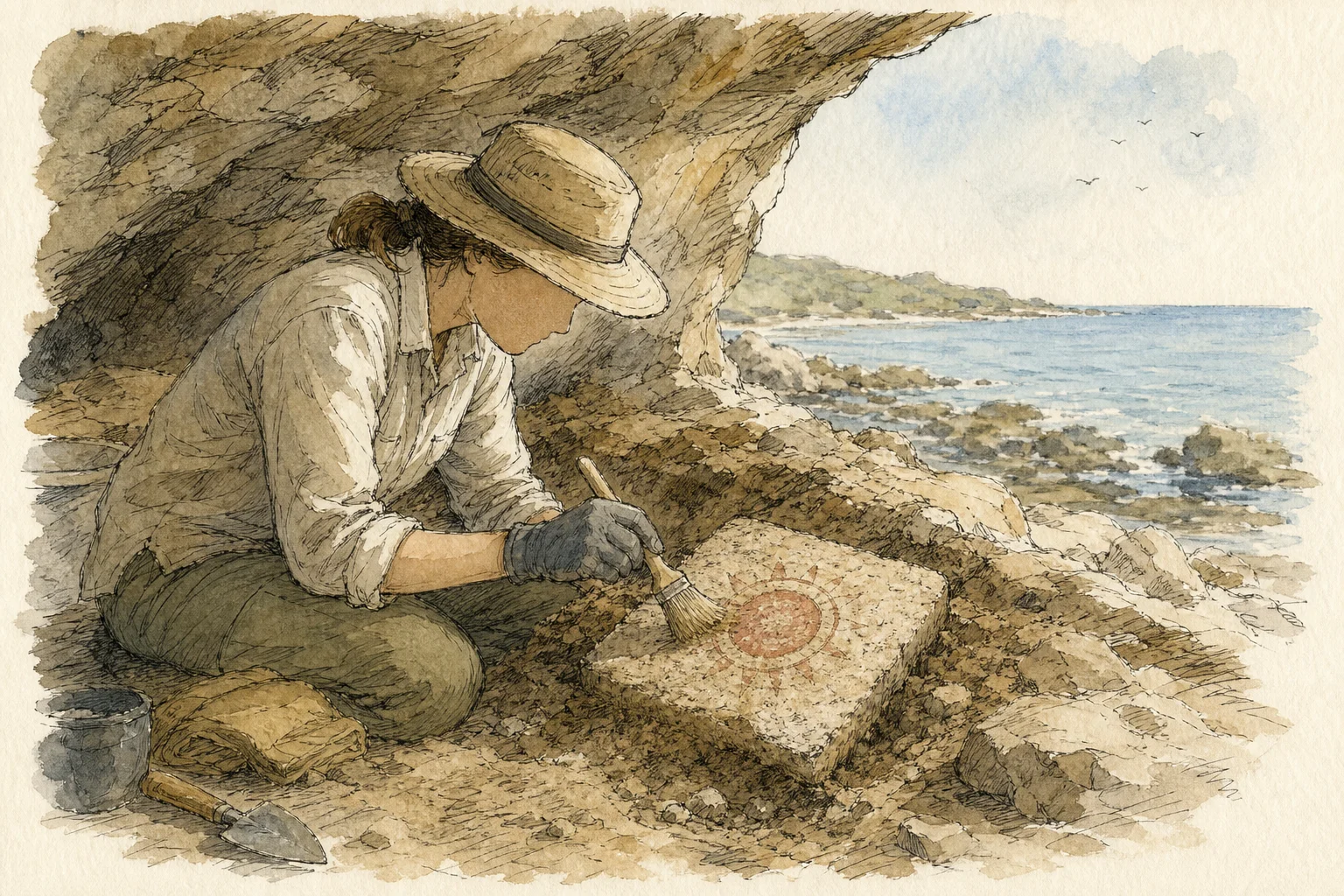
A painted limestone plaque excavated on Indonesia’s Wetar Island has provided rare, securely dated evidence of the symbols carried during the early Austronesian maritime expansion. Found at Huknaur rockshelter, the book-sized stone bears a red, sun-like design associated with the Austronesian Painting Tradition. Charcoal from its archaeological layer dates it to roughly 4,090 to 3,900 years ago.
The motif resembles rock art found across eastern Indonesia and islands near New Guinea, particularly in regions where Austronesian languages are spoken. Archaeologists have struggled to date wall paintings, making the portable plaque especially valuable. At Huknaur, it predates the earliest pottery by about 200 to 500 years. A shift to cone-shell beads, also known from early Austronesian-linked sites, offers separate evidence of cultural change.
The findings suggest that shared ideas and identities may have spread before some of the material goods commonly used to trace Austronesian movement. That seaborne dispersal eventually connected communities from Madagascar to Rapa Nui. Researchers caution that the plaque cannot establish where the painting tradition began, but it opens a new way to investigate how belief, belonging and ambition may have supported long ocean voyages.