science and discovery
A 299,000-Kilometre Map Rethinks Roman Roads
Researchers have turned nearly 300,000 kilometres of Roman roads into the most detailed empire-wide digital model yet, then used network science to test familiar claims. Their analysis reveals an achievement more practical than legend: a dense system shaped by terrain and provincial needs, rather than a uniformly straight web radiating from Rome.
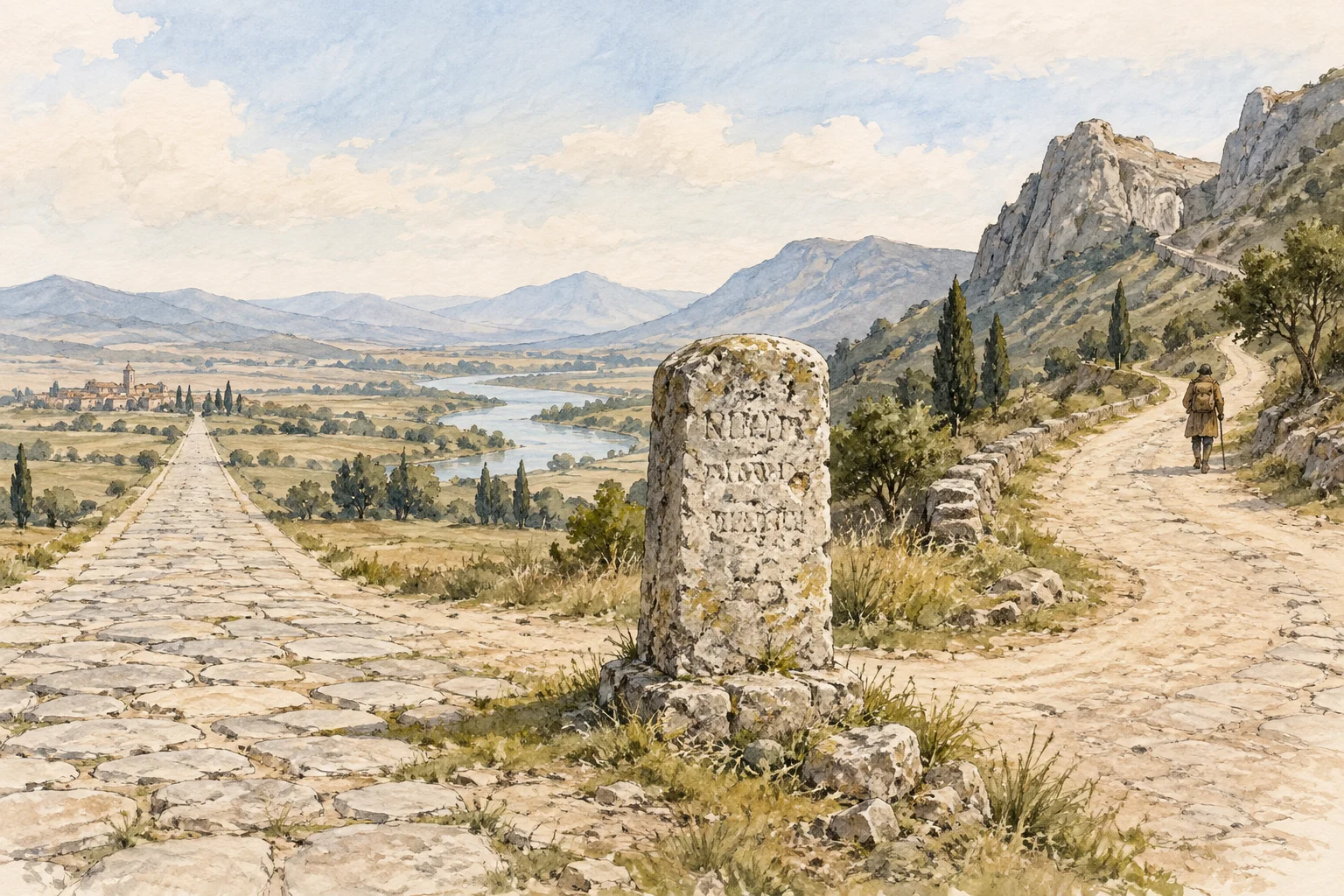
The 299,171-kilometre model spans Europe, North Africa and the Middle East. Roads tended to run straight where lowlands allowed, but bent with mountains and valleys. Modern major roads are generally straighter. About 90.6 per cent of mapped routes stayed below a 16 per cent maximum gradient, a threshold considered passable for animal-drawn carts and wagons.
Provincial capitals were more often strategic crossroads than other cities, while Byzantium occupied a particularly central place in the land network connecting its European and Asian sections. Antioch, Ancyra and Corinth also served as better intermediaries than Rome for empire-wide terrestrial travel.
The imprint has not vanished. Roman road density moderately correlates with the location of major modern roads, although the pattern varies sharply by place and does not prove direct continuity. The authors caution that archaeological coverage is uneven, many routes have uncertain alignments, and the model combines roads from different periods. Adding rivers, sea lanes and chronology could eventually reveal a fuller picture of Roman transport.
Sources
- EL MUNDONo todos los caminos conducían a Roma en la antigüedad: "Bizancio era el punto más estratégico del Imperio"
- NatureNetwork science reveals the structure and lasting impact of the Roman road system
- livescience.comDid 'all roads lead to Rome'? New study finds other cities in the empire were better connected.
- New ScientistRoman roads weren't so straight after all | New Scientist