science and discovery
A double twist explains the narwhal’s remarkably straight tusk
Researchers have uncovered the internal architecture that allows a narwhal’s long, visibly spiralled tusk to grow unusually straight. The finding resolves a longstanding puzzle about a structure unlike any other mammalian tusk.
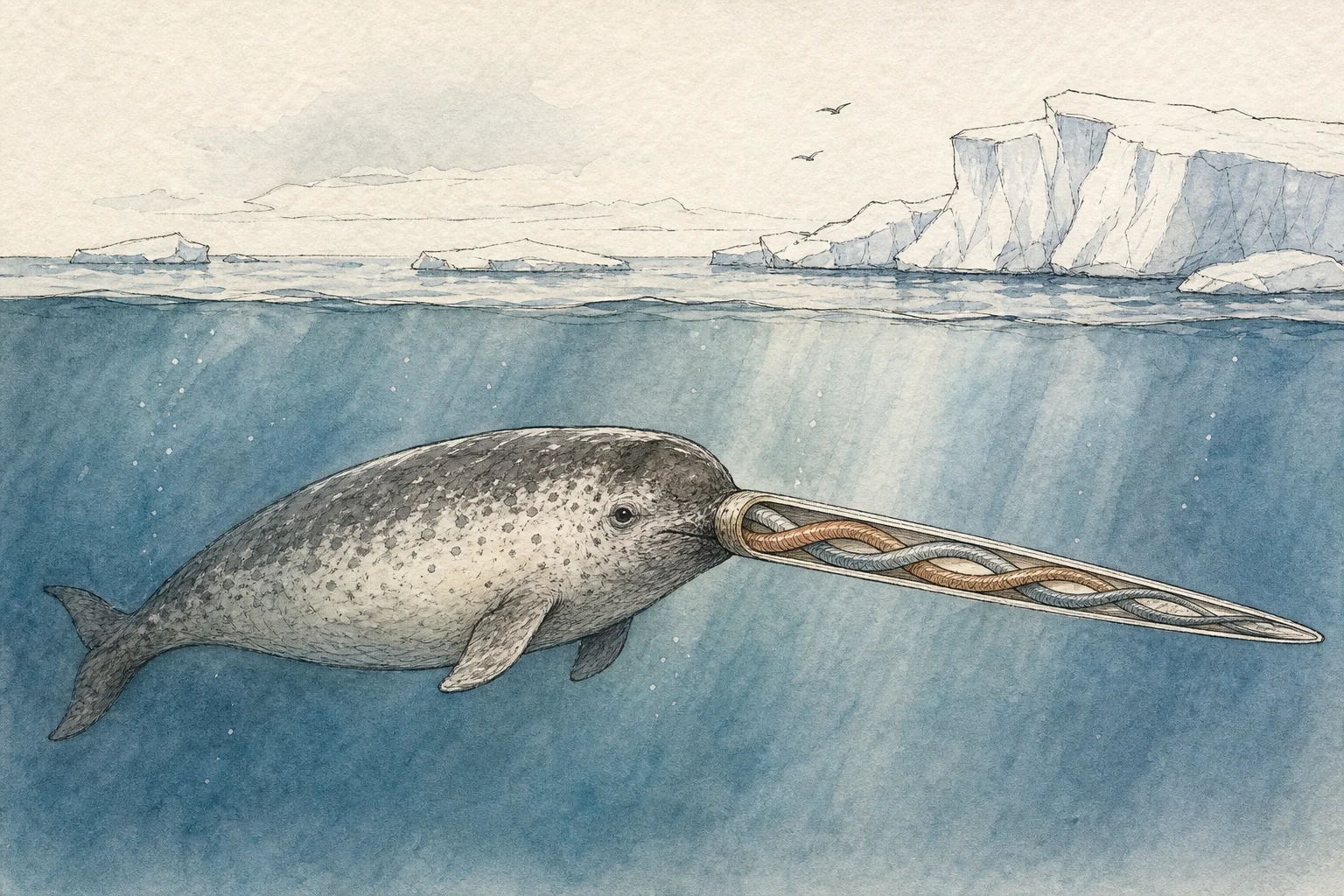
Using tensor tomography at three European synchrotron facilities, the international team mapped the tooth from its nanometre-scale components to its overall form. The scans revealed two interlocking helices: the outer cementum follows a left-handed spiral, while mineralised collagen structures in the inner dentin twist in the opposite direction.
These counter-twisting layers work much like fibres in a rope, creating a stable composite that resists torsion and mechanical strain. Their opposing forces help explain how the tusk can retain its straight overall shape even as its surface forms a pronounced spiral. Usually the left upper canine of a male, the tusk grows through the lip and can extend for several metres.
The researchers also found growth layers comparable to tree rings. These may preserve clues about Arctic climate and food availability across an animal’s life. One mystery remains: the tusk’s precise biological function is still debated, with social and reproductive display among the leading explanations and sensory use also proposed.