science and discovery
A fresh Moon crater reveals a surprisingly cold halo
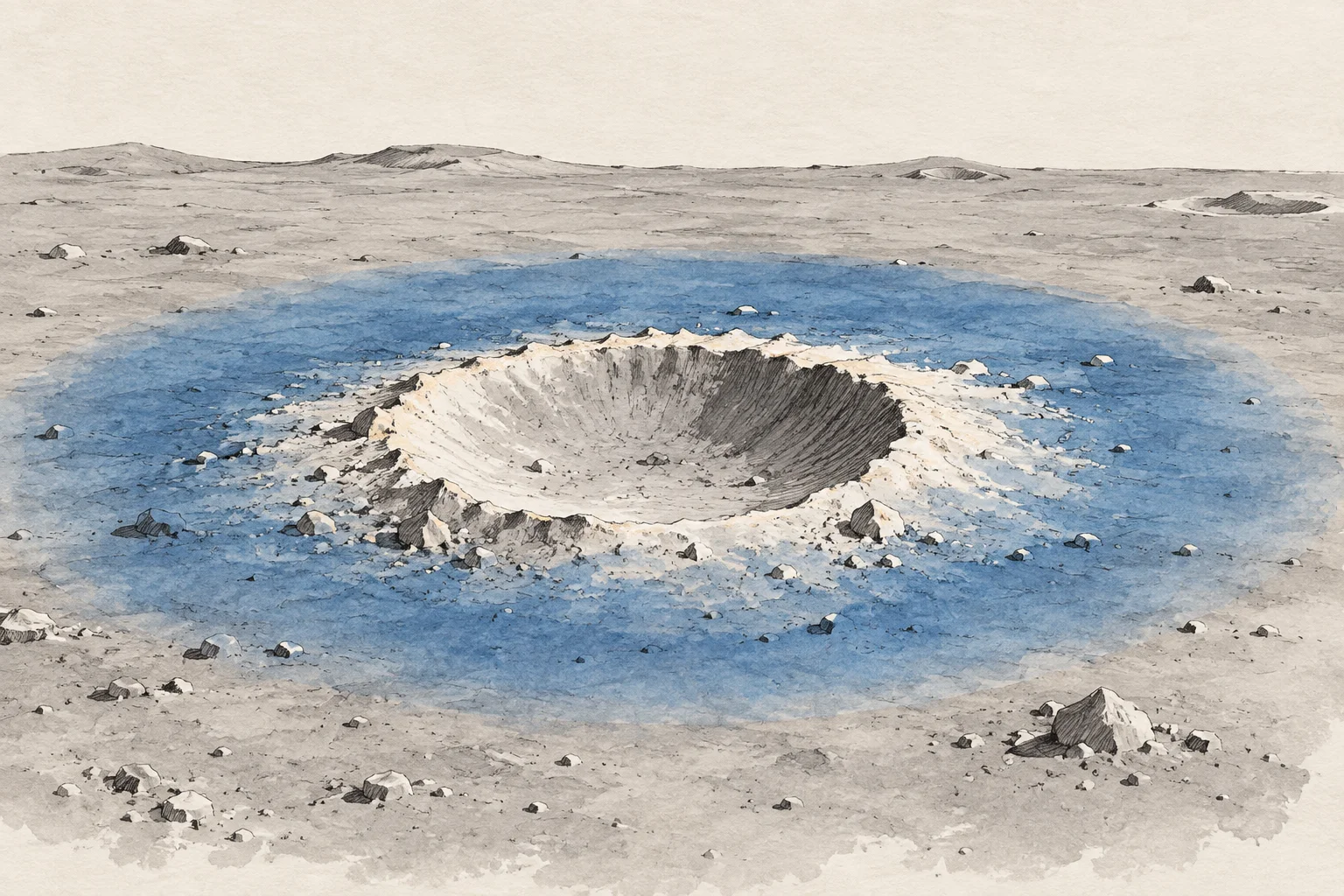
Scientists have identified a 222-metre-wide crater on the Moon, gaining a rare before-and-after record of a large lunar impact. The discovery also revealed an unexpected consequence: a broad patch of ground that is colder at night than its surroundings.
The crater, named McGetchin, is about 43 metres deep. Images from NASA’s Lunar Reconnaissance Orbiter place its formation between 11 April and 22 May 2024, although nobody directly observed the collision. Image specialist Robert Wagner spotted the change in October 2025; comparisons with earlier photographs confirmed the new crater.
Researchers think a fragment of an asteroid or comet caused the impact. Events of this size are estimated to occur on the Moon roughly once every 130 years.
Two studies published in Science Advances describe changes extending well beyond the crater’s rim. Thermal measurements revealed a surrounding region about 6.4 kilometres wide with nighttime temperatures up to about 9°C below nearby ground. The impact had loosened the surface layer of rock fragments and dust, making it less able to retain heat.
With images from before and after the event, scientists can now follow how this freshly disturbed landscape changes over time. Understanding how far debris travels, and how impacts alter the ground, could also help planners assess risks to future lunar vehicles and equipment.
Sources
- El Comercio PerúDescubren en la Luna un enorme cráter más grande que el Coliseo romano: los expertos creen saber qué lo provocó
- www.nationalgeographic.com.esUn enorme objeto choca contra la Luna y deja un cráter del diámetro de 2 campos de fútbol y 15 plantas de profundidad
- O GloboMais de 200 m de largura e 43 m de profundidade: o que se sabe sobre a maior cratera lunar recém-formada já identificada no Sistema Solar