science and discovery
A museum fossil offers a fresh clue to dinosaur origins
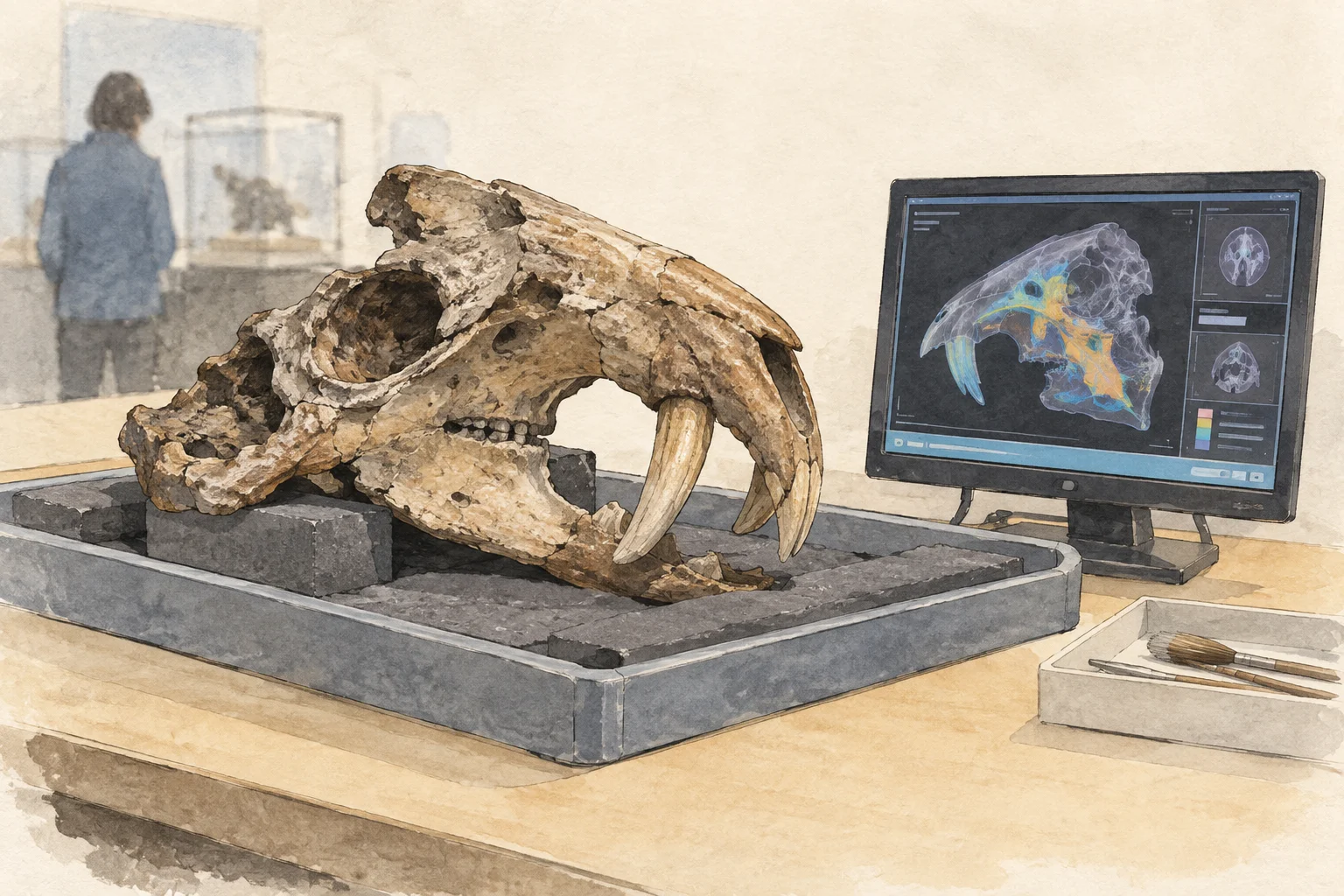
Researchers have identified a new species of prehistoric plant-eater using fossils collected in Tanzania in 1963 and preserved at London's Natural History Museum. Named Dinodontosaurus isiyavamanda, the animal lived around 240 million years ago. It was not a dinosaur, but a beaked, tusked member of the evolutionary branch that includes mammals.
An international team led by the University of Bristol examined the remains alongside a more recently discovered partial skull. CT scanning helped reveal their anatomy in detail. Skull features linked the animal to Dinodontosaurus, a group previously known only from South America, while other differences established it as a distinct species.
That connection offers a useful clue to the age of Tanzania's fossil-bearing rocks, which also contain possible early dinosaurs. Comparisons with better-dated South American layers suggest some Tanzanian dinosaur candidates may be younger than previously thought. But the researchers did not directly date the Tanzanian layer, and the precise rock layer that yielded one key dinosaur candidate remains unknown.
The finding strengthens the case for a revised timeline without settling when or where dinosaurs arose. It also shows how museum collections can keep yielding discoveries for generations, as new tools and fresh comparisons reveal details earlier researchers could not fully explore. More material from the Tanzanian collection remains to be studied.
Sources
- MoneyControlNew species of 240-million-year-old prehistoric animal from Tanzania discovered; it could tell us more about when and where dinosaurs first evolved- Moneycontrol.com
- Yahoo!Identifican en Tanzania una nueva especie de animal prehistórico de 240 millones de años
- Earth.com240-million-year-old prehistoric animal discovery is changing the dinosaur origin story