technology and innovation
A new material brings chipmaking precision to tiny OLEDs
Researchers at ETH Zurich have developed light-emitting materials that can withstand a precision manufacturing process used to make microchips. The advance tackles a longstanding obstacle to producing exceptionally small, sharp OLED screens.
OLEDs use carbon-based compounds to emit light, but those compounds are usually damaged by the chemicals used in photolithography, a technique for creating microscopic patterns. The team’s new materials protect a light-emitting core with molecular arms. Under ultraviolet light, the arms’ outer ends link together, allowing fine patterns to form without significantly damaging the core.
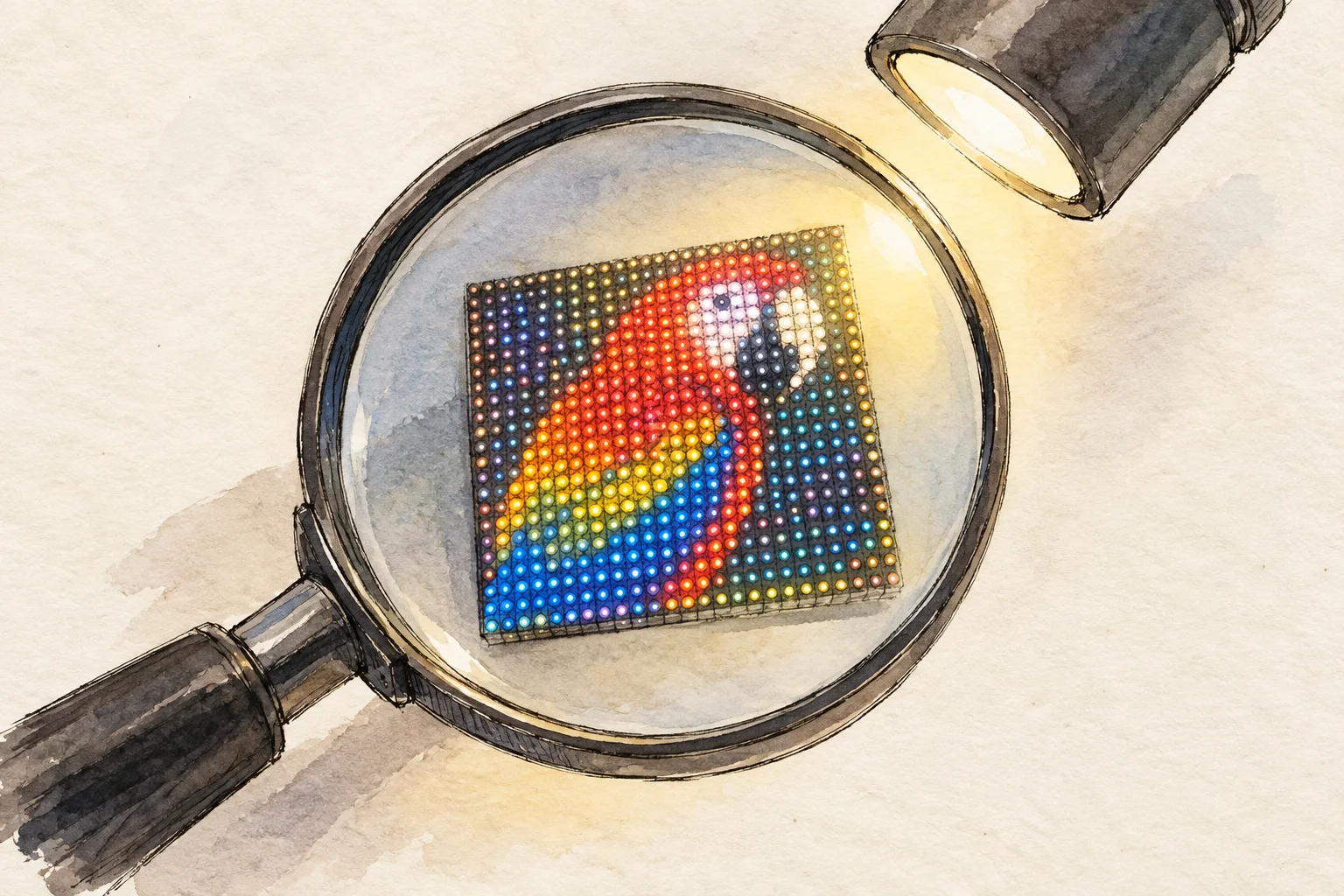
To demonstrate that precision, the researchers created a multicoloured macaw image just 0.3 by 0.43 millimetres across, containing 250 by 350 pixels. This was not a working screen: the colours glowed under external illumination rather than electrical power. In a separate experiment, the team produced an electrically powered light-emitting pattern measuring 1 by 2.4 millimetres.
The findings, published in Nature, establish a way to pattern these materials using an existing chipmaking technique. A functioning display still requires electronics that can control each pixel independently, and the researchers aim to shrink the electrically powered pixels further.
If those next steps succeed, the approach could help build miniature screens for augmented-reality glasses and camera viewfinders, as well as precisely positioned light sources for research and medical technology.