nature thriving
All four monitored stork nests produce fledglings at Gujarat wetland
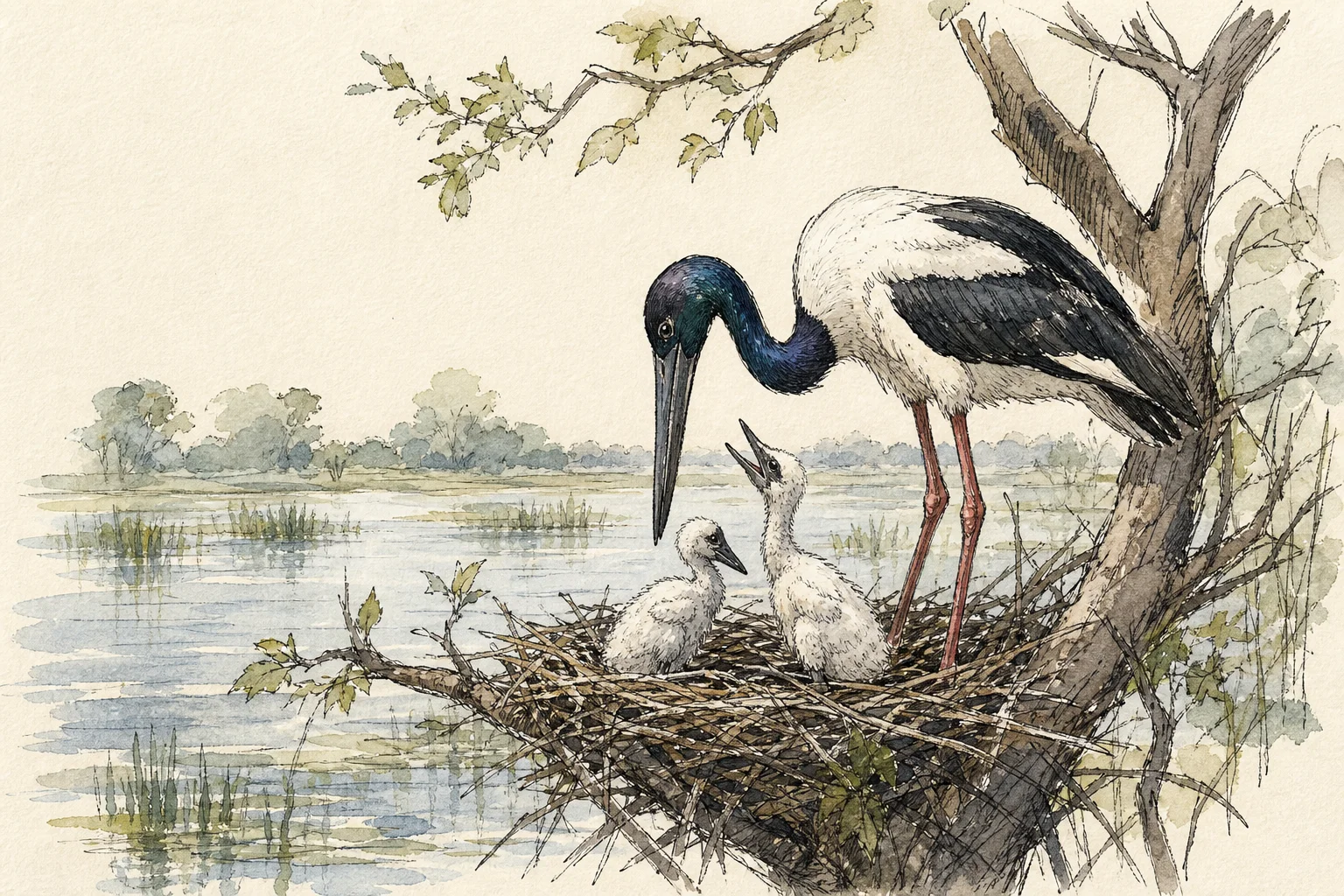
Every Black-necked Stork nest monitored at Khijadiya Bird Sanctuary successfully produced young, strengthening evidence that the protected wetland in western India is an important breeding site for the species. Four breeding pairs raised two fledglings each, with no nest abandonment, predation or chick mortality recorded during the study period.
Researchers from the Gujarat Ecological Education and Research Foundation surveyed the sanctuary from July 2024 to March 2025. Their peer-reviewed study drew on more than 320 hours of observations across 48 sampling points. In addition to the breeding pairs and eight juveniles, five non-breeding adults were regularly observed, bringing the peak seasonal count to 21 storks.
The team found that successful nest sites shared a useful combination of features: shallow water, open water and emergent vegetation, elevated ground, nearby prey and relatively little human disturbance. All four nests stood three to 4.5 metres high in Neltuma juliflora trees, showing that the birds can use structurally suitable invasive trees where large native nesting trees are limited.
The observations also revealed closely coordinated parenting. During 94 per cent of recorded foraging departures, one adult returned to replace the other at the nest. Protecting Khijadiya’s nesting trees, stable water conditions and low-disturbance areas could help preserve the conditions behind this breeding success.