science and discovery
Ancient Egyptian tomb preserves vivid scenes of working life
An Egyptian-Spanish team has uncovered an unusually well-preserved tomb at Saqqara, where painted scenes still carry traces of their original color after more than four millennia. Dating to the late Fifth Dynasty and the reign of Pharaoh Djedkare Isesi, the mastaba, a flat-roofed burial structure, contains two funerary chapels for an official named Yunmen and his father, Ity.
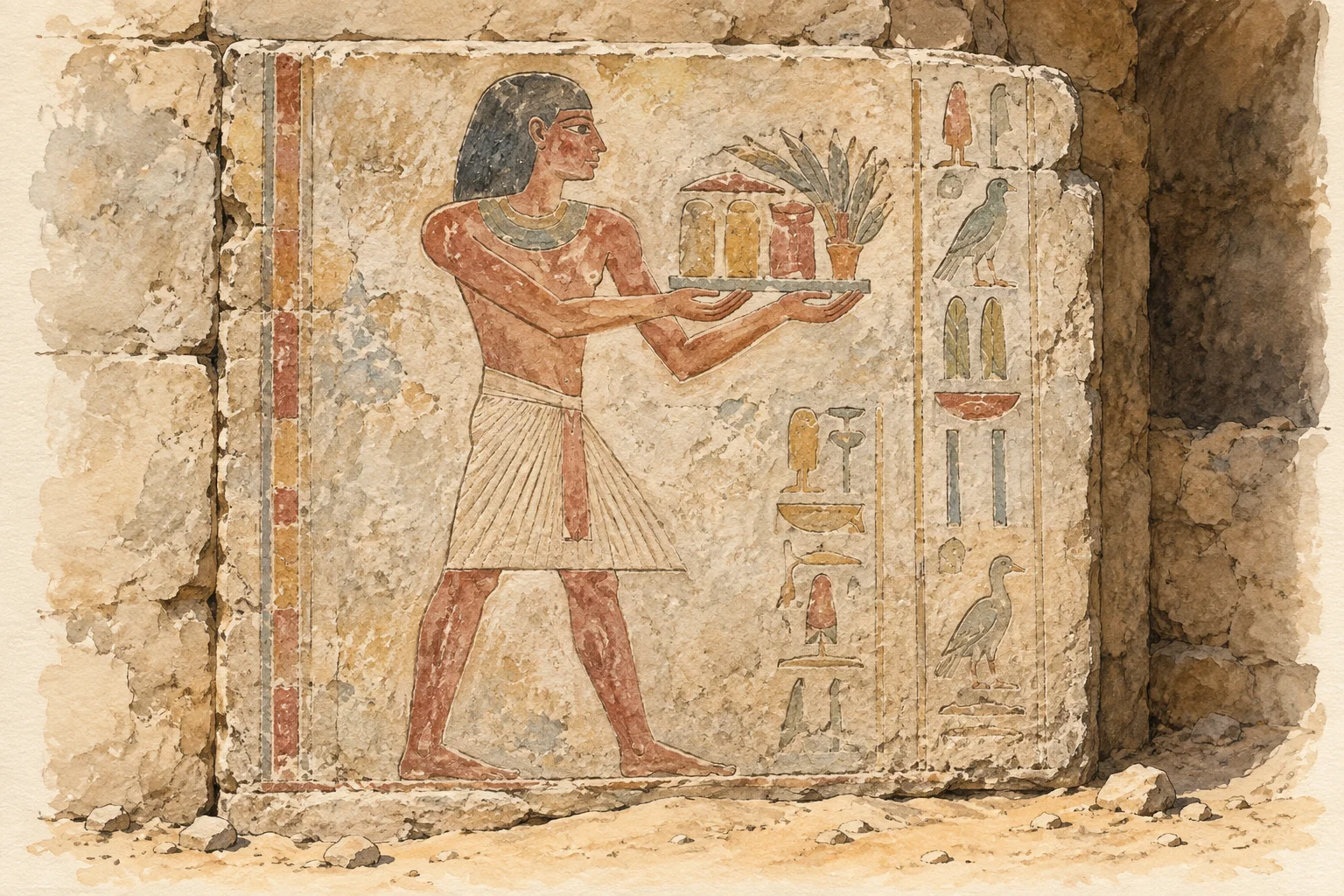
Yunmen served as a judge and senior administrator who reviewed petitions and complaints. His chapel’s finely carved reliefs show farmers at work, animals, servants and processions bringing offerings. The neighboring chapel belonged to Ity, whose work involved agricultural lands and offerings. Although more of its decoration has been lost, traces of painted offering scenes and a false door remain. Ancient Egyptians understood such doors as symbolic passages through which the dead could receive sustenance from the living.
The discovery emerged from systematic mapping and excavation by the Autonomous University of Barcelona and Egypt’s Supreme Council of Antiquities in the Mariette necropolis north of Saqqara. Although the area has been known since the 19th century, it had not been thoroughly documented. Researchers say the tomb can deepen understanding of architecture, art, administration and daily activity in Old Kingdom Egypt. Their work has also revealed indications of two more nearby mastabas that may be explored in future seasons.