science and discovery
Ancient proteins reveal rare Denisovan fossils in southwest China
Ancient protein analysis has identified rare Denisovan remains at Bianfu Cave in southwestern China, transforming a mass of broken bones into one of the clearest archaeological records of these ancient human relatives. Researchers screened more than 60,000 bone fragments and used preserved amino-acid patterns to link two skull pieces, part of a radius and two teeth to Denisovans. Two more fragile teeth were attributed by their anatomy.
The seven fossils, from three individuals, date to between 167,000 and 134,000 years ago. No ancient DNA survived, probably because proteins endure longer and Yunnan’s warmer climate speeds DNA decay. The radius is the first known Denisovan forearm bone. Its form combines some traits resembling Neanderthals with an overall shape closer to modern humans, adding a new piece to the still incomplete picture of Denisovan bodies.
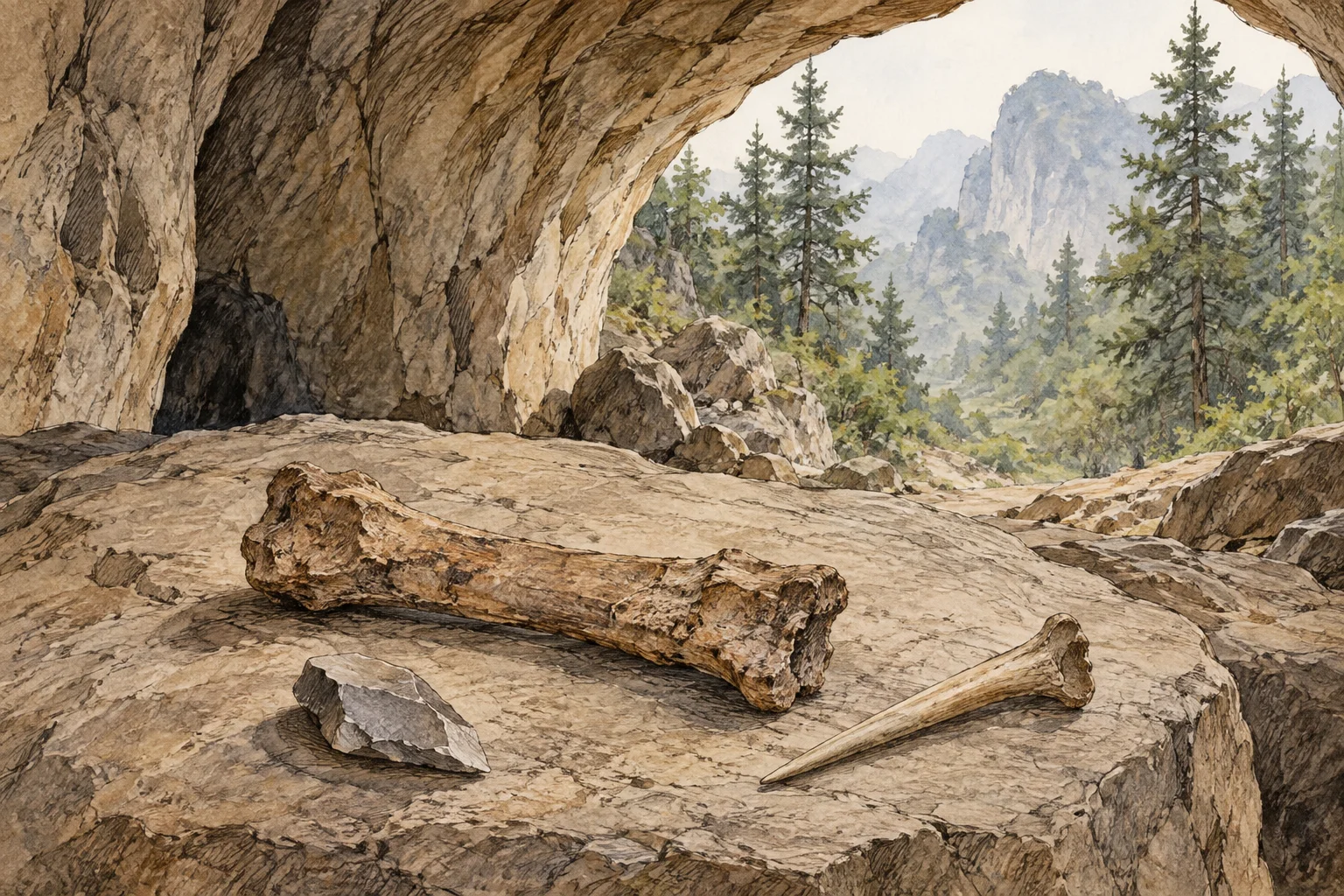
Around the fossils, excavators found roughly 1,300 stone artifacts, bone tools and thousands of animal remains. Cut marks and broken bones show that the cave’s occupants processed large animals including deer, water buffalo and gaur for meat and marrow. Pollen points to conifer forest and forest-steppe surroundings. Stone tools across deeper layers record repeated human activity at the site from about 190,000 to 70,000 years ago.
Denisovans were first recognized through DNA in 2010, and their sparse fossils have usually lacked this rich context. Bianfu now connects bodies, tools, food and habitat in one place.
Sources
- EL MUNDOUna cueva de China reescribe la historia de los misteriosos denisovanos: cazaban grandes animales y se parecían más a nosotros de lo que creíamos
- LaVanguardiaNuevos fósiles aclaran quiénes eran y cómo vivían los denisovanos hace 150.000 años
- NatureWho were the Denisovans? Rich trove of fossils and tools paints new picture
- CNN InternationalFossil remains unearthed in China offer new clues about how Denisovans lived
- livescience.comEnigmatic Denisovans lived by cave in what is now China for 100,000 years, rare fossils and handcrafted tools reveal