science and discovery
Ancient wall offers new clues to where Paris began
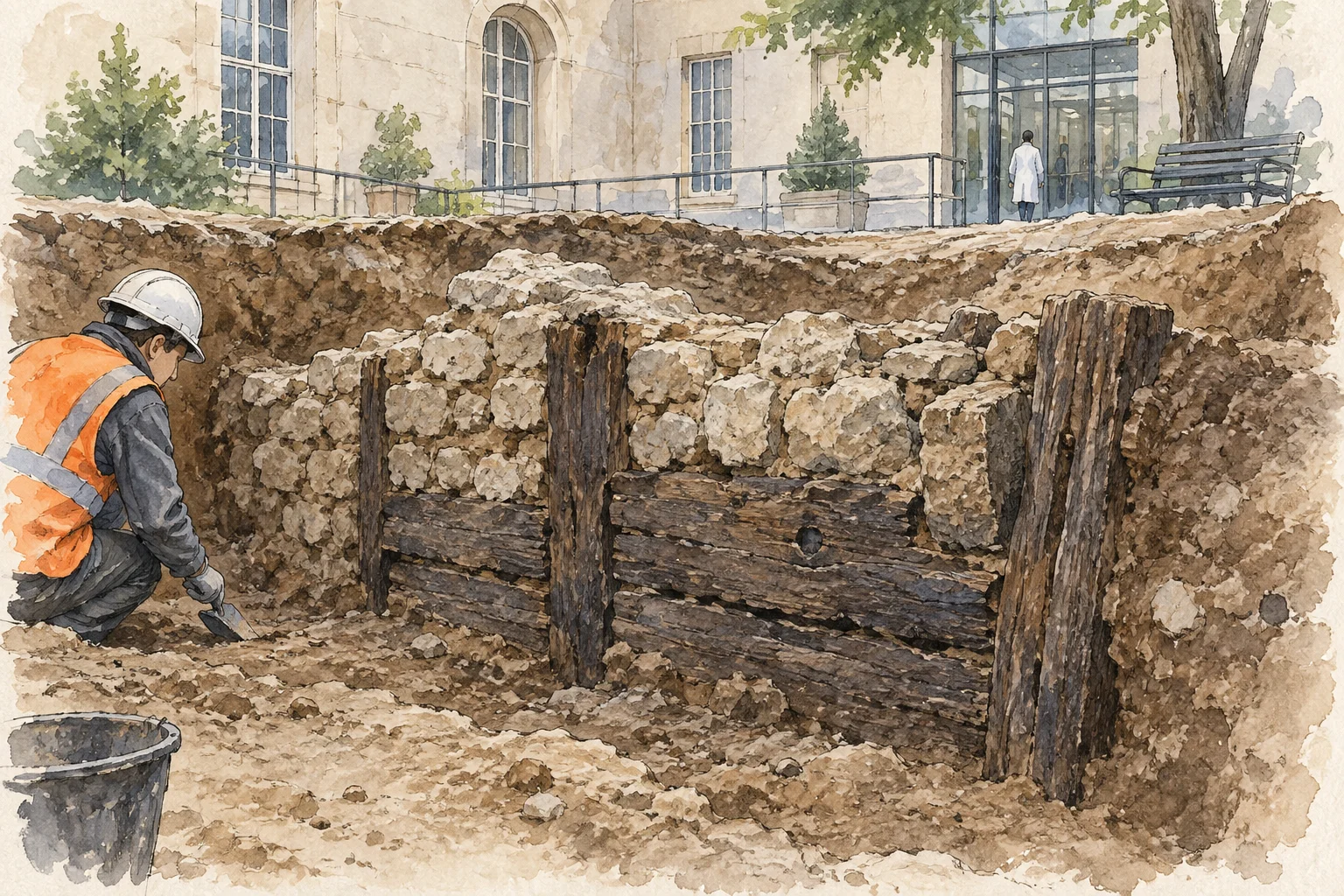
Archaeologists have uncovered a roughly 20-metre stone-and-wood wall in central Paris that could help answer a long-running question: where did the city's original Gallic settlement stand? The remains emerged during excavations at the Hôtel-Dieu hospital on the Île de la Cité, close to Notre-Dame.
The wall's construction is characteristic of Gallic fortifications from the late Iron Age. Researchers think it may have formed part of the defences of Lutetia, home to the Parisii people before Roman conquest. The island has traditionally been considered its location, but archaeological research has also supported a competing theory pointing to Nanterre, west of Paris.
Initial carbon dating places wooden remains between 200 and 10 BC. Burnt timber and charred seeds provide evidence of a fire. That date range includes 52 BC, when historical accounts describe Lutetia being burned as Roman troops advanced, but it does not establish that this was the same event.
The French culture ministry says further work is needed to verify the wall's date and purpose. Even with those questions open, the find offers fresh physical evidence for investigating the city's beginnings. A reconstructed section incorporating original stones is planned for display in a Paris museum.
Sources
- infobaeHallan en el centro de París un posible tramo de la muralla de la antigua Lutecia gala
- Le Monde.frAncient wall discovered in Paris, possibly confirming city's original settlement
- BFMTV"Une avancée majeure pour la connaissance des origines de Paris": un rempart gaulois exhumé sur l'île de la Cité