technology and innovation
Astronomers spot tiny asteroid hours before harmless atmospheric entry
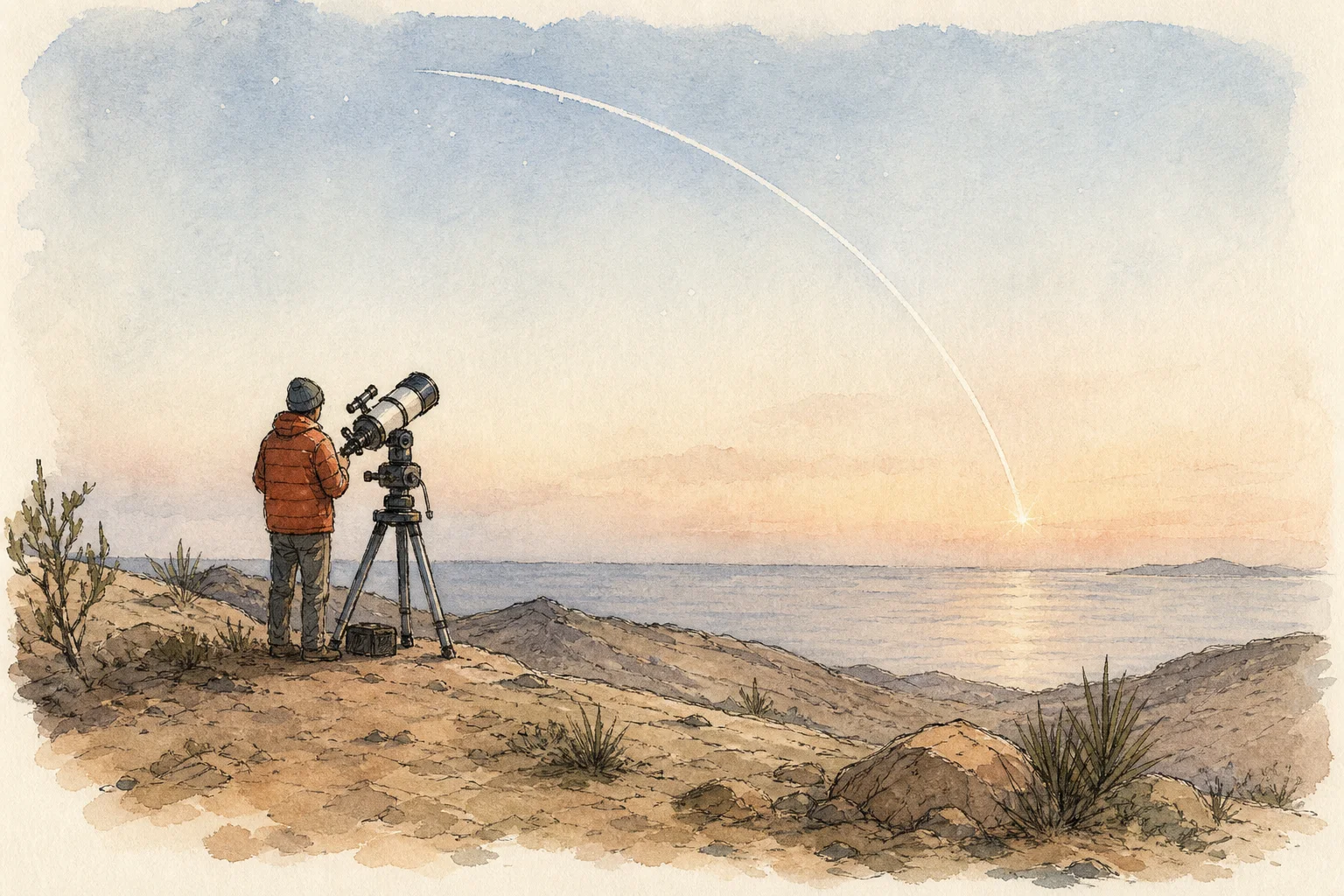
Astronomers detected and tracked a tiny asteroid only hours before it entered Earth’s atmosphere over the Indian Ocean near northwestern Australia, giving planetary-defence teams a rare real-world test. The object, designated CERNQ52, posed no meaningful danger and was expected to break apart in a brief fireball far from populated areas.
Surveys including Catalina and Pan-STARRS contributed detections, while international monitoring centres rapidly refined the trajectory. European Space Agency experts predicted atmospheric entry at about 16:12 UTC on September 6. Size estimates ranged from 0.6 to 1.2 metres, roughly comparable to a household appliance. At that scale, the atmosphere was expected to destroy it, although a few pebble-sized fragments may have survived.
This was only the 13th occasion on which a small incoming object had been identified before reaching the atmosphere. That rarity made the event useful: monitoring systems had little time to combine observations, calculate a path and distinguish a harmless encounter from a genuine threat. NASA described the scenario as a valuable test of capabilities used to monitor larger objects and predict potential impacts.
The event did not test whether Earth could deflect a dangerous asteroid. It did show how a global observation network can turn a surprise discovery into a timely, calm forecast.