technology and innovation
Bulgaria completes its first professional radio telescope
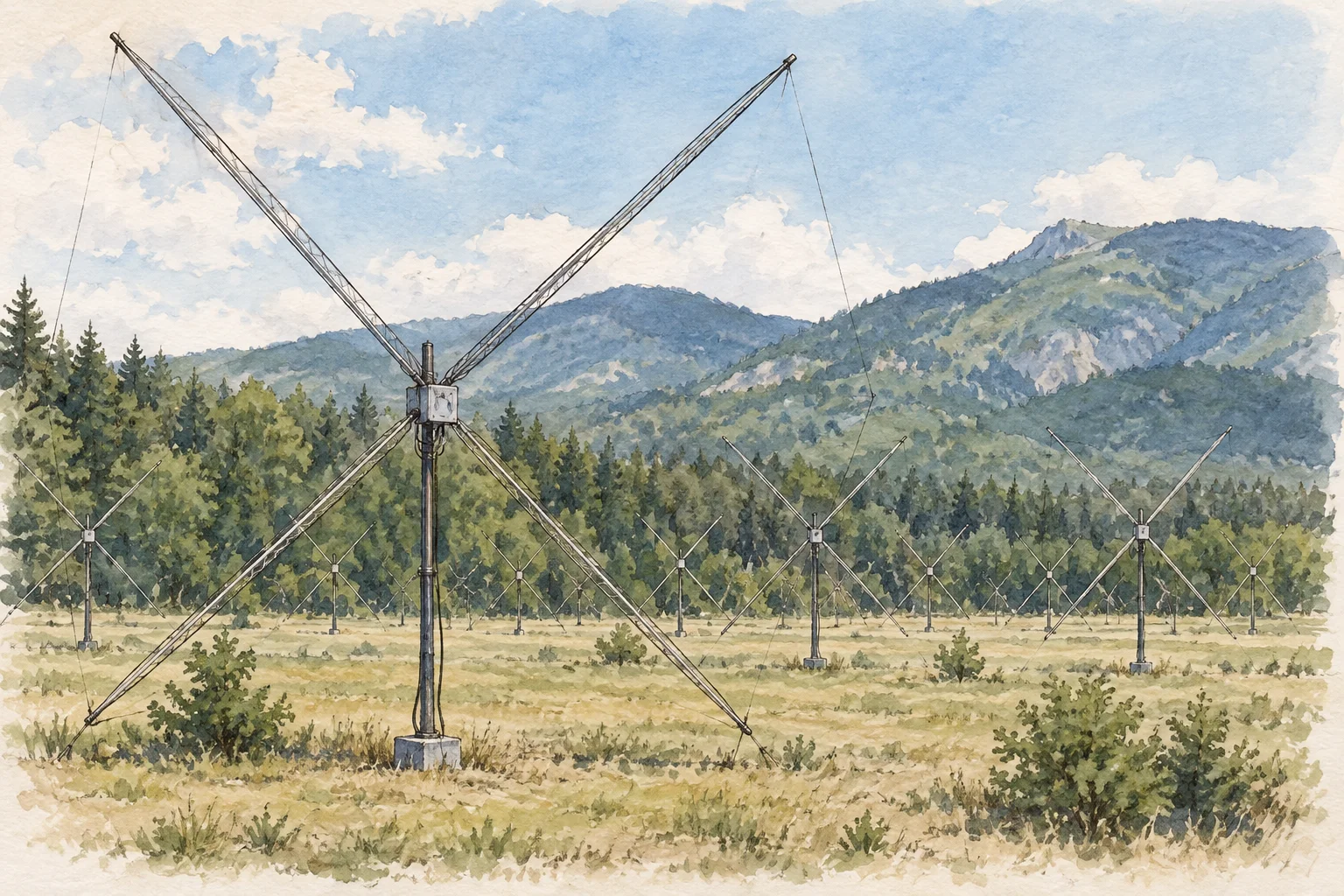
Bulgaria has completed construction of its first professional radio telescope, LOFAR-BG, near the Rozhen National Astronomical Observatory. Its two antenna fields and supporting infrastructure are now built, bringing the country closer to a new chapter in astronomical research.
The facility is set to become the 53rd station in Europe’s LOFAR telescope network and its first in southeastern Europe. Full certification is still pending, with scientific work expected to begin in early 2027.
Its location gives it importance well beyond Bulgaria. As the network’s southernmost and easternmost station, LOFAR-BG will extend the greatest distance between observing stations to about 2,500 kilometres. That wider span is expected to help the telescope distinguish finer details and produce sharper images.
More than 25 students, doctoral candidates and young researchers helped build the station during a summer 2026 internship. Working under experienced engineers and technicians, they carried out most of the assembly of hundreds of antennas, with much of the work done by hand.
The project brought together Bulgaria’s Institute of Astronomy, university partners, the Netherlands Institute for Radio Astronomy, ASTRON, and AstroTec Holding. Once fully operational, the station is expected to support Bulgarian research in astronomy, space physics and geophysics. Plans also include training future telescope users and developing artificial-intelligence tools to process vast amounts of data.