science and discovery
Buried cotton reveals more active soil on organic Swiss farms
Organic farming and reduced soil disturbance were linked to healthier, more biologically active soils in a nationwide Swiss citizen-science study using an unusual measuring tool: cotton underwear.
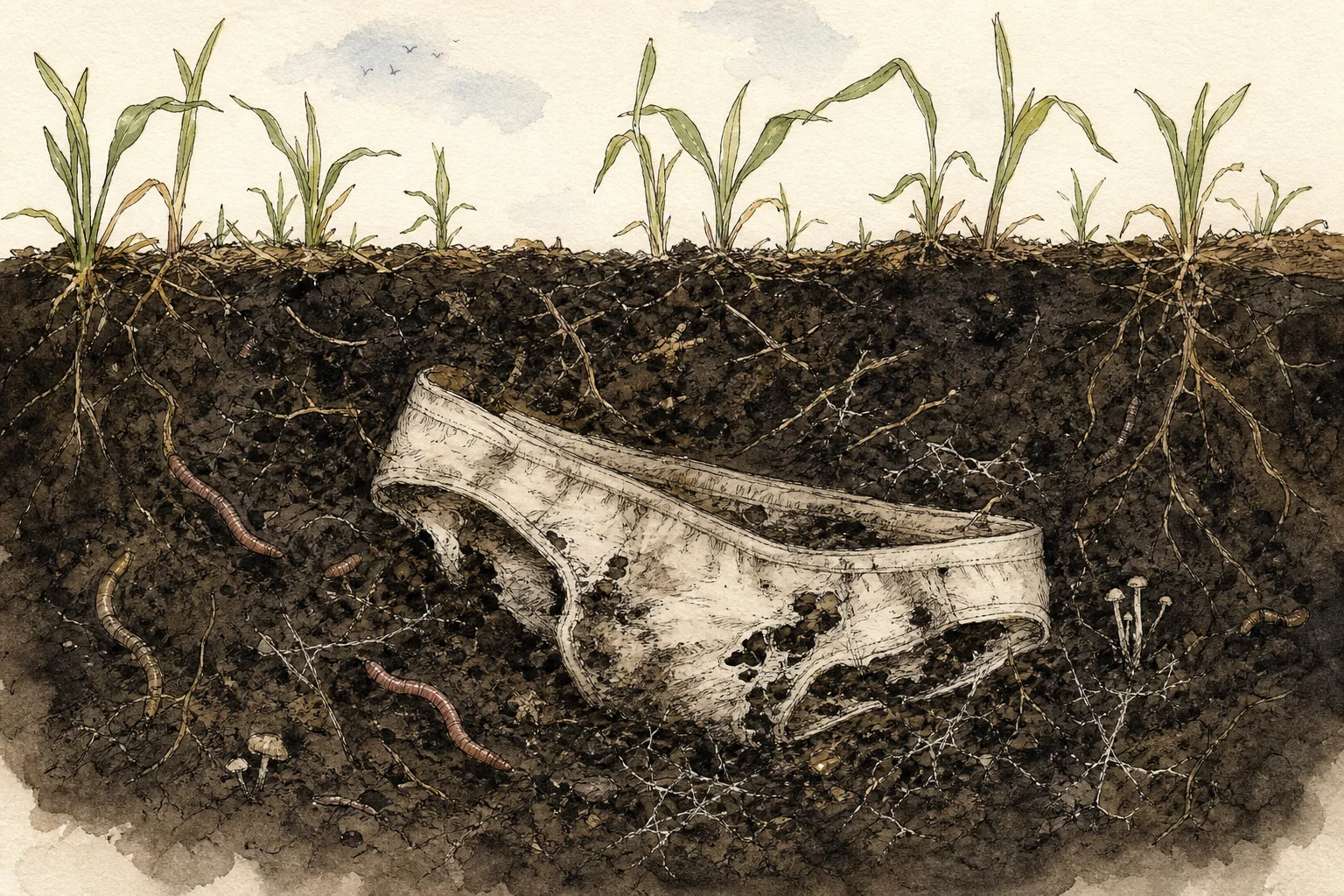
About 1,000 gardeners and farmers joined researchers from the University of Zurich and Agroscope by burying standard cotton garments at selected sites. After retrieval, the amount of fabric that had decomposed provided a practical indicator of activity among bacteria, fungi, earthworms, insects and other soil organisms.
The results showed that land management can make a measurable difference below ground. Cotton decomposed significantly more on organically managed fields than on conventionally farmed fields, while no-till farming was also associated with better soil-quality results. Gardens were among the most biologically active locations, and agricultural plots showed substantial variation depending on how they were managed.
Participants also photographed the garments and submitted soil samples, helping researchers build a broader picture of conditions across Switzerland. Laboratory DNA analysis is intended to reveal more about the diversity of organisms in those samples.
The researchers cautioned that rapid decomposition is not an ideal benchmark everywhere. In forests and other near-natural habitats, unusually high nutrient levels can signal ecological imbalance. But for farmland, biologically active soil supports fertility, nutrient cycling, water quality, carbon storage and food production.