science and discovery
Buried rock strengthens the case for the Moon’s ancient magnetic field
Scientists have found new evidence that the Moon generated its own magnetic field about 4.2 billion years ago. Their analysis suggests it was at least roughly one-fifth as strong as Earth’s field today.
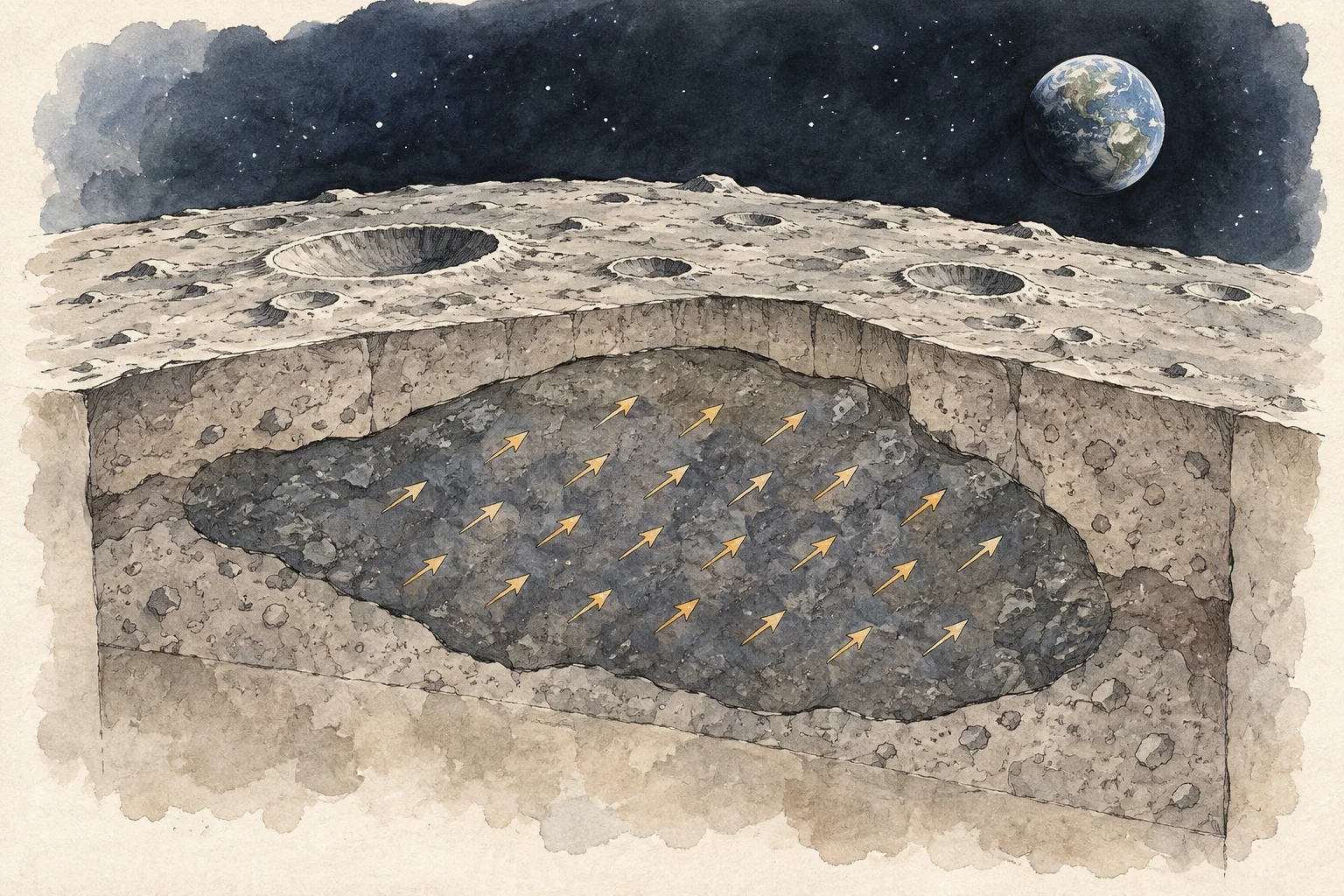
The ETH Zurich-led team combined gravity and magnetic measurements from lunar orbit to study Dewar, a region on the Moon’s far side. The resulting model revealed a dense, strongly magnetised body of rock about 60 kilometres wide beneath the surface, interpreted as magma that rose and cooled underground.
As molten rock cools in a magnetic field, it can retain a record of that field. Using estimates of the buried rock’s iron content, the researchers calculated the minimum strength needed to account for its magnetism.
The findings, published in Science Advances, offer an independent way to investigate a long-running puzzle. Apollo rock samples have produced conflicting answers about whether the Moon once had a field generated by movement inside its core, as Earth does today.
A brief magnetic field caused by an impact is unlikely to explain the Dewar rock, which would have taken tens of millions of years to cool. Still, the study does not settle everything: how the Moon’s small core could have powered such a strong field remains unclear. Samples collected at Dewar could help test and refine the orbital findings.