Science and discovery
Chemistry Nobel honours breakthroughs in controlling molecular mirror images
Henri Kagan and Kenso Soai have shown how chemical reactions can favour one of two mirror-image forms of a molecule, helping chemists design reactions for making medicines. Their discoveries earned the French and Japanese scientists the 2026 Nobel Prize in Chemistry, announced on 7 October.
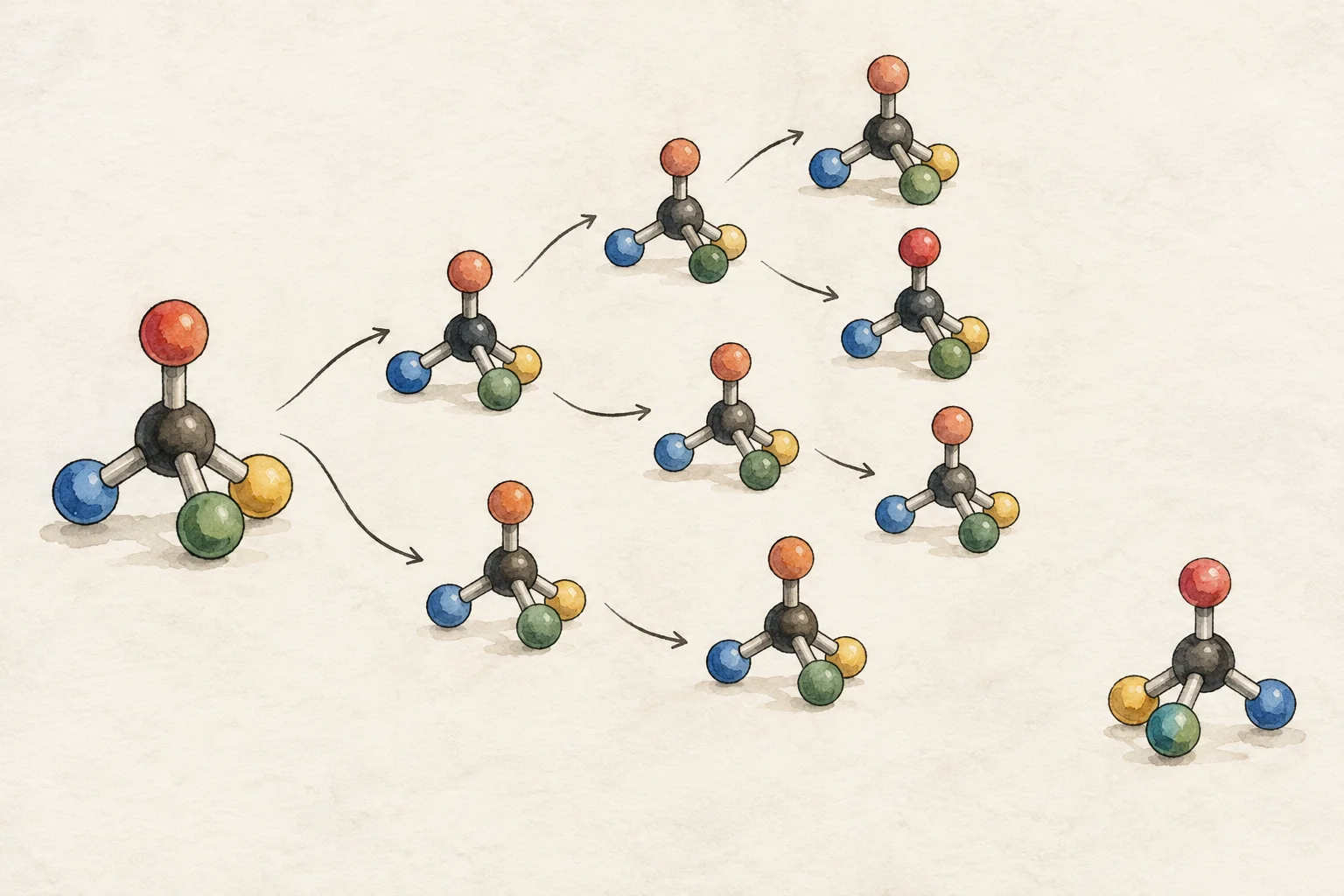
Many molecules essential to life come in two versions, like left and right hands. Their effects in living organisms can differ sharply. For some medicines, one form provides the intended benefit, while the other can cause unwanted or harmful side effects.
In 1986, Kagan demonstrated a reaction that produced more of one mirror-image form than the other. Soai later developed a reaction in which the product helped drive its own production, progressively amplifying the preference for one form. This self-reinforcing process can yield just one of the two versions.
The work also offers a laboratory demonstration of how a preference for one molecular “hand” can emerge. Living organisms use almost exclusively one version of many key molecules, a puzzle chemists have studied for more than a century. The experiments did not establish how nature made that choice at the beginning of life, but showed how such an imbalance could arise through chemistry.