technology and innovation
Clay’s magnetic memory offers a new test for ancient artifacts
Researchers have developed a new way to help distinguish ancient clay artifacts from modern forgeries by measuring a weak magnetic signal that builds over time. The technique could give museums, archaeologists and law enforcement another tool for examining objects whose excavation history is unknown.
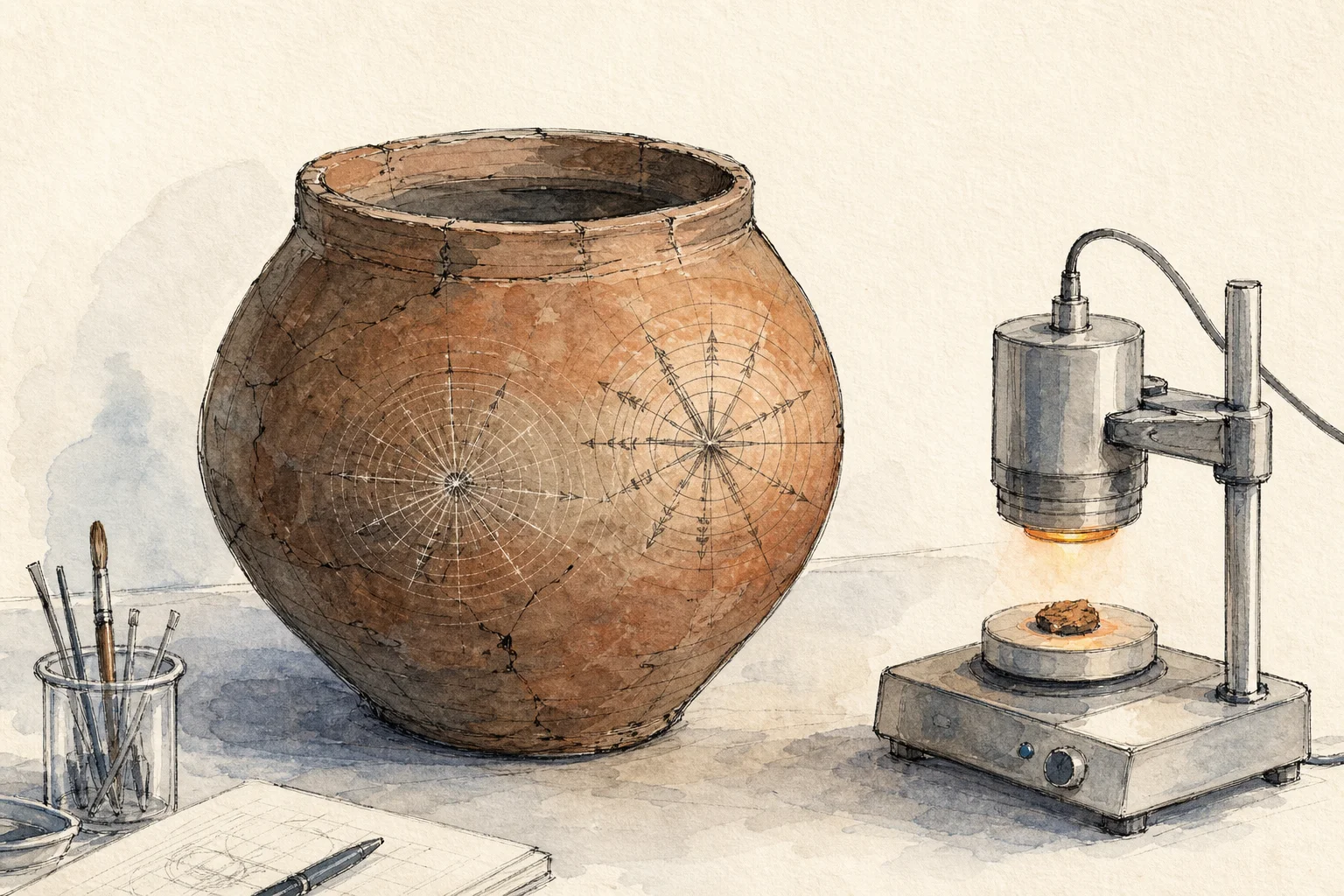
When clay is fired, magnetic particles record Earth’s magnetic field as the object cools. Smaller particles continue responding gradually to the surrounding field, creating what scientists call viscous remanent magnetization. Reheating a small sample erases this secondary signal, but the study found that it took more heat to remove it from ancient ceramics than from modern ones.
The team tested 45 known objects, including pottery from controlled archaeological excavations, modern souvenirs and specially made fakes. All 26 modern objects lost the relevant signal below 112 degrees Celsius, while 19 artifacts known to be more than 1,000 years old retained it until above that threshold. Computer models supported the laboratory results. Three objects recovered through antiquities enforcement also produced evidence consistent with ancient origins.
Published in the Proceedings of the National Academy of Sciences, the method does not establish an exact date or reveal where an object was found. It may also be less useful for ceramics younger than about 1,000 years. Even so, it adds a measurable line of evidence for assessing disputed artifacts and could become more precise with further research.