science and discovery
Dark matter detector sets record for lowest-energy solar neutrino measurement
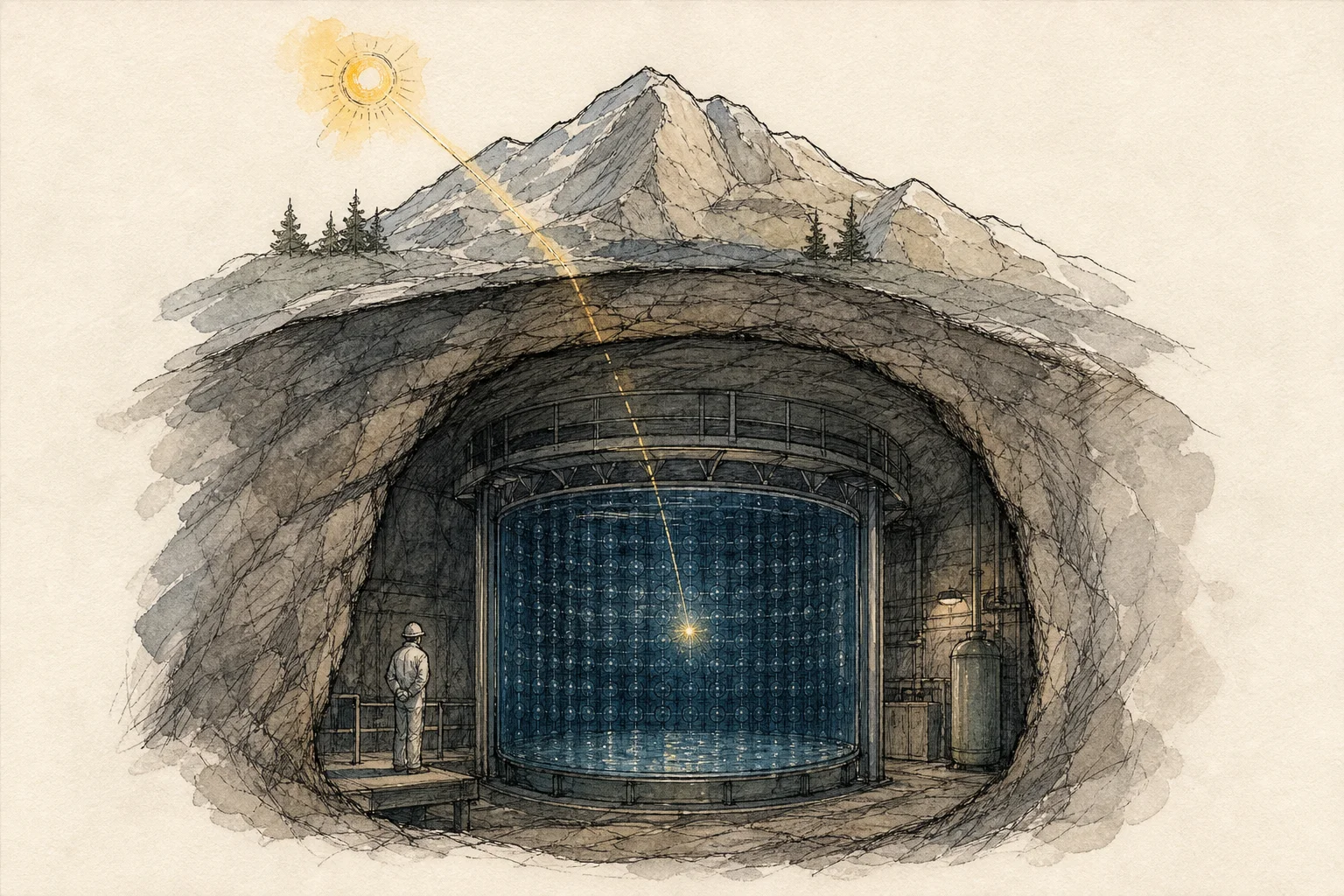
A detector built to search for dark matter has measured solar neutrinos at lower energies than any previous experiment. The XENONnT instrument extended direct observations to neutrino energies of about 17 kiloelectronvolts, revealing a signal dominated by particles created in the fusion reactions that power the Sun.
Buried 1,400 metres beneath Italy’s Gran Sasso massif, the detector contains 5.9 tonnes of highly purified liquid xenon. On rare occasions, a passing neutrino strikes an electron in the xenon, producing tiny flashes of light and electrical signals. Researchers reduced and carefully measured interference from sources including radioactive radon, lead and krypton, allowing the faint solar signal to reach the five-sigma statistical standard conventionally used to claim a discovery in particle physics.
These proton-proton, or pp, neutrinos are produced near the beginning of the Sun’s main fusion chain. More precise measurements of their flow could therefore test scientists’ understanding of how energy is generated in the solar core.
The result also shows how much dark matter technology has advanced. XENONnT has not yet found dark matter, but its growing sensitivity is revealing other rare particle interactions. Solar neutrinos will eventually become a significant source of background noise in the dark matter search, creating a challenge while also opening a productive field of neutrino research.