science and discovery
Earth microbes grow in a lab version of Enceladus’s ocean
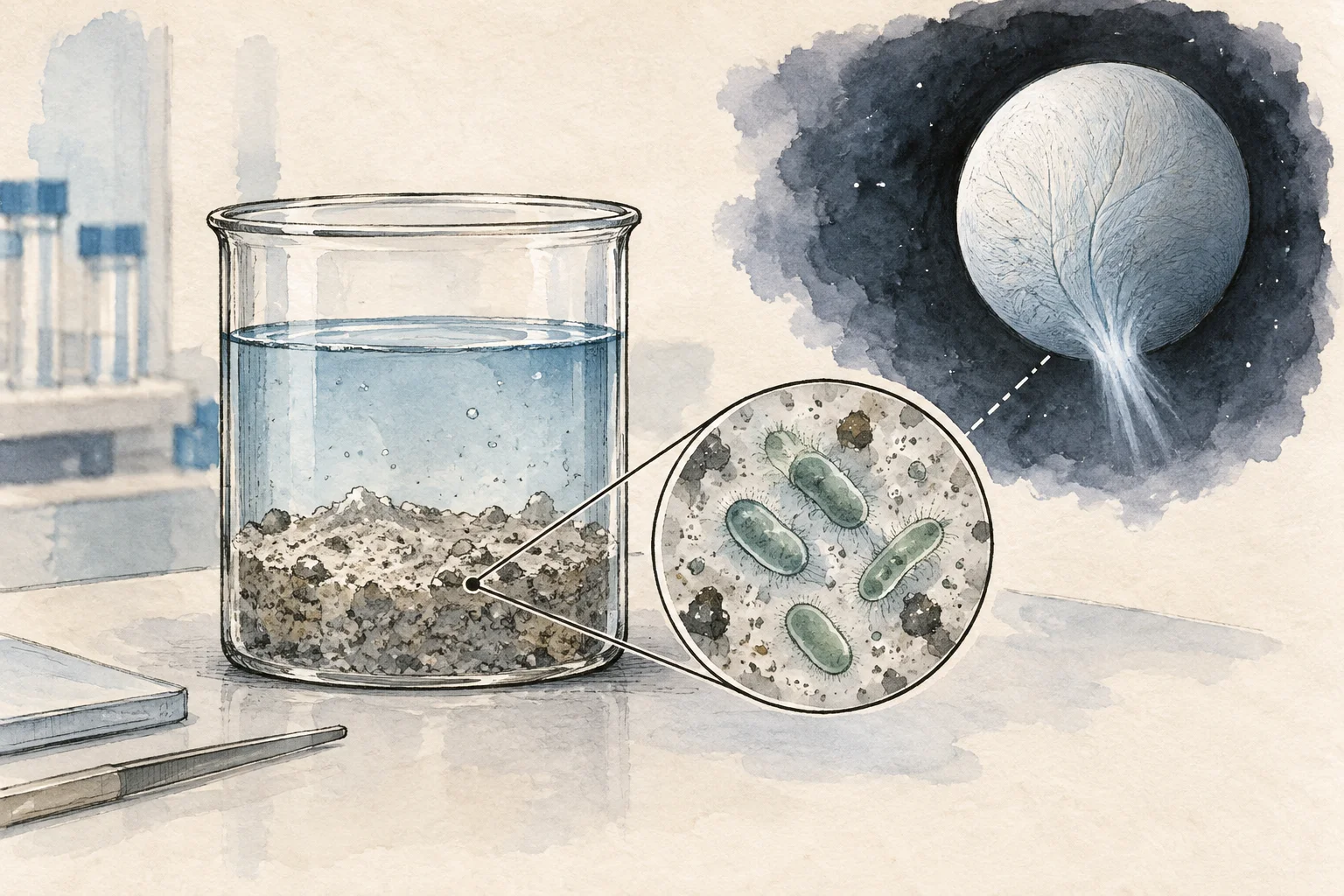
Microbes from Earth’s deep sea have grown in a laboratory recreation of the ocean chemistry expected beneath the ice of Enceladus, one of Saturn’s moons. Their growth offers new evidence that this distant ocean could support some forms of life.
Beneath its frozen crust, Enceladus is thought to harbour a vast saltwater ocean. Plumes of water vapour and ice escaping into space have made it a promising target in the search for life beyond Earth.
Researchers mixed water, salts, carbonates and powdered rock to recreate key aspects of that ocean and its seafloor. Reactions between the water and rock released hydrogen, which the microbes use with carbon dioxide to make methane and obtain energy.
The organisms, originally found near hot springs on the seafloor between Japan and Taiwan, grew in water far more alkaline than their previously known limit. They also adjusted their metabolism to use the very small amounts of carbon dioxide available. The findings were published in Science Advances.
The experiment does not show that Enceladus has life. It lasted only days, so whether such microbes could survive there over much longer periods remains unknown. But it demonstrates that some of the moon’s expected chemistry need not rule life out.