Science and discovery
Euclid spots a quasar shining just 630 million years after the Big Bang
Astronomers have found the most distant quasar yet, catching sight of a brilliant galactic core as it looked 630 million years after the Big Bang. Its light travelled for about 13.1 billion years to reach us, giving astronomers a view roughly 40 million years further back in cosmic history than the previous quasar record.
A team led by astronomer Julien Wolf picked out the object among millions in observations from the European Space Agency’s Euclid telescope. They nicknamed it Dún Aonghasa after a prehistoric clifftop fort in Ireland. Telescopes on the ground and in space helped confirm the find, and the James Webb Space Telescope revealed the mass of the black hole at its centre: about 360 million times that of the Sun.
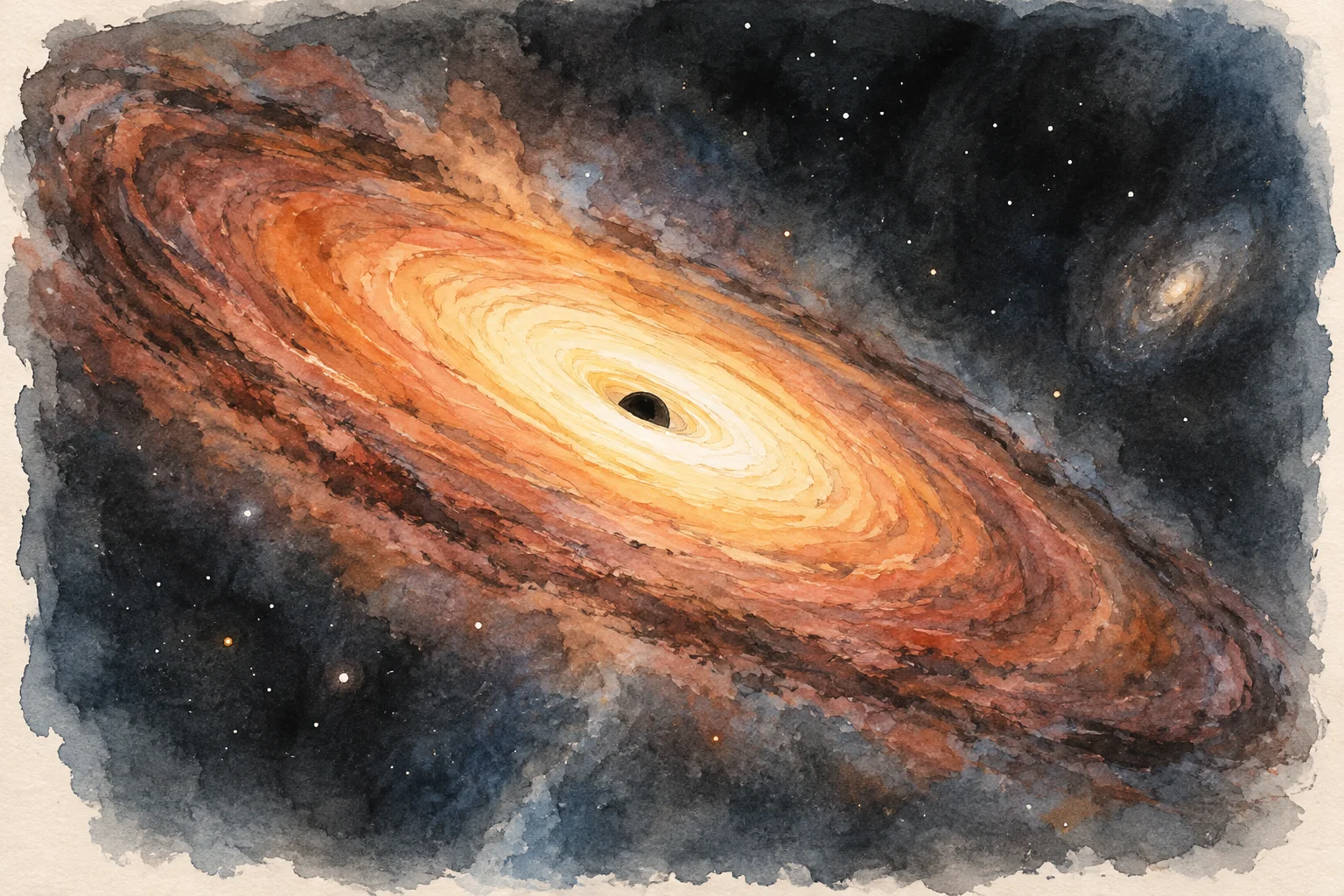
A quasar shines because gas swirling towards a black hole heats up enough to outshine the rest of its galaxy. Yet when it emitted the light astronomers see now, this black hole was taking in gas relatively slowly. To reach such an enormous mass so early, it may have grown much faster in earlier bursts, started out unusually massive, or both.
Sources
- TerraAstrônomos identificam um quasar recordista no universo primitivo
- U.S. News & World ReportScientists Discover Quasar Formed Within a Mere 630 Million Years of the Big Bang, Setting a Record
- www.esa.intEuclid breaks own quasar record by 40 million years
- www.mpg.deNew quasar record tightens constraints on black hole formation scenarios