technology and innovation
Europe launches satellites to read plants’ hidden glow
Europe has successfully placed two new Earth-observation satellites into orbit, expanding scientists’ ability to track plant health and environmental change worldwide. FLEX and Sentinel-3C launched aboard a Vega-C rocket from Kourou in French Guiana, and ground controllers received signals confirming that both spacecraft had deployed safely.
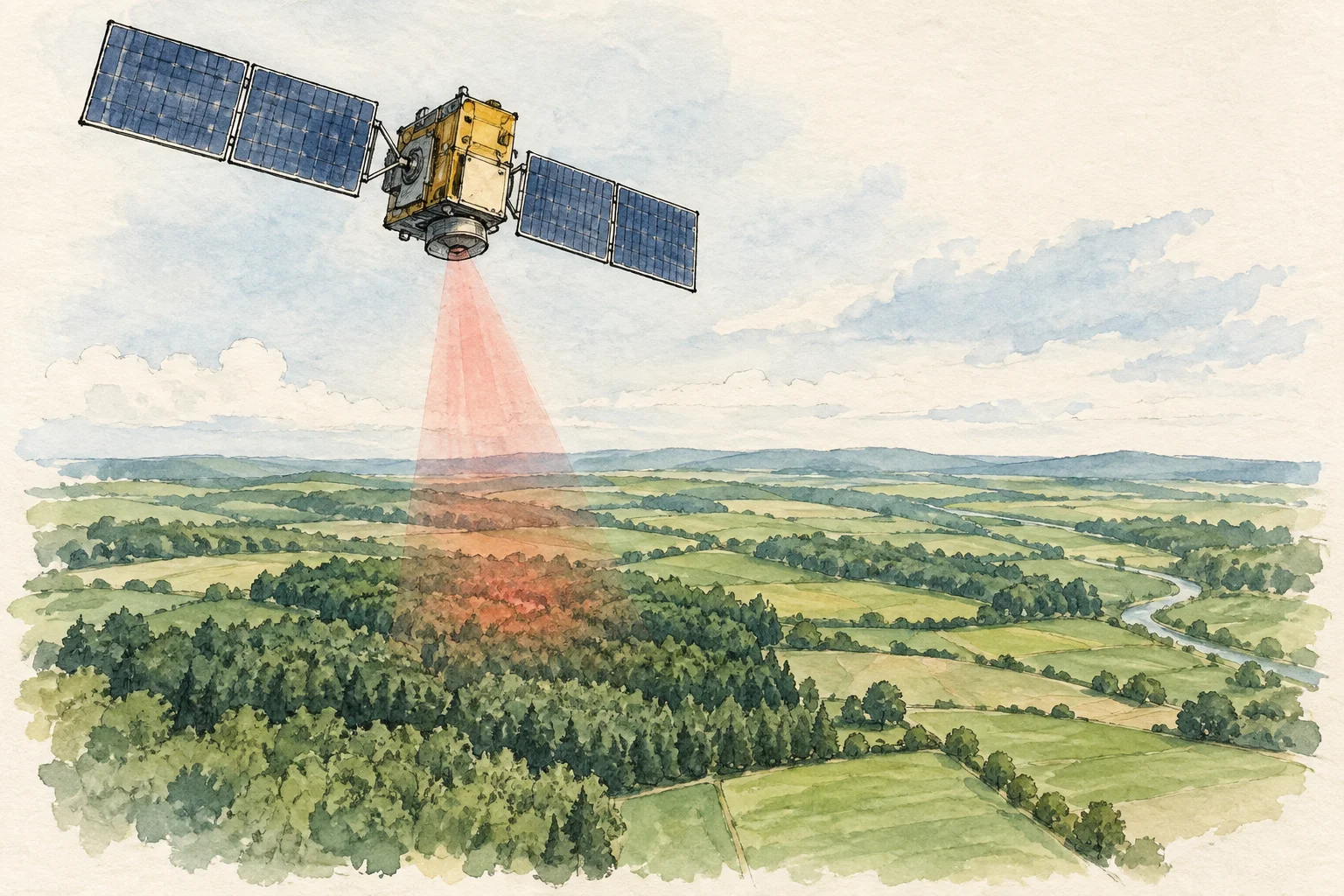
FLEX is the first European Space Agency satellite designed specifically to measure photosynthetic activity from space. Its sensitive spectrometer will detect chlorophyll fluorescence, a faint red glow released by plants during photosynthesis that is invisible to human eyes. Changes in this signal can reveal how vegetation responds to drought, extreme heat, disease and other pressures, sometimes before damage becomes visible.
The satellite will map vegetation fluorescence globally at a resolution of about 300 by 300 metres. Its observations should improve understanding of plant productivity and the role of photosynthesis in Earth’s carbon and water cycles. The mission is designed to operate for at least three and a half years.
Sentinel-3C will provide complementary measurements of surface temperatures, clouds, aerosols, vegetation, oceans, inland water, ice and the atmosphere. Combining these observations with FLEX data will give researchers a fuller picture of why plants are thriving or struggling, while continuing the long-running environmental record maintained by Europe’s Copernicus programme.
Sources
- infobaeFlex, el satélite que estudia la fotosíntesis, y un nuevo Sentinel despegan en un Vega-C
- WEB.DEWie gestresst sind Pflanzen? Europäische Mission ins All soll Frage beantworten
- 20 minutosEuropa estrena nuevos ojos en el espacio: FLEX, el satélite con marca España, ya está en órbita
- Euronews EnglishFLEX satellite in orbit: studying plant responses to climate change from space