technology and innovation
FDA authorizes first autonomous robotic blood-draw system
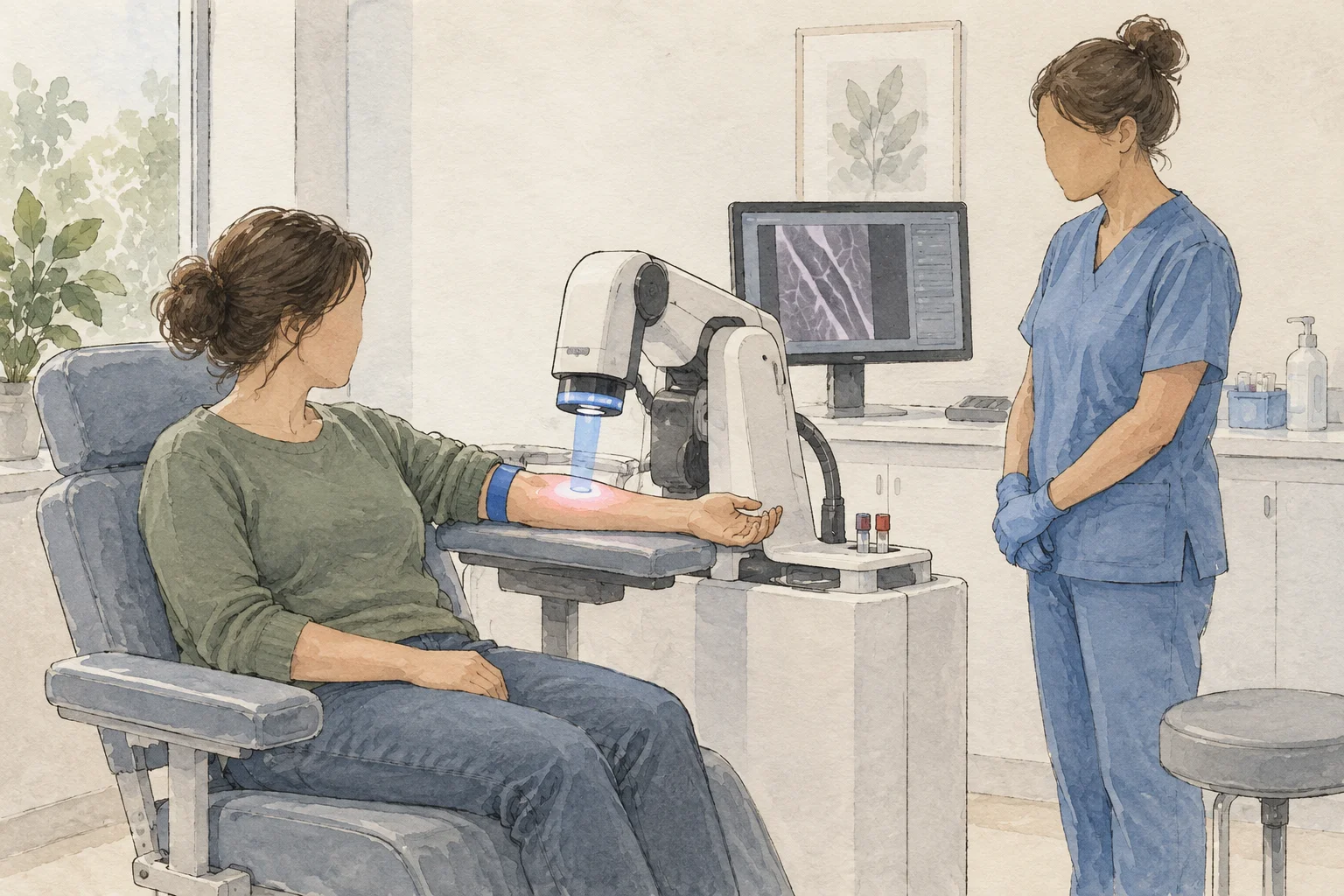
The US Food and Drug Administration has authorized the first autonomous robotic system for drawing venous blood, opening a new regulatory category for the technology in the United States. Aletta can carry out the procedure without a health professional directly handling the needle, although trained human supervision remains required.
The system combines near-infrared imaging, ultrasound, Doppler ultrasound, artificial intelligence and precision robotics to map blood vessels, distinguish veins from arteries and choose a suitable site. It then applies a tourniquet, disinfects the skin, inserts the needle, collects blood, switches sample tubes, disposes of the needle and applies a bandage. Safety controls prevent an attempt if no suitable vein is found and stop the procedure if movement or other potentially unsafe conditions are detected.
In the multicentre European ADOPT study, published in Clinical Chemistry in 2026, the system succeeded on the first puncture in 94.5% of cases. The sample haemolysis rate was 0.3%, while adverse events occurred in 0.6% of cases and were all mild. Among participants, 90% said pain was lower than or similar to a conventional draw, and 82% either preferred the robot for a future draw or had no preference.
Already cleared for clinical use in the European Union through CE marking, the system is being introduced gradually in European hospitals and laboratories. One trained phlebotomist can oversee up to three units, a model that could expand capacity while keeping clinical judgment and patient safety in human hands.