health and healing
Five-nanobody antivenom protects mice from diverse Indian cobra venoms
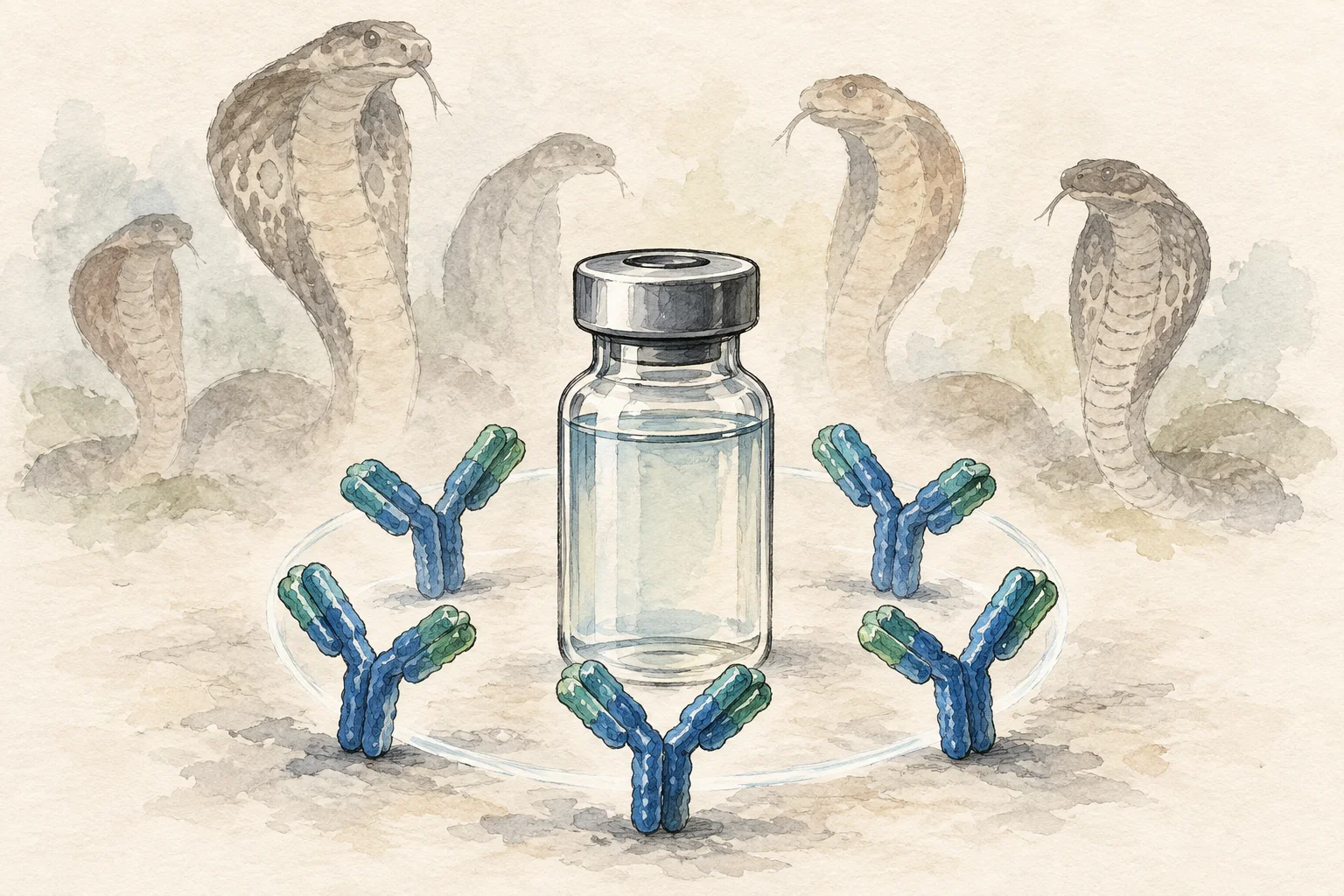
A recombinant antivenom made from five engineered antibody fragments protected mice against toxins from several cobra species found in India. The cocktail worked against venom from spectacled cobras, monocled cobras and two Indian king cobra species, according to research published in Science Translational Medicine.
Researchers at the Indian Institute of Science and the Technical University of Denmark selected the fragments, known as nanobodies, for their ability to bind related families of neurotoxins. The cocktail neutralised venom activity and blocked toxins from attaching to their target receptor. In mouse experiments, it prevented death even when given 30 minutes after venom injection, and animals showing paralysis or other neurotoxic symptoms recovered.
The approach could address some weaknesses of conventional antivenoms, which are produced by repeatedly immunising animals such as horses. Those products can vary between batches, cause side effects and cover a limited range of species. Recombinant antibodies can instead be manufactured using microbial or humanised expression systems, potentially offering more consistent production. The researchers also achieved protection with relatively small antibody quantities, which may help with future cost and safety challenges.
The findings remain preclinical, so they do not yet establish safety or effectiveness in people. However, the modular design could allow scientists to add antibodies for other medically important snakes and tailor antivenoms to particular regions.