health and healing
Five-session radiotherapy shows lasting benefits in prostate cancer trial
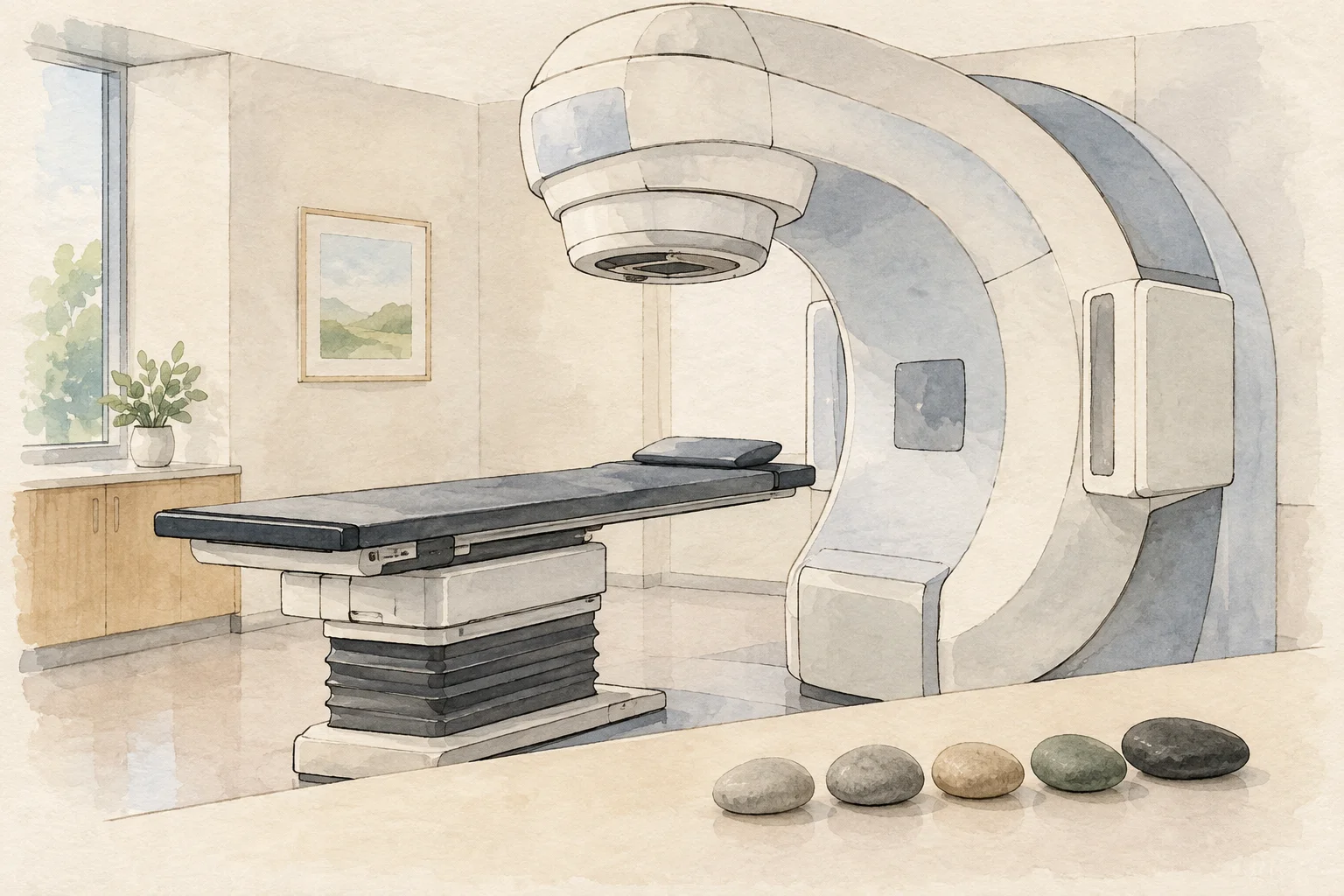
Five sessions of targeted radiotherapy have shown strong long-term cancer control, with less urinary leakage and better sexual function than surgery for some men with prostate cancer.
The UK PACE-A trial randomly assigned 123 men, mainly with low- or intermediate-risk cancer confined to the prostate, to surgery or stereotactic body radiotherapy (SBRT). This precisely focused radiation treatment is delivered in five outpatient visits over one to two weeks.
Five years after treatment, about 8% of radiotherapy patients responding to surveys reported daily urinary pad use, compared with 48% after surgery. Sexual function declined in both groups but remained significantly better after radiotherapy. Moderate or substantial bowel problems were uncommon in both groups.
At eight years, 91% of the radiotherapy group and 84% of the surgery group remained free of treatment failure, a measure including cancer recurrence, rising prostate-specific antigen levels and starting hormone therapy. The difference was not statistically significant, and the small trial was not designed to prove the treatments equally effective.
The findings were presented at the 2026 American Society for Radiation Oncology Annual Meeting. The eight-year results have not yet appeared in a peer-reviewed journal.
For patients who need treatment, the findings strengthen the evidence for a nonsurgical option rather than establish one best choice. Some people with lower-risk disease can instead be monitored without immediate treatment.
Sources
- The IndependentResearchers find prostate cancer treatment that is 'as effective as' surgery
- HealioSBRT improves multiple quality of life outcomes vs. surgery in localized prostate cancer
- EurekAlert!Five-treatment radiation therapy offers effective nonsurgical alternative for localized prostate cancer
- Medical DailyFive-Session Prostate Radiation and Surgery Showed Similar Eight-Year Cancer Control in a Small 123-Patient British Trial