science and discovery
Fossil wings reveal the calls of a Jurassic insect soundscape
Scientists have reconstructed the likely calls of nine insect species that lived about 165 million years ago, revealing a Jurassic soundscape that extended from cricket-like tones into ultrasound beyond human hearing.
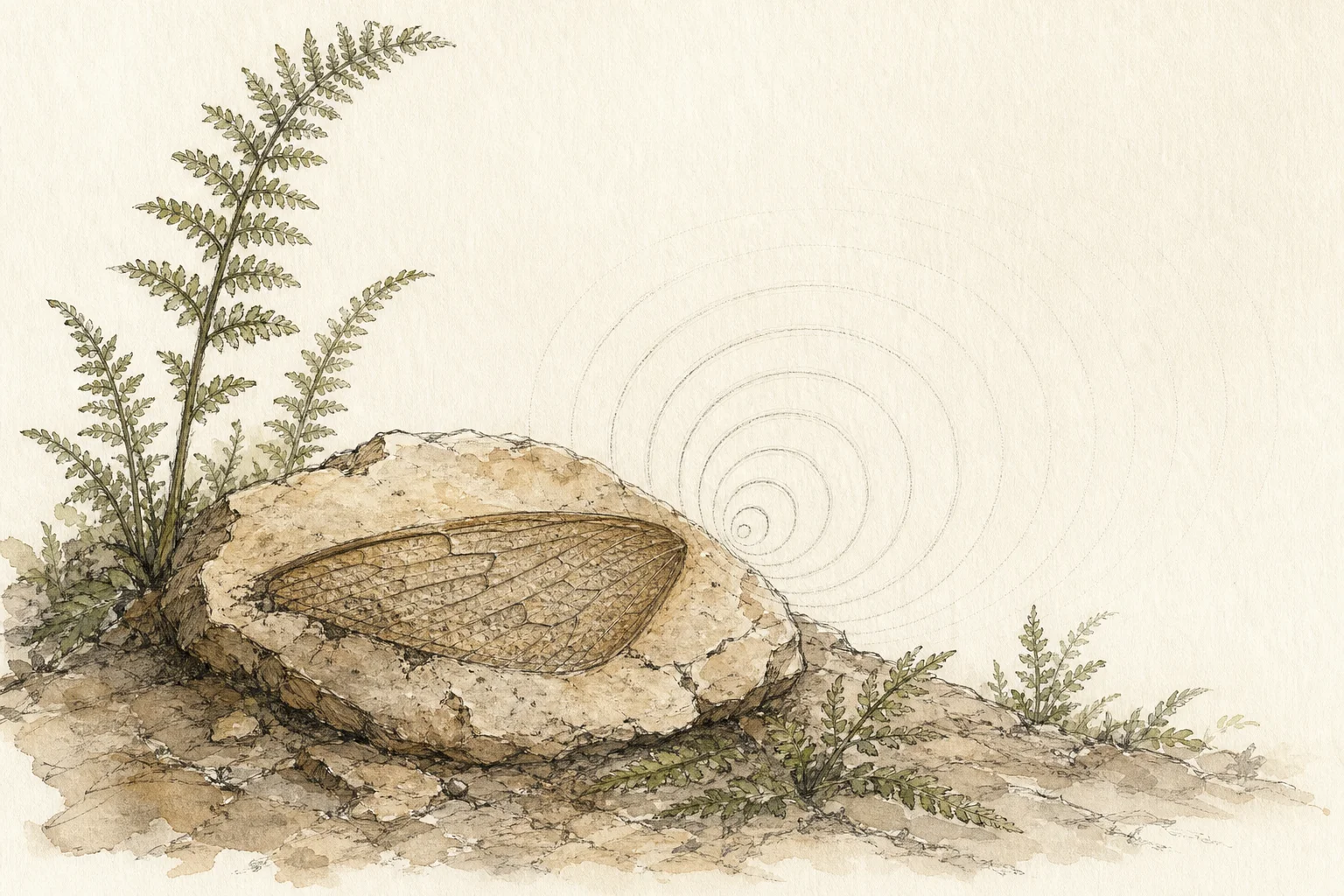
The international team examined 20 exceptionally preserved forewings from fossils found in Inner Mongolia, China. These extinct relatives of crickets and katydids produced sound through stridulation, rubbing specialized structures on one wing against the other. Because those hardened structures can fossilize, their shape retains clues to the vibrations they once generated.
Researchers combined measurements of fossil wing anatomy with evolutionary comparisons, laser studies of living insect wings, computer simulations and machine-learning models. Most reconstructed calls were low, pure tones around 5 kilohertz, while other species occupied higher frequencies. One appears to have reached about 20.5 kilohertz, just into the ultrasonic range.
The finding represents the oldest known evidence of ultrasonic communication in animals and places it long before bats and their echolocation. That challenges the idea that pressure from hunting bats alone drove insects toward high-frequency signaling. The researchers suggest that eavesdropping by early mammals, difficulty locating pure tones, and competition among species for acoustic space may also have shaped these ancient calls, although the precise evolutionary pressures remain uncertain.