science and discovery
Fossilized dinosaur droppings open a new window on ancient feathers
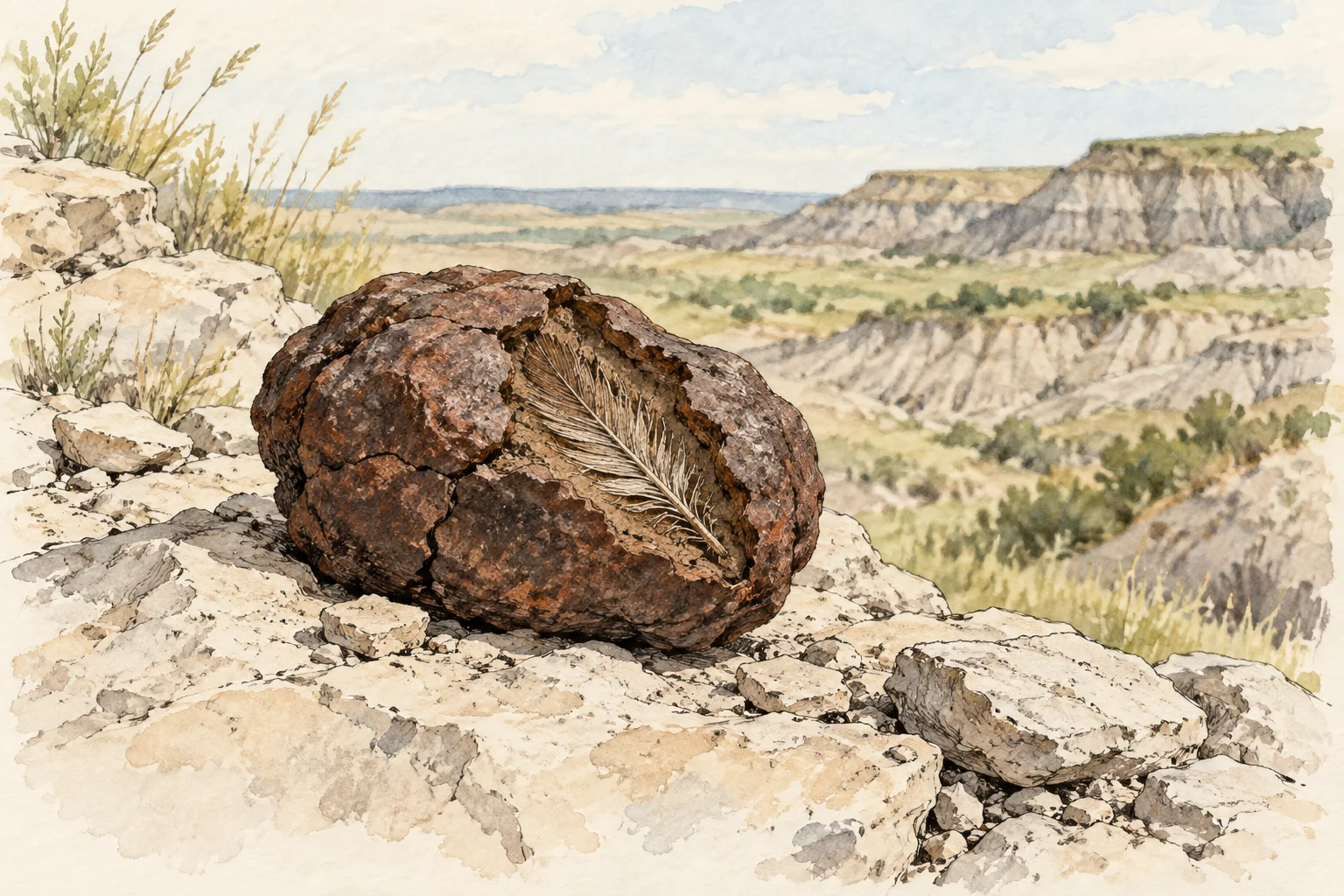
A 66-million-year-old piece of fossilized dinosaur dung has yielded an exceptionally preserved bird feather, revealing details rarely captured in the fossil record and pointing scientists toward a new source of ancient soft tissues.
The reddish-brown fossil was found in 2016 in Montana’s heavily studied Hell Creek Formation. A tiny feather was visible where the specimen had broken open, making it the first feather identified in fossilized feces, or coprolite. Micro-CT scans later revealed additional feathers, small bird bones and two fish scales inside. Unlike the flattened impressions found in many fossils, the exposed feather is preserved in three dimensions, including evidence of individual cells.
Researchers writing in Current Biology think the remains came from an aquatic bird related to hesperornithiforms, a group that disappeared during the mass extinction at the end of the Cretaceous period. The fish scales may have come from the bird’s last meal before the bird itself was eaten by a large meat-eating dinosaur.
The team also found that some body feathers lacked the full insulating structure seen in modern birds. Better insulation might have helped the ancestors of today’s birds endure the cold period following the asteroid impact, although outside experts stress that the fragments are incomplete and more fossils are needed. The firmer breakthrough is methodological: museum coprolites may hold overlooked feathers, fur and other delicate tissues that scanning can uncover.