Science and discovery
Francis Halzen wins physics Nobel for tracking cosmic neutrinos
An observatory buried in South Pole ice has opened a new way to study the distant universe by detecting elusive, high-energy particles called neutrinos. Francis Halzen, who led its development, was awarded the 2026 Nobel Prize in Physics on 6 October.
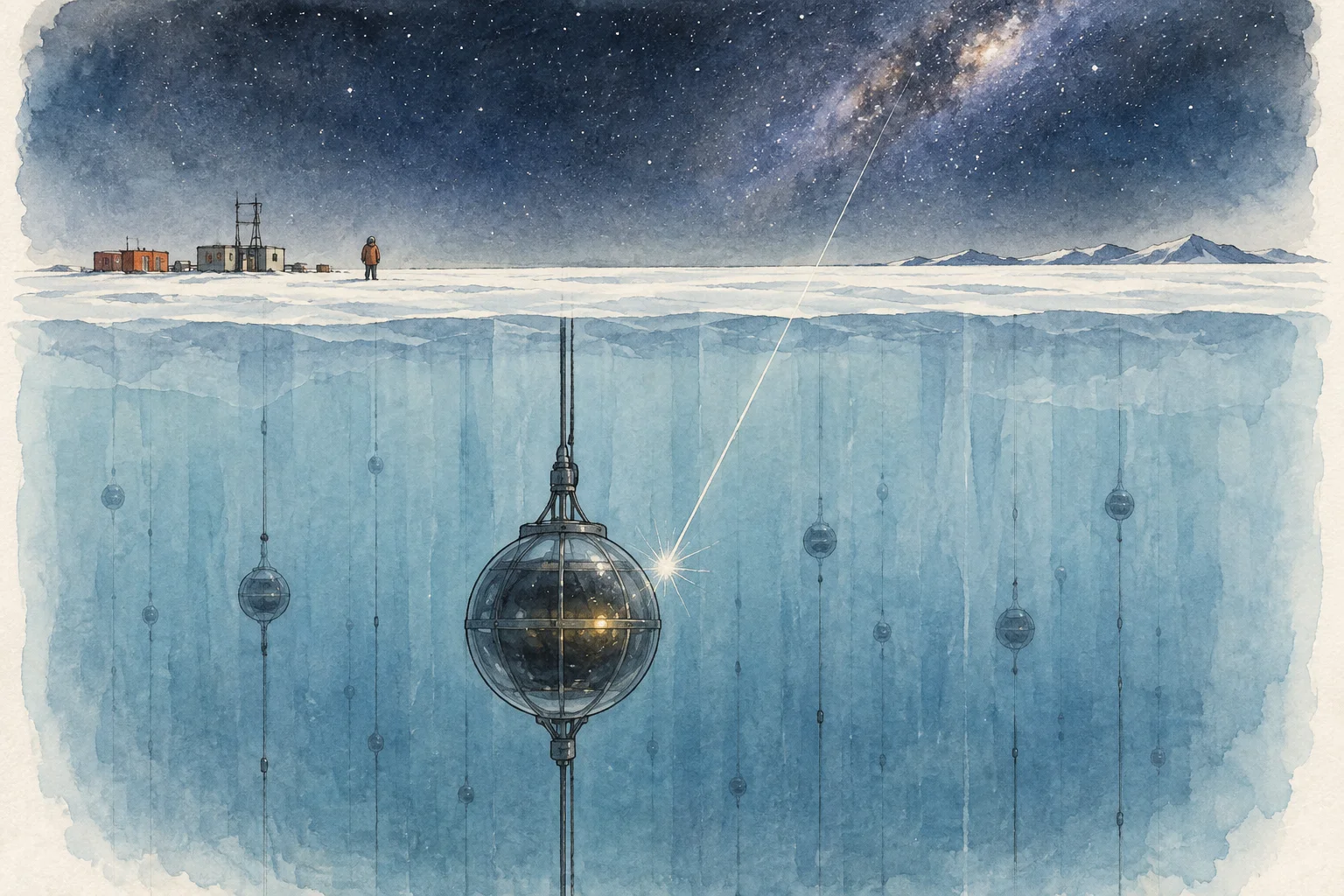
The Belgian-born physicist at the University of Wisconsin-Madison led an international team of researchers and engineers behind the IceCube Neutrino Observatory. His idea, developed in the 1980s, was to use Antarctic ice to detect particles that usually pass through matter unnoticed.
On rare occasions, a neutrino collides with an atomic nucleus, producing light that sensors in the ice can detect. Completed in 2011, IceCube subsequently recorded high-energy neutrinos that researchers determined came from far beyond our solar system. Their rarity makes detection difficult, requiring sensors spread throughout an enormous volume of ice.
These particles offer clues about some of the universe’s most energetic environments. Because they can travel without changing direction or losing energy, they carry information that helps scientists investigate their distant origins.
The Nobel recognises Halzen’s decisive contributions to both the observatory and the discovery of high-energy cosmic neutrinos. Responding to the award, he said his greatest satisfaction came from the recognition it brought to the colleagues who had supported the project.
Sources
- NDTVFrancis Halzen Wins Physics Nobel For Astrophysical Neutrinos' Discovery
- La NacionEl Premio Nobel de Física 2026 fue para el profesor belga Francis Halzen
- El ConfidencialFrancis Halzen, Nobel de Física por el hallazgo de neutrinos de origen astrofísico
- vrtnws.beLe Prix Nobel de physique décerné au Belge Francis Halzen | VRT NWS: le site d'information de référence