science and discovery
Giant bubbles reveal what keeps Andromeda’s gas churning
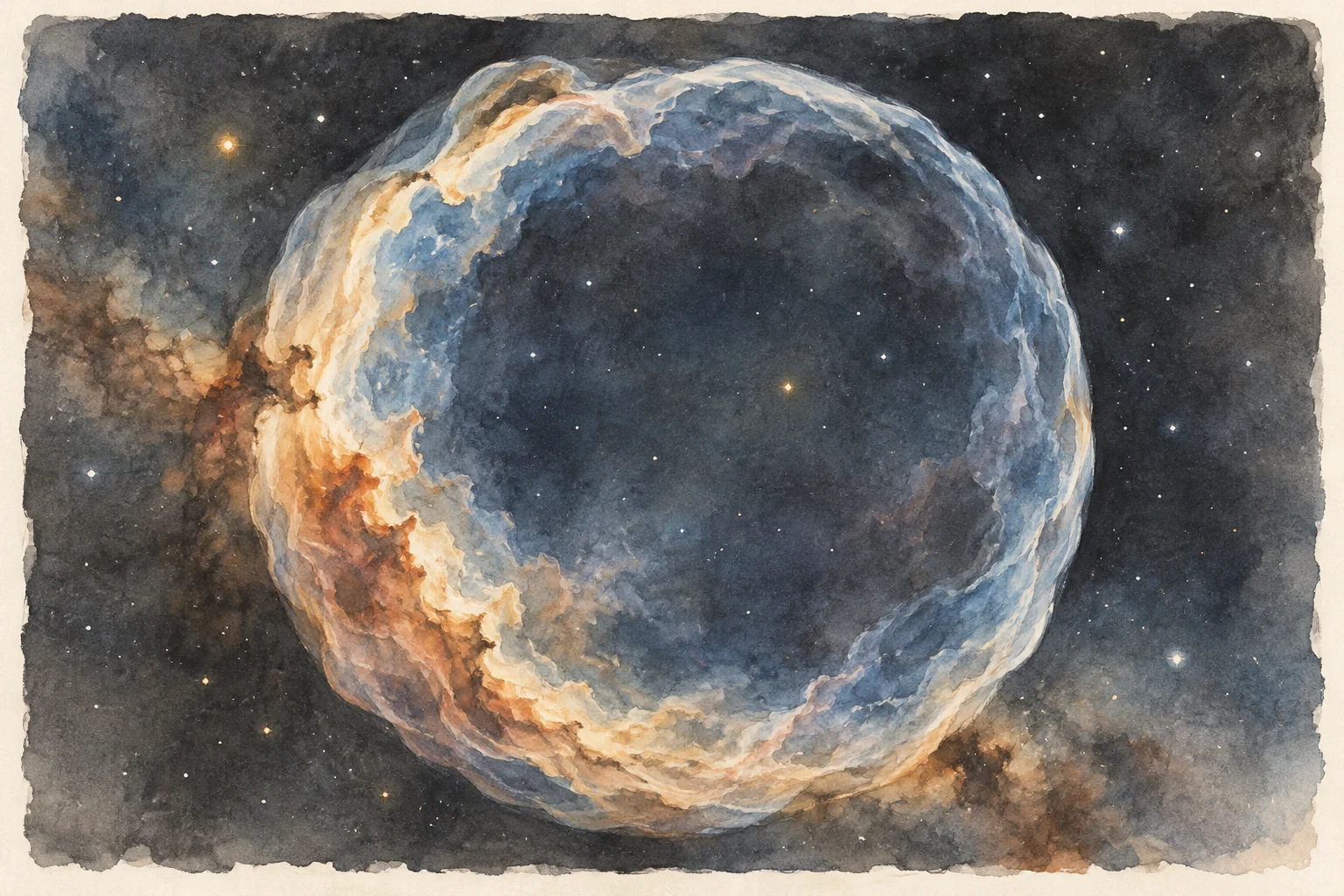
Astronomers have identified 118 enormous gas bubbles in the Andromeda galaxy, providing direct observational evidence that repeated stellar explosions can supply enough energy to keep its gas churning.
The international team, led by researchers at Tsinghua University in China, combined observations from China’s FAST radio telescope and the Karl G. Jansky Very Large Array in the United States. FAST picked up faint, widespread gas, while the US array revealed finer details. Together, they allowed researchers to identify even older, slowly expanding bubbles.
Known as “superbubbles”, these giant cavities are carved out by the activity of massive stars, including the supernova explosions that mark their deaths. Some were estimated to have been expanding for as long as 40 million years.
The team estimated how quickly the bubbles fed energy into surrounding gas and compared this with how quickly turbulent motion lost energy. The rates closely matched across different distances from the galaxy’s centre, supporting a decades-old explanation for what sustains these swirling, irregular movements.
Published in Nature Astronomy on 17 September, the study offers a clearer view of a process that influences star formation and galaxy evolution. Andromeda, about 2.5 million light-years away, also gives astronomers an outside view of a nearby spiral galaxy, helping them better understand our own Milky Way.