science and discovery
Giant footprints offer a glimpse of T. rex on the move
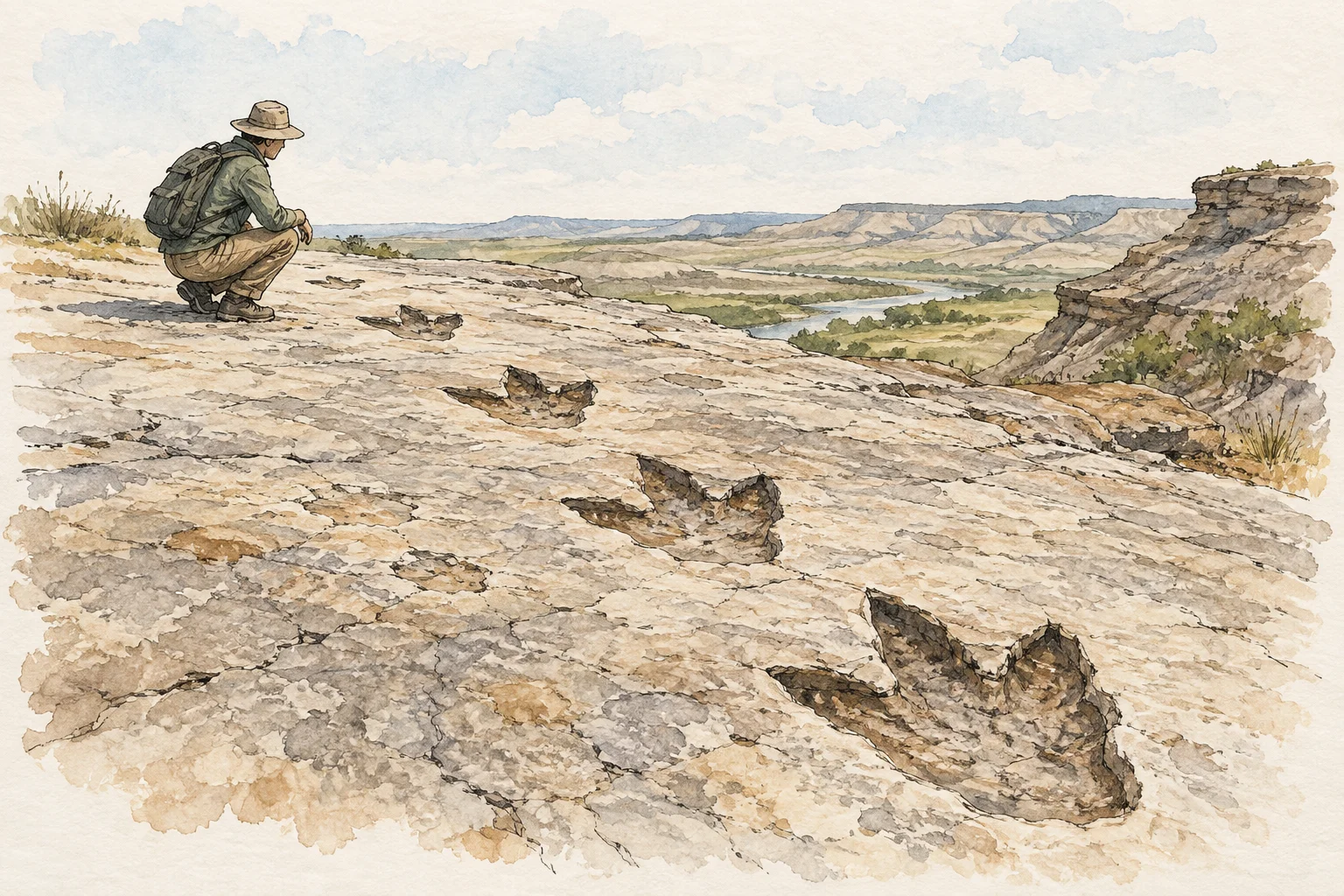
Scientists have identified the first known sequence of footprints probably left by an adult Tyrannosaurus rex. The four prints in North Dakota offer a rare record of the animal moving through its environment about 66.5 million years ago.
Kent Hups, a Colorado high school science teacher and volunteer museum researcher, spotted the first two prints while fossil hunting in the Hell Creek Formation in July 2025. Researchers then searched where the next steps should have fallen and uncovered two more, strengthening the evidence that these were footsteps rather than unusually shaped rocks.
The prints’ enormous size and three slender toes point to T. rex. Of the dinosaurs known from the area, it is the only one whose foot size and shape fit. The study, published September 8 in the Journal of Vertebrate Paleontology, describes all four impressions.
Using stride length and estimated body size, the team calculated a walking speed of about 1.6 metres per second, roughly a person’s brisk walking pace. The prints are not well preserved, so the estimate remains uncertain. It does not indicate the dinosaur’s top speed.
While isolated adult T. rex footprints were already known, a sequence reveals how feet were placed as the animal moved. It preserves something a skeleton cannot: a brief record of life in motion.