technology and innovation
Giant underground air store clears key startup test in China
Two units at what sources describe as the world’s largest salt-cavern compressed-air energy-storage project have completed full-system startup in Jintan, Changzhou, eastern China. The September 12 run verified the equipment’s operational stability and marked a key step toward large-scale use of the technology.
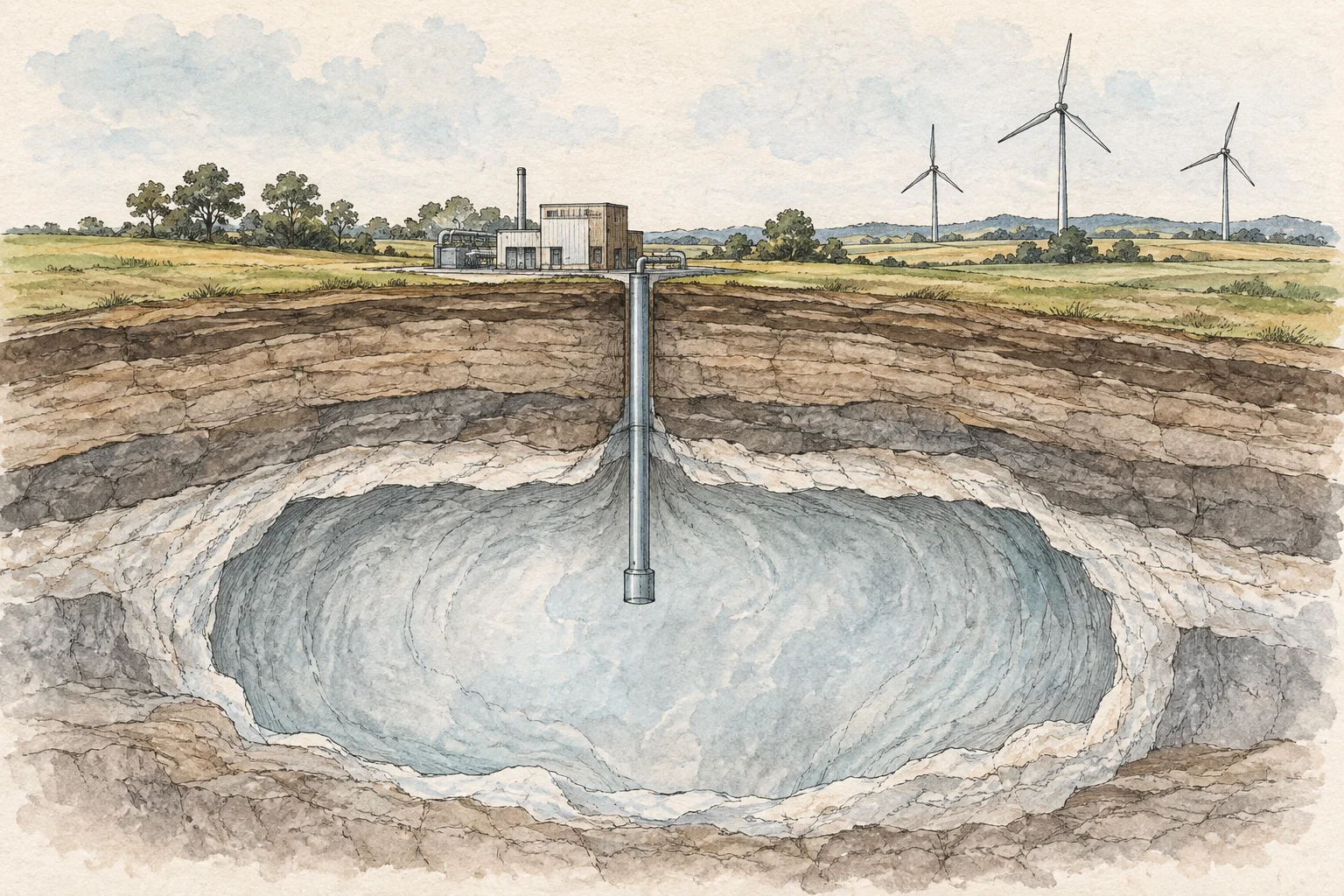
The plant stores surplus electricity when demand is low by compressing air to more than 130 times atmospheric pressure and sending it into caverns about 1,000 metres underground. Heat created during compression is captured in a water-based thermal system. When demand rises, the air is released, reheated and used to drive generators. Because the cycle does not burn fossil fuels, it can generate electricity without direct emissions from combustion.
Each charging cycle can store 2.8 million kilowatt-hours, and the facility is designed for about 330 charge-discharge cycles a year. Its 16 thermal-storage tanks can hold a combined 56,000 cubic metres of water.
The caverns were left by salt mining, in which water dissolves underground salt and the resulting brine is brought to the surface. Salt’s low permeability makes these spaces suitable for holding pressurized air. Once commissioned, the project is expected to help balance electricity supply and demand while allowing the grid to make better use of variable wind and solar generation.