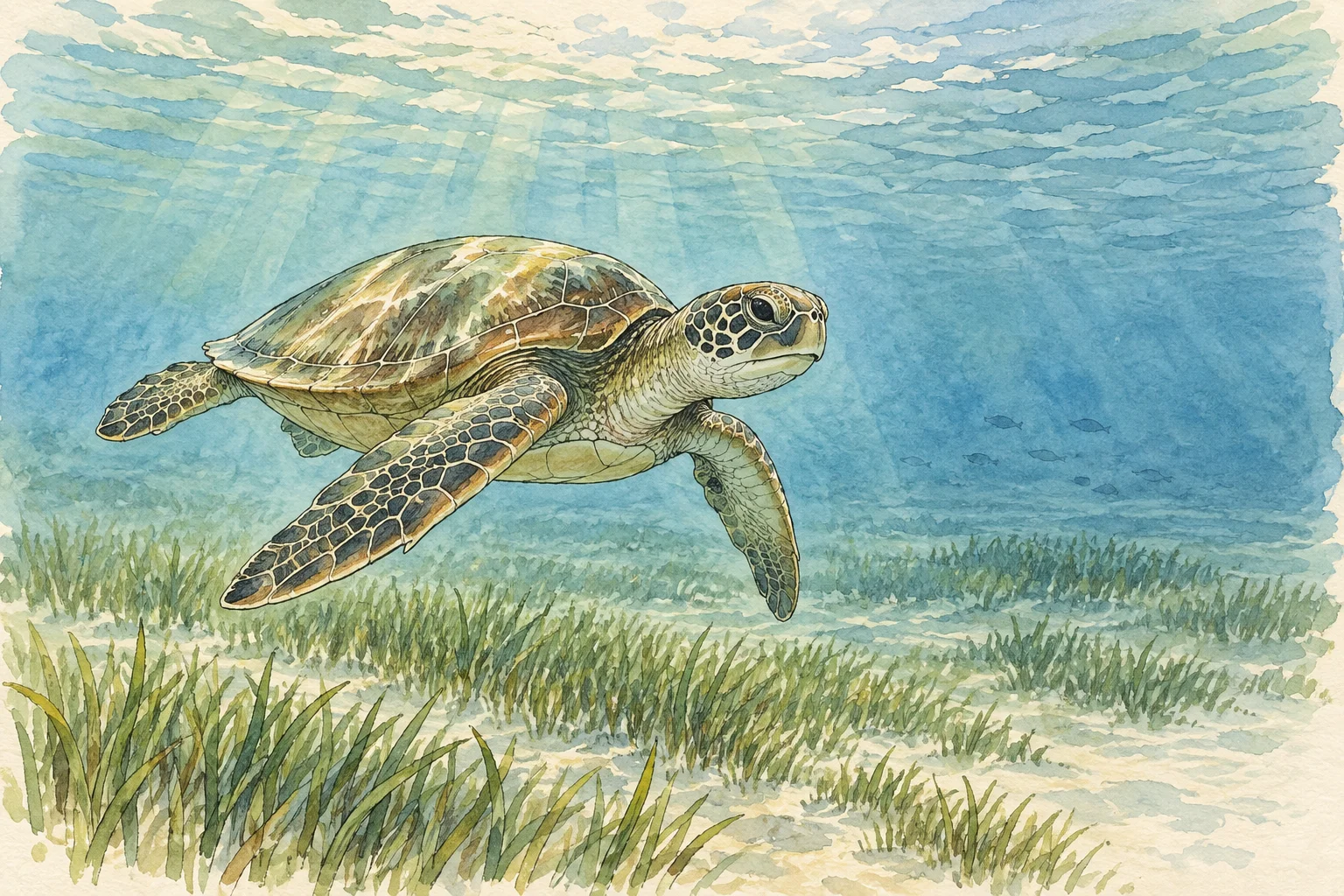
Nature thriving
Green turtles rebound after decades of protection
Green sea turtles are no longer globally classified as endangered, a recovery built on decades of protection for eggs, nesting beaches and ocean habitats. The International Union for Conservation of Nature moved the species to “least concern” in 2025.
In Malaysia’s Sabah state, the results are especially tangible: green turtle nesting on the Turtle Islands has tripled since the 1970s, reaching more than 20,000 nests a year. The islands have been protected since 1977, and Sabah banned consumption of turtle meat and eggs in 1997.
Local communities have helped sustain that work. On Omadal Island, a 20-strong team from a women’s cooperative relocates turtle eggs to a hatchery to protect them from predators and poachers. The group began conservation work with WWF and now funds it itself, putting 10% of revenue from its handicraft and catering business into turtle protection.
The global recovery does not mean every population is safe. Some remain endangered and are still shrinking, while fishing nets, poaching, pollution and climate change continue to threaten turtles. With hatchlings taking around 20 years to reach breeding age, protecting the next generation remains a long-term commitment. The gains in Sabah reflect more than five decades of work, not a quick fix.