science and discovery
Hidden wrinkles reveal Mercury’s greater shrinkage
Scientists have produced a higher estimate of how much Mercury has contracted during its 4.5-billion-year history. A new analysis suggests the planet may have lost roughly 23 kilometres from its diameter, substantially more than earlier surface studies indicated.
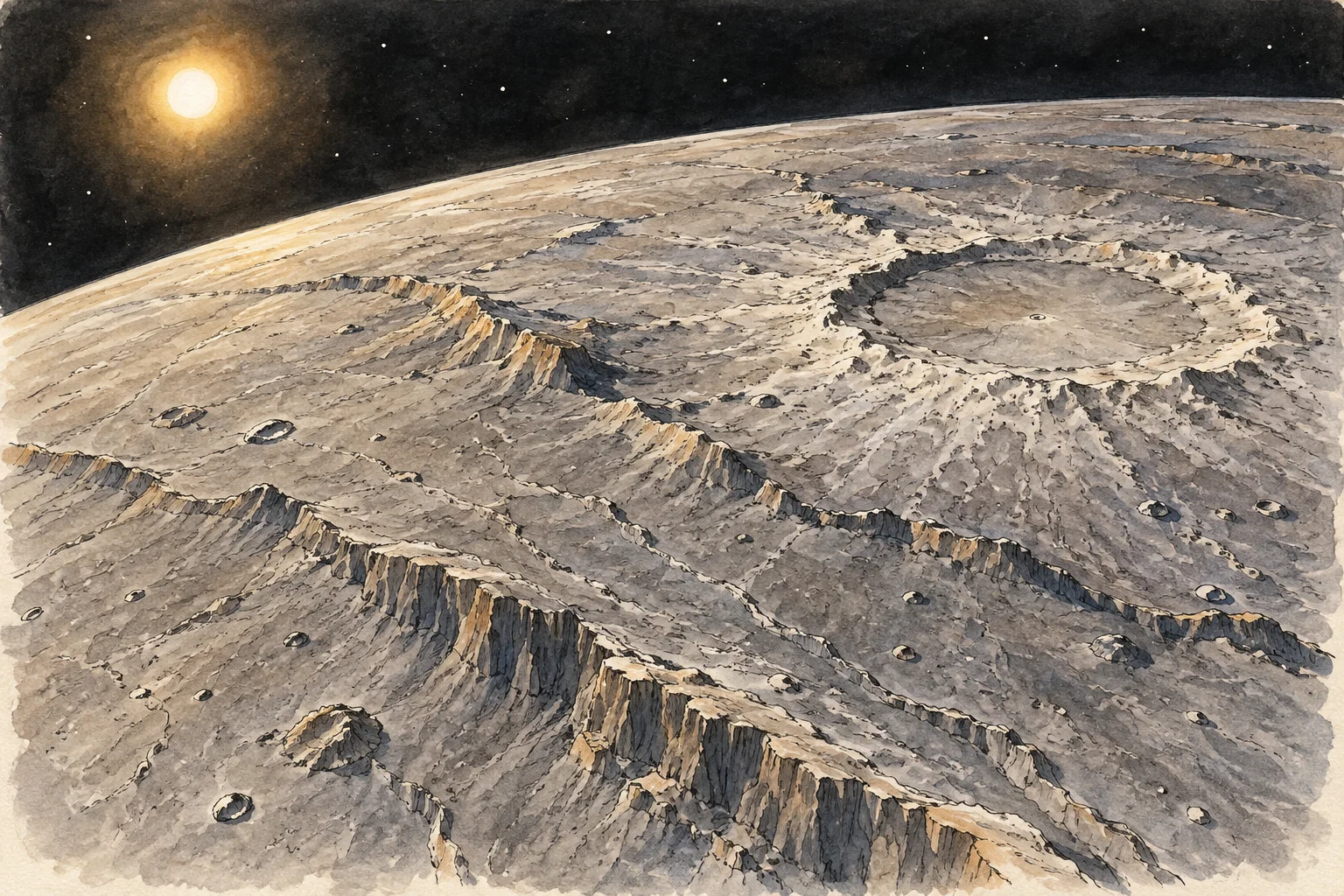
As Mercury’s once-hot interior cooled, the planet contracted and its crust buckled, creating long ridges, cliffs and fractures. Researchers used data from NASA’s MESSENGER spacecraft to map surface roughness and found fewer visible contraction features in heavily cratered terrain than in smoother regions. They concluded that debris from asteroid and comet impacts probably buried many of the planet’s telltale wrinkles.
Accounting for those concealed structures yielded the larger estimate. If confirmed, it could reshape models of Mercury’s interior. Greater contraction may point to a larger metallic core, fewer light elements such as silicon within that core, or a higher temperature when the planet formed.
The estimate remains open to testing. One independent scientist noted that contraction on this scale might be expected to produce more obvious, planet-wide buckling. The BepiColombo mission is expected to place two orbiters near Mercury in November, providing the first comprehensive global measurements of its topography and improved data on surface composition, gravity and internal structure.