science and discovery
Hubble and Webb reveal 27 tiny frozen worlds beyond Neptune
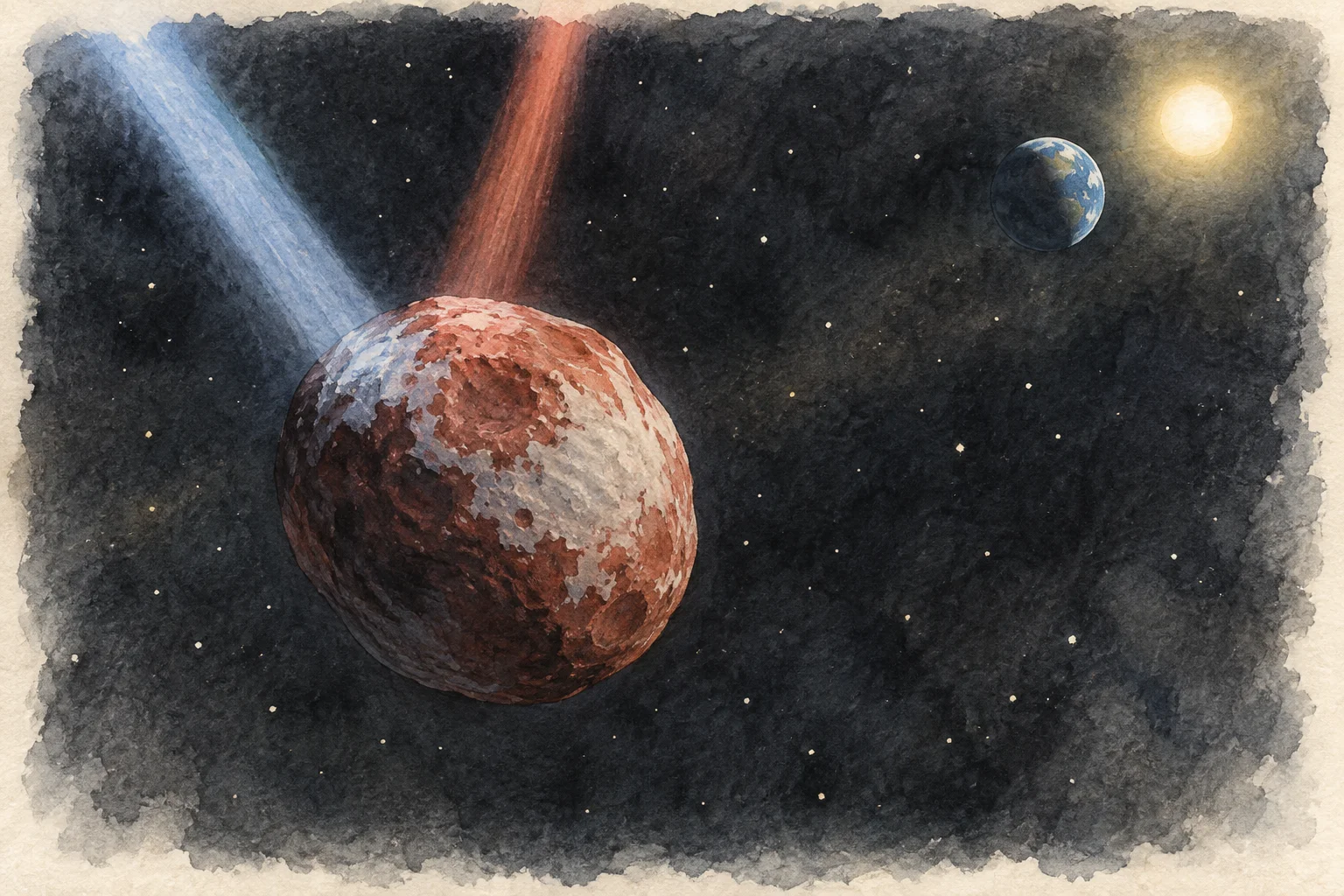
Astronomers have directly detected and studied 27 exceptionally faint icy bodies beyond Neptune, including one only about 5 kilometers wide. The smallest is roughly five times smaller than objects detectable with the most sensitive ground-based telescopes.
For the first joint survey of these distant objects by Hubble and Webb, the telescopes observed the same patch of sky at the same time. Hubble measured visible light while Webb collected infrared light, allowing researchers to estimate the objects’ colors, surface composition, sizes and orbits. The findings were reported in two papers in The Astronomical Journal.
These frozen remnants come from an early stage of planet formation, before small building blocks called planetesimals merged into full-sized worlds. Researchers found fewer very small bodies than some models predicted, although the sample covers only one field of sky. Two groups with very different orbital histories also had surprisingly similar size patterns, suggesting planetesimal formation may produce comparable results under varied conditions.
The smallest objects also shared the color relationships of their larger relatives. Scientists had expected repeated collisions to alter their surfaces more substantially. The result suggests either that collisions were less common than assumed or that these bodies somehow retained their original compositions despite them. Further surveys will be needed to determine whether the patterns extend across the wider outer solar system.
Sources
- MashableJames Webb Space Telescope reveals surprises about objects beyond Neptune
- Science @ NASANASA's Hubble, Webb Find Far-out Solar System Objects 'Remember' Past - NASA Science
- Nature World NewsHubble and Webb Teamed Up on Distant Solar System Bodies and Found Fewer Tiny Ones Than Some Models Predicted
- Sci.News: Breaking Science NewsHubble and Webb Team Up to Spy Tiny Frozen Worlds beyond Neptune