science and discovery
Hubble reveals an early galaxy merger that helped build the Milky Way
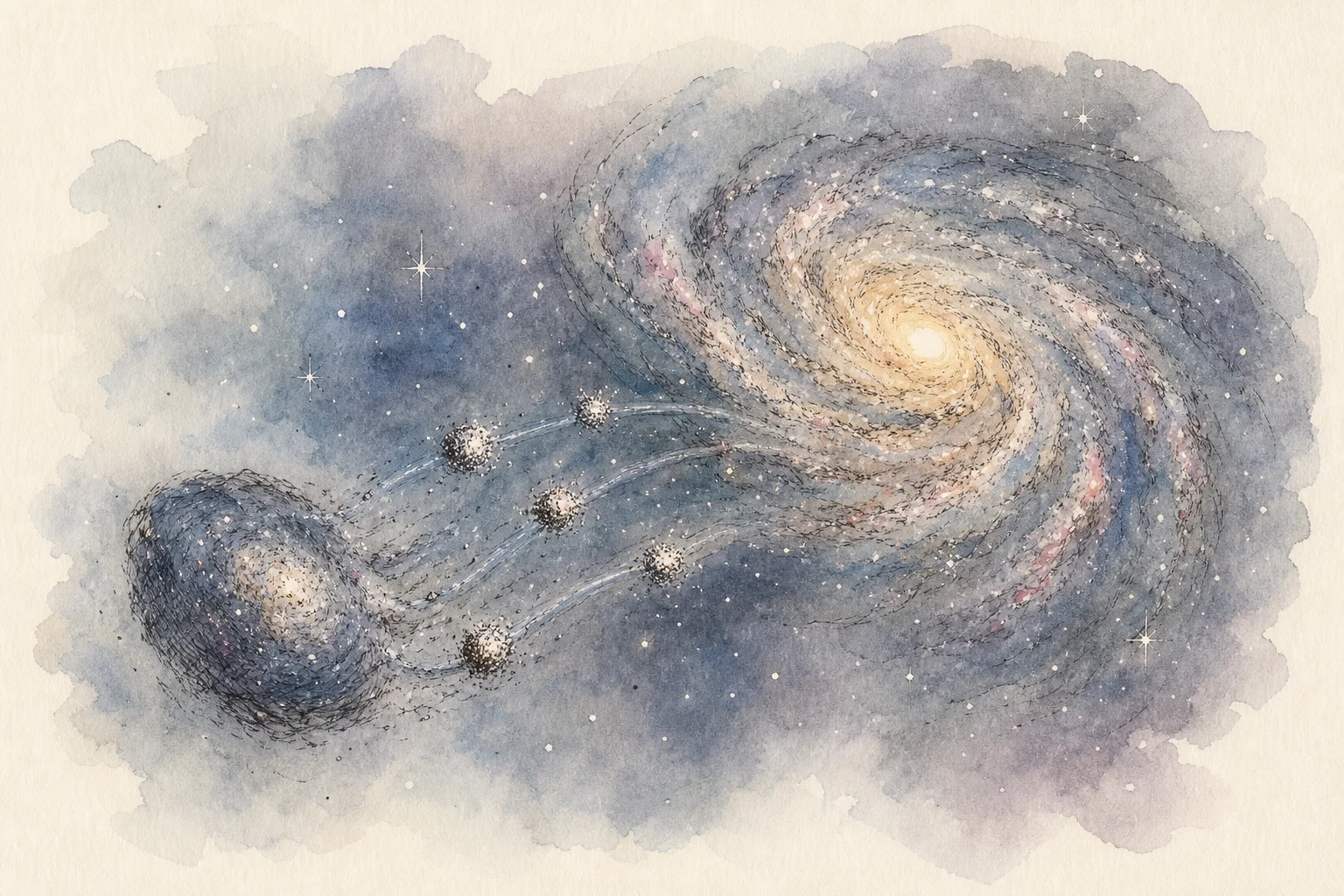
Astronomers have identified evidence that the young Milky Way absorbed a dwarf galaxy about 11.8 billion years ago, extending the reconstructed history of our galaxy’s mergers by roughly 1.8 billion years. The event occurred only about two billion years after the Big Bang and shows that stars formed beyond the Milky Way contributed to its earliest growth.
The team examined Hubble observations of 39 globular clusters within the galaxy’s inner 20,000 light-years, combining precise estimates of their ages and heavy-element content with measurements from ESA’s Gaia mission. The analysis separated the clusters into three populations: those formed in the Milky Way, those associated with the later Gaia-Sausage-Enceladus merger, and a distinct group linked to a separate, earlier merger.
Researchers named the lost dwarf galaxy Low-energy-Kraken-Heracles, or LKH, acknowledging three earlier studies that proposed such an event. They estimate it contained about 500 million solar masses in stars, a substantial share of the Milky Way’s stellar mass at the time. Published in Nature Astronomy, the finding sharpens a once-blurred chapter of galactic history. Further studies of globular clusters could reveal other ancient mergers and build a fuller account of how the Milky Way took shape.