science and discovery
Human brain organoids mature for more than five years while keeping biological time
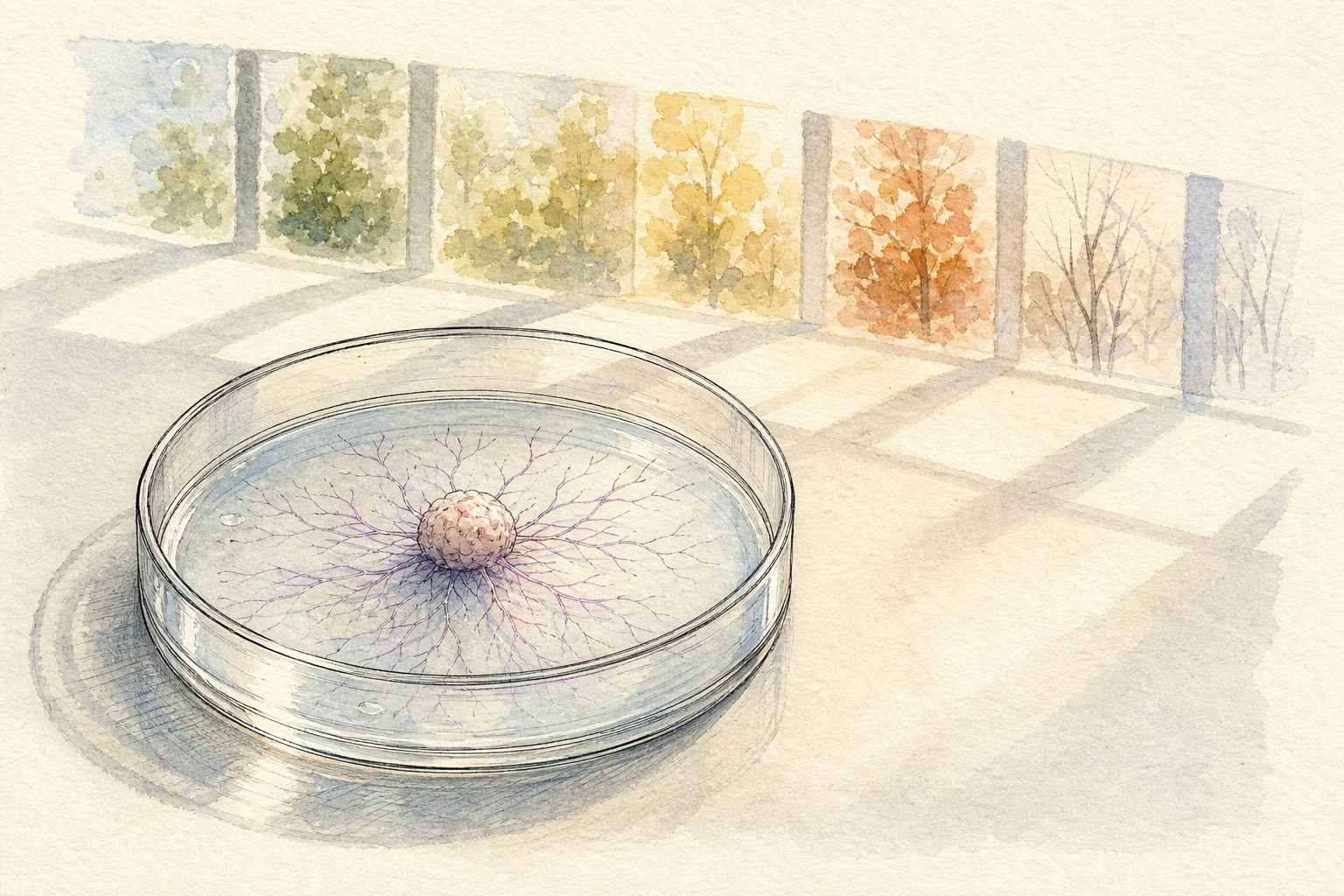
Researchers have sustained human cortical organoids for more than five years, allowing the laboratory models to reproduce developmental stages that shorter-lived cultures could not reach. The record-setting work suggests these tiny clusters of human cells mature according to an internal biological clock that closely follows aspects of natural brain development.
The team studied 110 organoids and more than 424,000 individual cells. Patterns of gene activity and DNA methylation, a chemical marking process used to estimate biological age, tracked the cultures’ chronological ages. Postnatal-like signatures appeared after roughly a year, and neurons remained detectable in organoids approaching six years old.
A culture fluid formulated to support electrical activity also helped preserve neuronal function. At one year, all nine organoids grown with this medium produced coordinated network bursts, while none of eight conventionally grown controls did.
In another experiment, older progenitor cells were combined with much younger cells. The older cells responded to their new surroundings but did not begin development again. Instead, they rapidly produced later-forming neuron types, indicating that they retained a cellular memory of stages already completed.
These organoids are not complete brains. They lack blood vessels, sensory input and a body, and cannot think or feel. They are research models that could provide access to later periods of human brain maturation that have been difficult to study directly.
Sources
- The DebriefScientists Grew Human Brain Organoids for Years and Discovered They Keep Track of Time
- Medical DailyLab-Grown Human Brain Tissue Survived Five Years and Kept an Internal Record of Every Month It Aged
- New York PostWorld's oldest lab-grown human brains grow for seven years recording 'passage of time'