health and healing
Immunotherapy nearly halves relapses in high-risk childhood leukaemia trial
Replacing two intensive chemotherapy courses with immunotherapy nearly halved relapses among children with a specific high-risk form of acute lymphoblastic leukaemia, a blood cancer, in a large international trial. Serious infections were also much less common.
More than 700 children were randomly assigned to standard treatment or a modified approach using the drug blinatumomab. The study involved over 100 centres in eight countries, and its results were published in the New England Journal of Medicine.
After four years, the cancer had returned in just over 21% of the standard-treatment group, compared with just under 12% of the immunotherapy group. Serious infections affected almost 70% of children receiving the intensive chemotherapy, versus fewer than 25% with the replacement treatment.
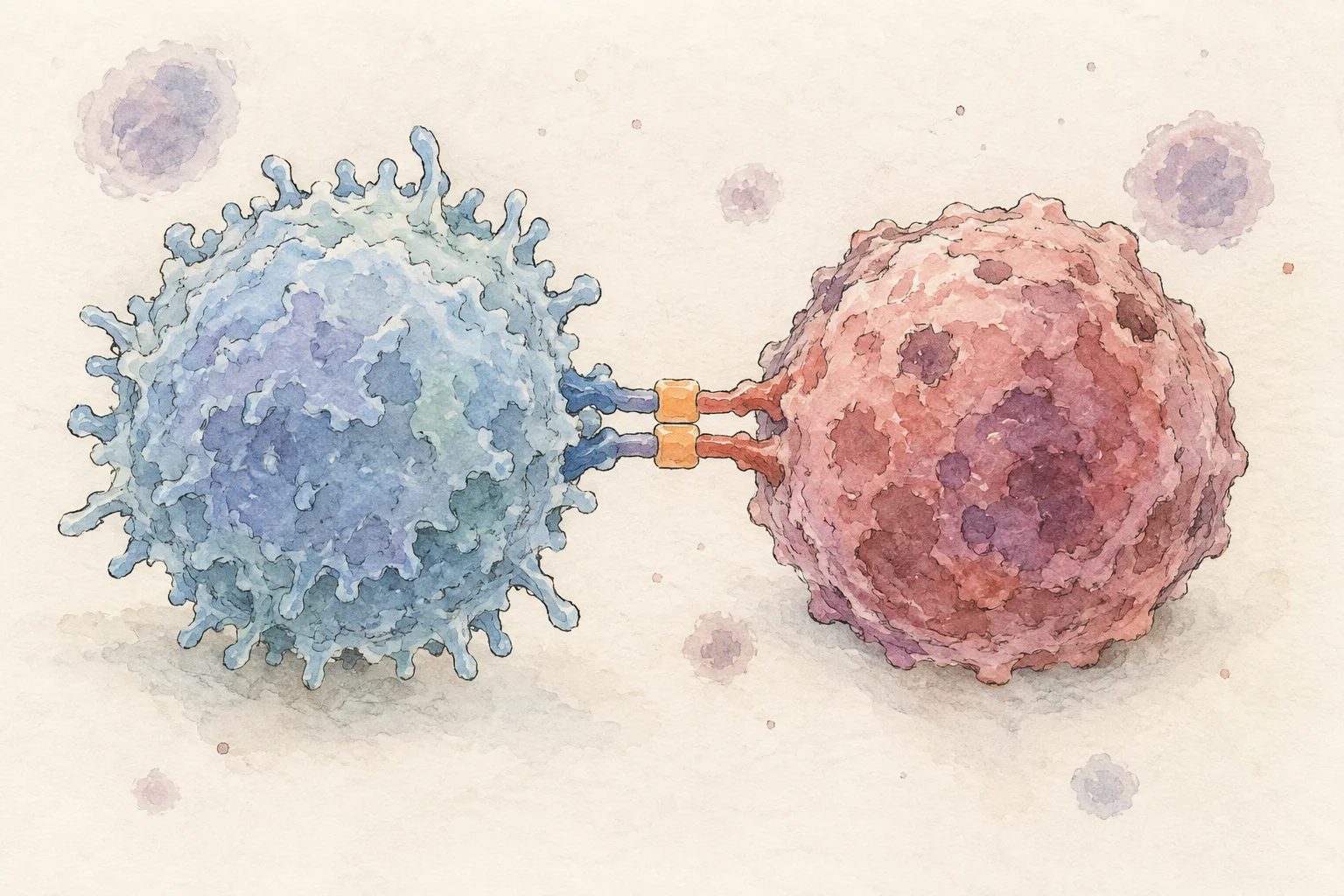
Children at high risk of relapse usually receive especially intensive chemotherapy to try to prevent the cancer’s return. Blinatumomab instead brings the body’s immune cells into contact with leukaemia cells, helping them recognise and destroy the cancer. In this trial, it replaced only part of chemotherapy, not the whole treatment.
The findings do not apply to every form of leukaemia. Immunotherapy can also cause side effects, including problems affecting the nervous system, though severe cases were rare in the trial. At the time of reporting, blinatumomab was not approved in the EU for children’s initial treatment.
Sources
- ANSA.itLeucemia acuta pediatrica, l'immunoterapia dimezza le recidive - Focus Tumore news
- rtl.deWeniger Chemo, weniger Rückfälle! Krebs-Studie macht Eltern von kranken Kindern Mut
- Informationdienst Wissenschaft e.V. - idwDurchbruch bei der Therapie von Hochrisiko-Leukämie im Kindesalter
- insalutenews.itLeucemia pediatrica, l'immunoterapia dimezza le ricadute: una svolta per i bambini ad alto rischio