technology and innovation
India puts EOS-05 on course to become its first geosynchronous imaging satellite
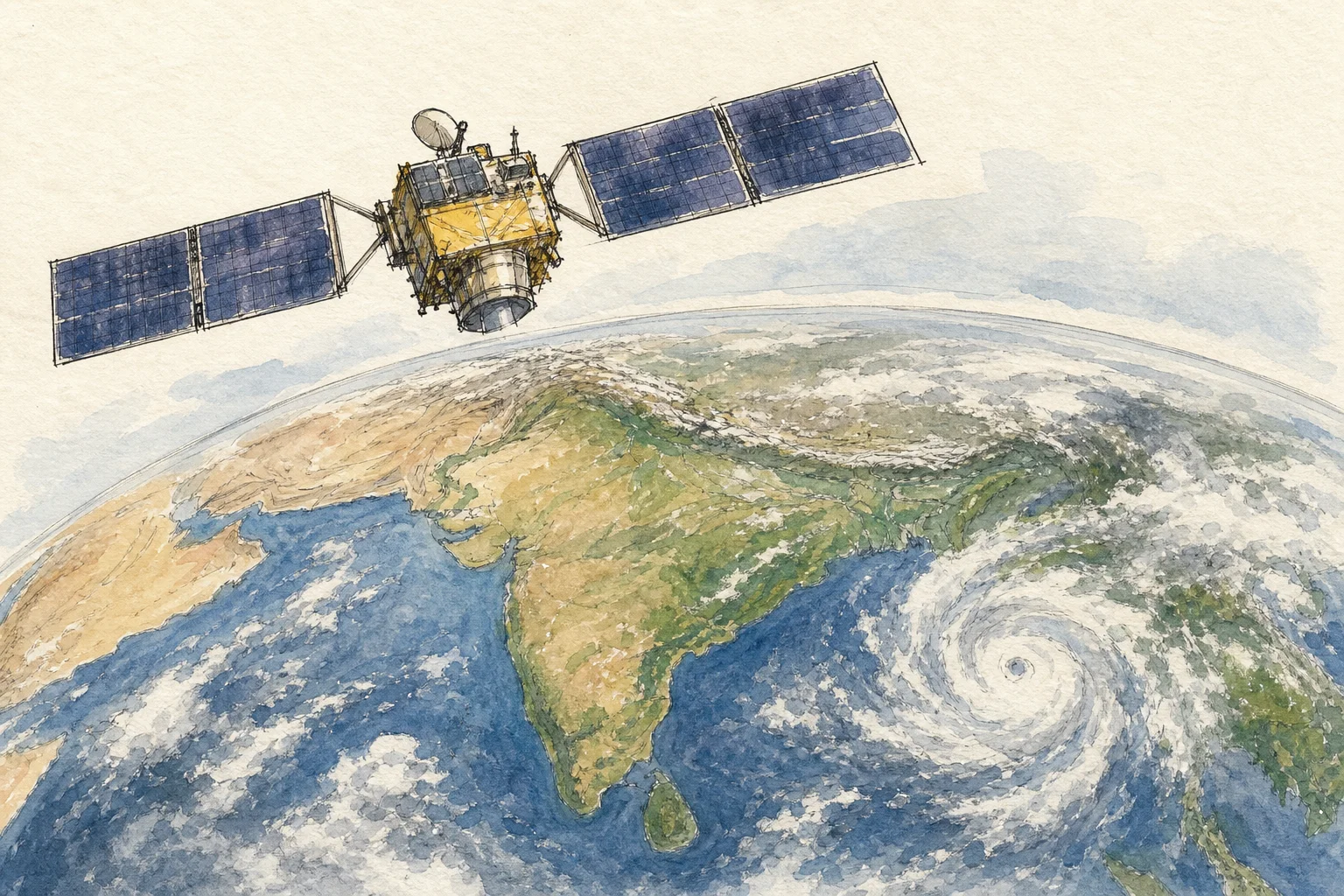
India has successfully placed EOS-05 into its intended transfer orbit, advancing a mission designed to provide the country’s first dedicated imaging capability from geosynchronous orbit. The GSLV-F17 rocket launched from the Satish Dhawan Space Centre and precisely injected the spacecraft into a sub-geosynchronous transfer orbit. Officials said the satellite was healthy and its solar panel had deployed successfully.
Further manoeuvres are required to raise EOS-05 to its operational position roughly 36,000 kilometres above Earth. Once there, its movement will match Earth’s rotation, allowing frequent observation of large areas instead of waiting for the periodic return of a satellite in low Earth orbit.
Weighing 2,367 kilograms, EOS-05 is the heaviest satellite yet carried by India’s GSLV. The launch was the rocket family’s 19th flight and ISRO’s first successful mission of 2026, following a failed PSLV launch in January. It also marks progress after a 2021 attempt to launch an earlier geosynchronous imaging satellite ended because of an anomaly in the rocket’s cryogenic upper stage.
Equipped with a 700-millimetre telescope and multiple imaging bands, EOS-05 is intended to support disaster monitoring, agriculture, forestry, environmental observation and strategic needs. Its planned nine-year operating life could provide sustained, near-real-time views of fast-changing conditions.
Sources
- Daily News and Analysis (DNA) IndiaGSLV-F17 Launch: PM Modi lauds ISRO, says mission 'reflects excellence and growing capabilities'
- The TribuneIndia gets 'eye in sky' as ISRO launches first imaging sat into orbit - The Tribune
- Jammu Kashmir Latest News | Tourism | Breaking News J&KEye in sky: ISRO launches advanced earth observatory satellite - Daily Excelsior