science and discovery
Indian rock links microbial signatures to an age of 3.5 billion years
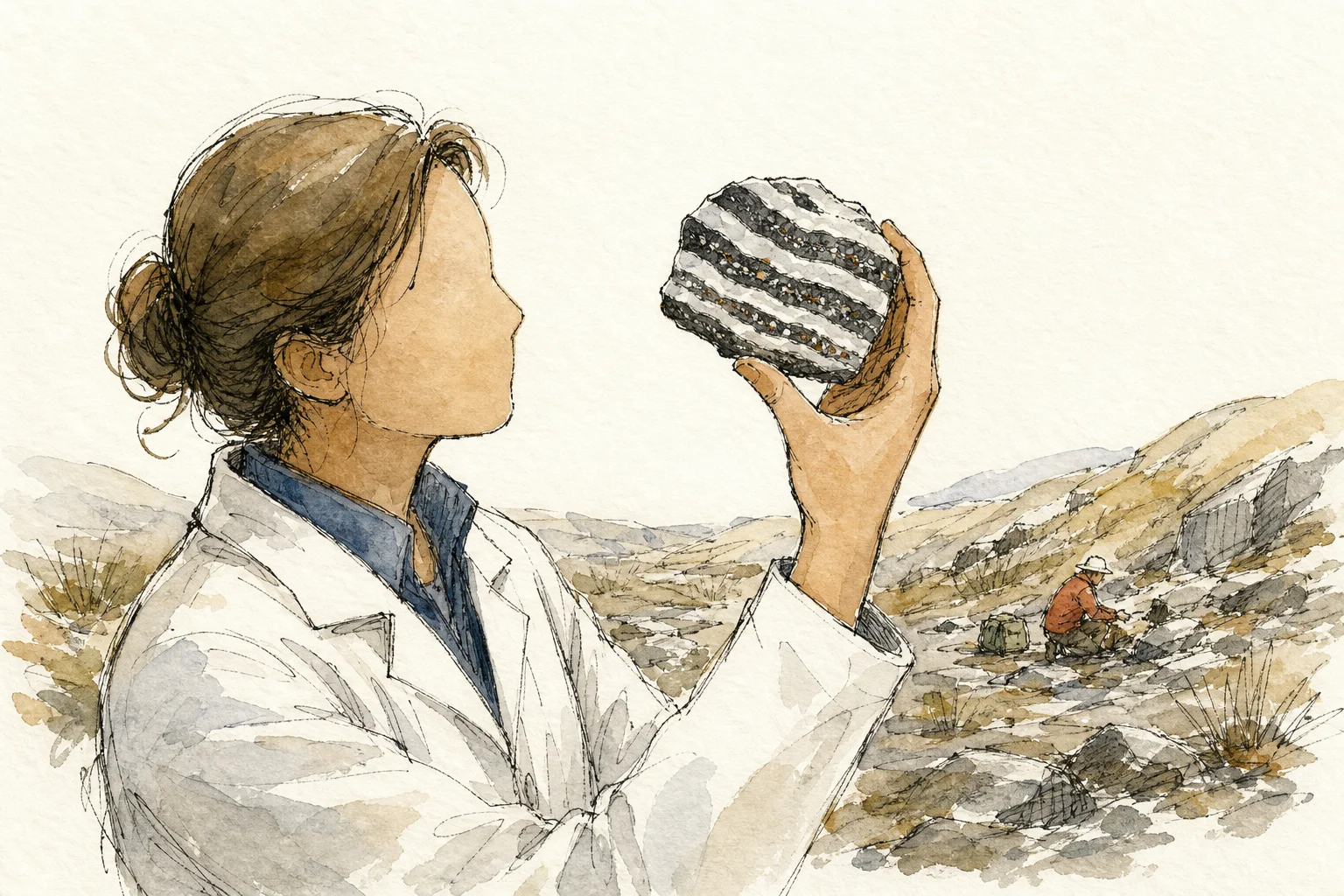
A black-and-white banded rock from eastern India has provided an unusually strong link between signs of microbial life and a radiometric age of about 3.497 billion years. Researchers describe it as the oldest directly dated rock with a confirmed biosignature, based on several chemical and structural clues reported in the peer-reviewed Proceedings of the National Academy of Sciences.
The chert came from Bhitardari in the Singhbhum Craton, an ancient block of continental crust spanning parts of Jharkhand and Odisha. It contains repeated, extremely fine layers of carbon-rich material alternating with silica, a structure consistent with the remains of a microbial mat.
Because chert cannot be dated directly, the team examined eight zircon crystals embedded among its layers. Four produced matching uranium-lead ages of roughly 3.5 billion years. Their tiny, needle-like shapes suggest they arrived as fresh volcanic ash while the rock was forming, rather than being eroded from older material.
Raman spectroscopy indicated that the layered carbon was original to the rock and had remained distinct from graphite deposited later in cracks. Its carbon-isotope balance was also characteristic of biological carbon fixation.
Each clue alone would be insufficient, and further research is needed to confirm interpretations of the microbes’ metabolism. But together, the evidence offers a particularly well-dated record of established microbial ecosystems on the early Earth.