science and discovery
Intact hoard of 2,600 medieval silver coins opens a window onto 15th-century trade
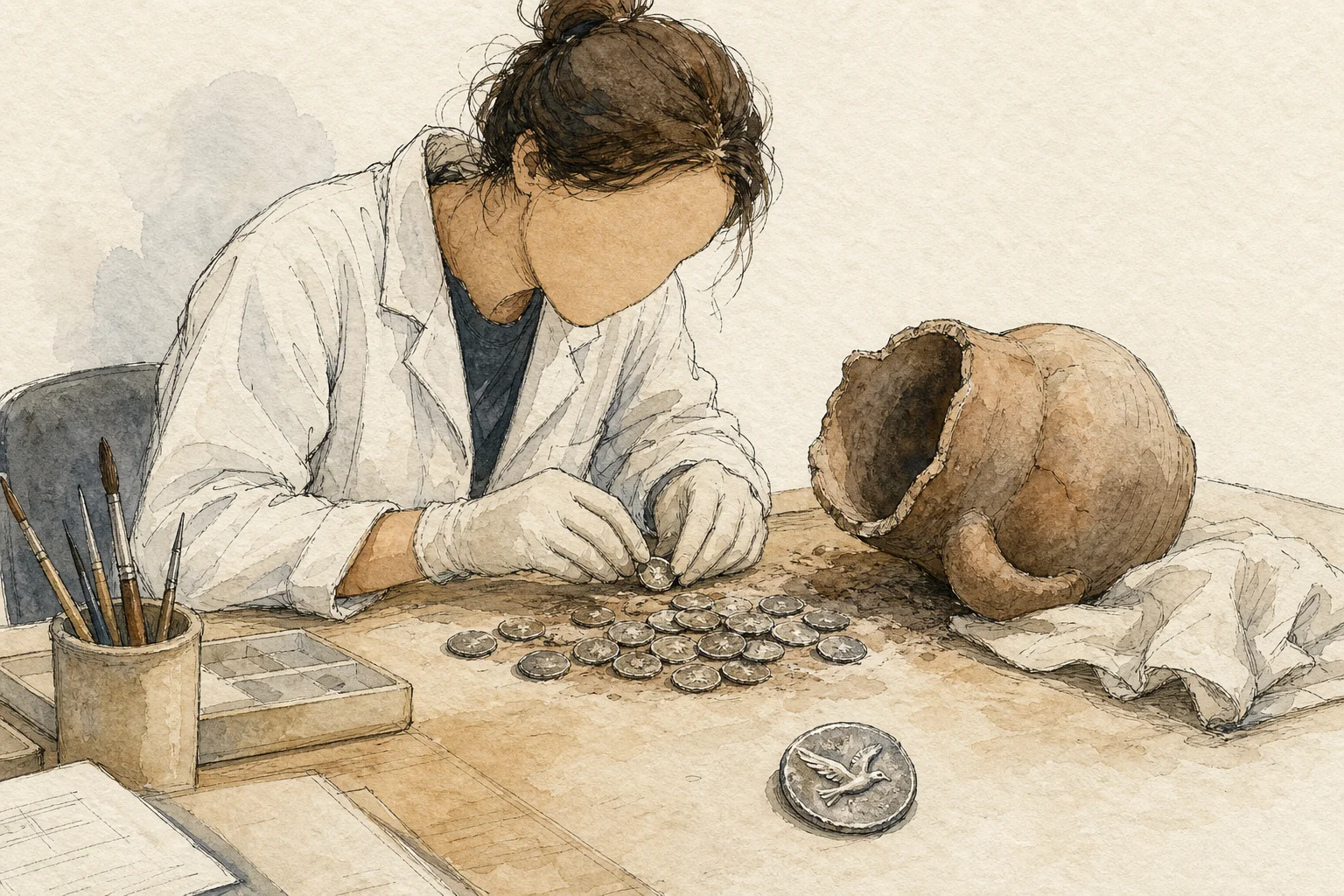
Archaeologists in Kolomna, in Russia’s Moscow region, have recovered an intact hoard of more than 2,600 silver coins from the first half of the 15th century. The coins had remained undisturbed for roughly 600 years inside a locally made ceramic jug buried near the city’s kremlin.
The Institute of Archaeology of the Russian Academy of Sciences made the discovery during rescue excavations ahead of construction work. Researchers describe it as the largest complete coin collection of its period available for study. Unlike many hoards dispersed after discovery, every coin remains together, preserving evidence about how money was minted and circulated in this regional market.
Most of the coins were issued under Grand Princes Vasily I and Vasily II. The collection includes locally minted pieces showing a flying bird and more than 350 previously unknown varieties of Kolomna coinage. Studying such a large, unified group could help specialists reconstruct local minting practices across at least 15 years.
The hoard represented about 13 rubles, enough at the time to buy roughly two urban houses. Its owner and the reason it was buried remain unknown. Researchers tentatively connect its concealment to the plague outbreaks of 1425 to 1427. After conservation and study, the coins are expected to join the collection of the Kolomna-Zaraysk museum reserve.