Science and discovery
Lab study finds a weak point in dementia-linked protein tangles
Researchers have inhibited the growth of dementia-linked protein fibres in laboratory experiments by blocking a small contact point on tau. The finding offers a more precise target for investigating how to interrupt the spread of misshapen proteins.
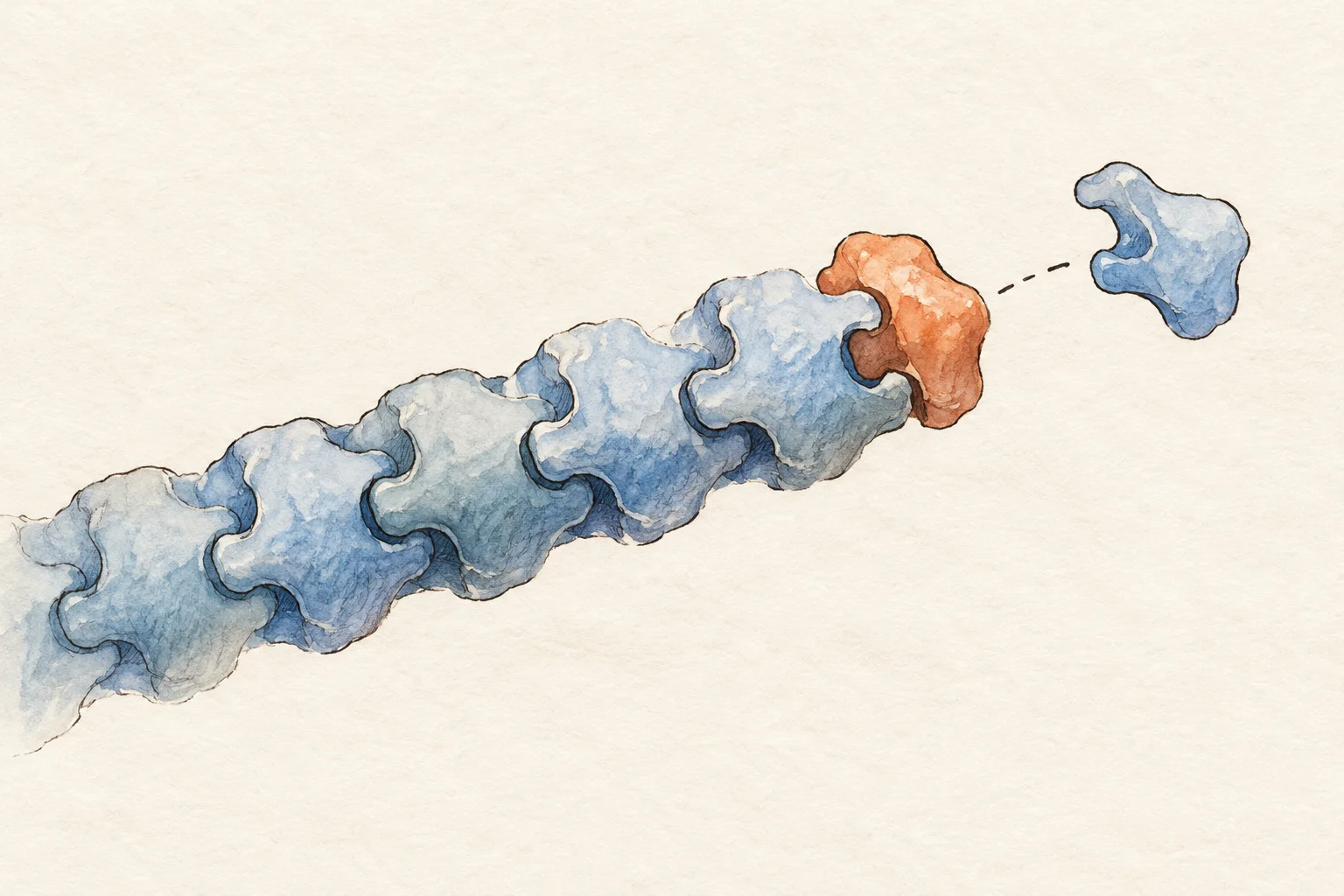
Tau normally helps support the internal framework of nerve cells. In Alzheimer’s disease and frontotemporal dementia, it can fold abnormally and accumulate in tangles, recruiting other tau molecules into the same shape.
The team, from Northwestern University and the University of California, Santa Barbara, found that incoming tau attached to existing fibres at one dominant “hotspot” before aligning with the growing structure.
Water surrounding that spot appears to help drive the process. Experiments and computer simulations indicated that a distinctive cap of water is released when tau molecules meet, helping them bind together. Adding a chemical tag to block the hotspot inhibited fibre growth, while blocking other locations had much less effect.
This is an early laboratory result, not a treatment for dementia. The experiments used a shortened, engineered form of tau carrying a disease-associated mutation. Researchers still need to establish whether the mechanism holds across different forms of tau and whether it can be safely disrupted in the brain.