nature thriving
Leatherback turtles return to nest on Panama’s Pacific coast after nearly a decade
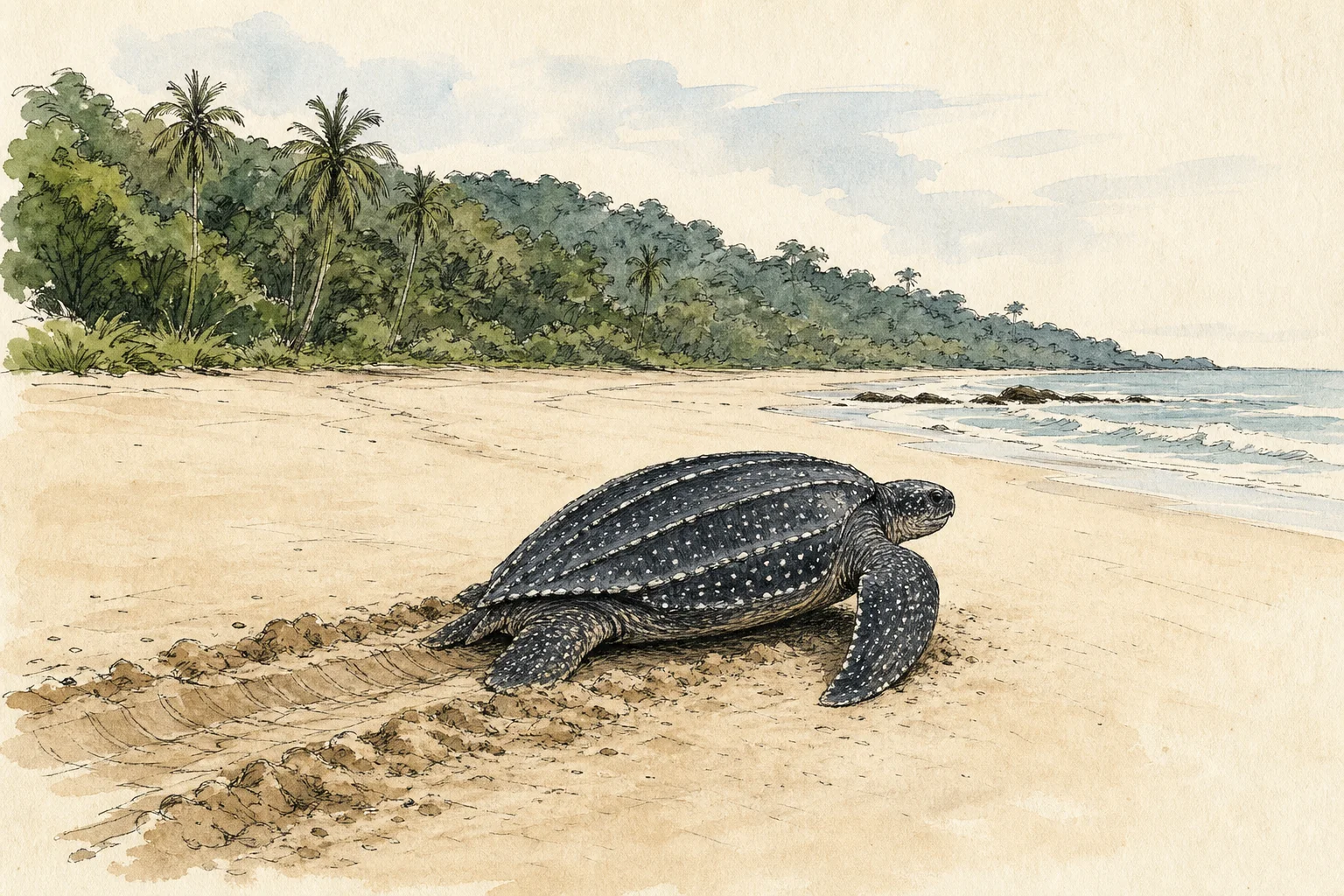
Leatherback turtles have returned to nest on Panama’s Pacific coast after almost a decade without a confirmed record. Three nesting events were documented this season on El Fondiaderito, a remote beach near Jaqué in Darién province, according to Panama’s Environment Ministry. The country’s previous confirmed Pacific-coast nest was reported in Veraguas in 2017.
Residents, members of a local marine turtle and biodiversity protection group, and ministry conservation staff moved 178 eggs to an incubation nursery. The measure is intended to reduce risks from predators and beach erosion. Hatching is expected in September or October, although that outcome is not yet assured.
Leatherbacks are the world’s largest sea turtles and are considered critically endangered. In parts of the eastern tropical Pacific, their populations have fallen by more than 95 percent since the 1980s. A Panamanian official estimated that fewer than 500 adult nesting females remain across the region. The turtles face pressures including accidental capture in fisheries, nest removal, marine pollution, coastal development and climate-related changes to nesting beaches.
That makes the Darién records scientifically valuable as well as encouraging. Protecting the eggs gives this nesting season a better chance, while monitoring the site can help conservation teams understand whether leatherbacks are beginning to use Panama’s Pacific beaches again.