science and discovery
Many-legged fossil illuminates insects’ move from water to land
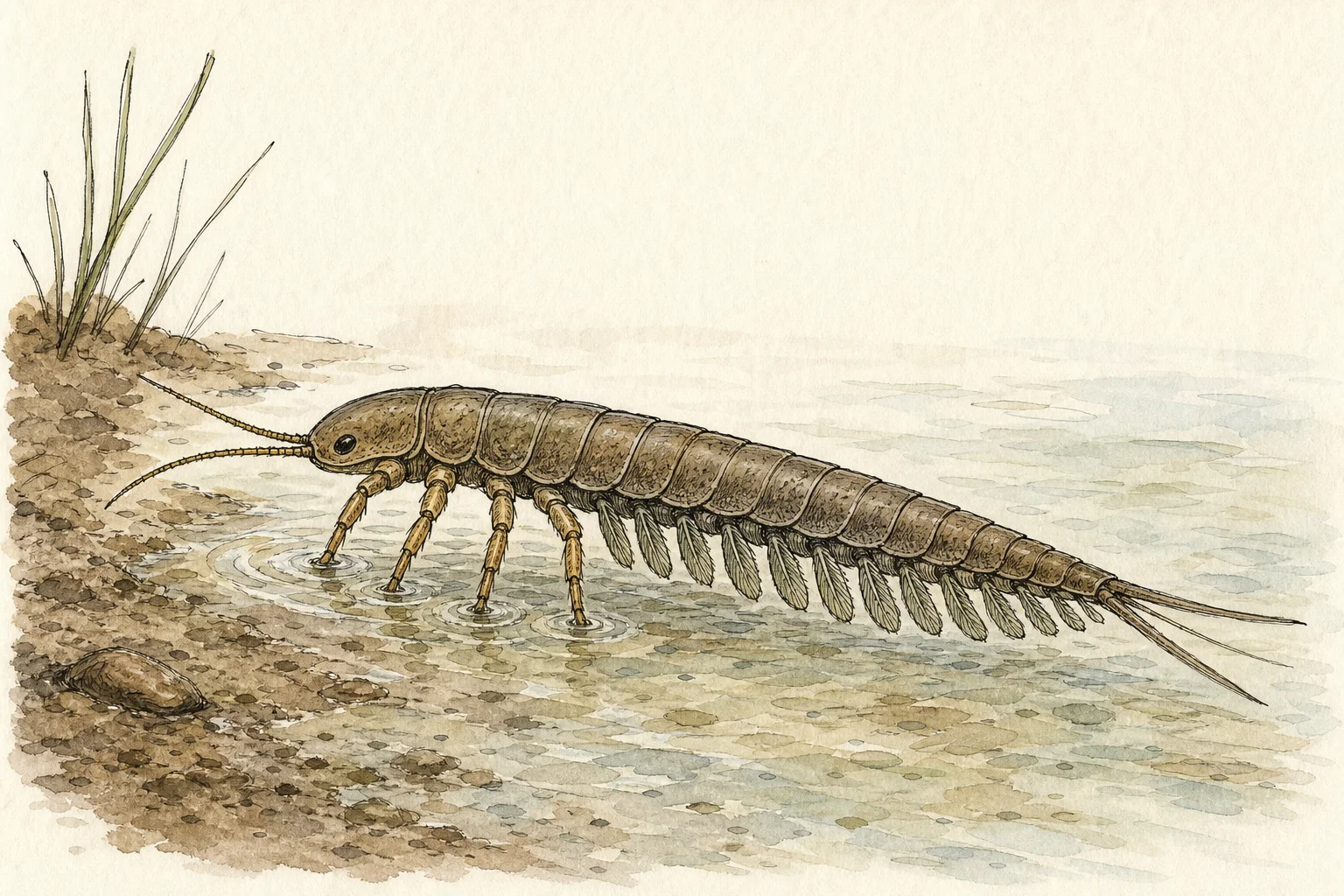
Researchers have identified a 324-million-year-old fossil from West Texas as an early-diverging insect with a body unlike that of any insect alive today. Chosha praecursor had the familiar three pairs of thoracic walking legs, but also nine pairs of short abdominal legs, bringing its total to 24. Some rear limbs carried flattened, grooved, paddle-like structures, suggesting a semiaquatic way of life.
The specimen was collected from shale north of Big Bend National Park in 1985 and initially mistaken for a young crustacean. It remained in a museum collection until researchers revisited it. Cross-polarized light imaging revealed details obscured in the dark fossil, including antennae, a three-segmented thorax, an egg-laying structure and a central terminal filament. A comparison with living and extinct arthropods strongly favored its placement near the base of the insect evolutionary tree rather than among crustaceans.
The team also reassessed a Devonian fossil from Scotland and two undescribed Carboniferous specimens from Illinois. Together, these fossils reveal that early wingless insects had more varied body plans than their modern six-legged descendants. They also help narrow the long-standing “hexapod gap,” a sparse stretch of the fossil record that has made it difficult to reconcile physical evidence with molecular estimates of when insects first diversified.