science and discovery
More than 500 Bronze Age graves uncovered along Romanian railway route
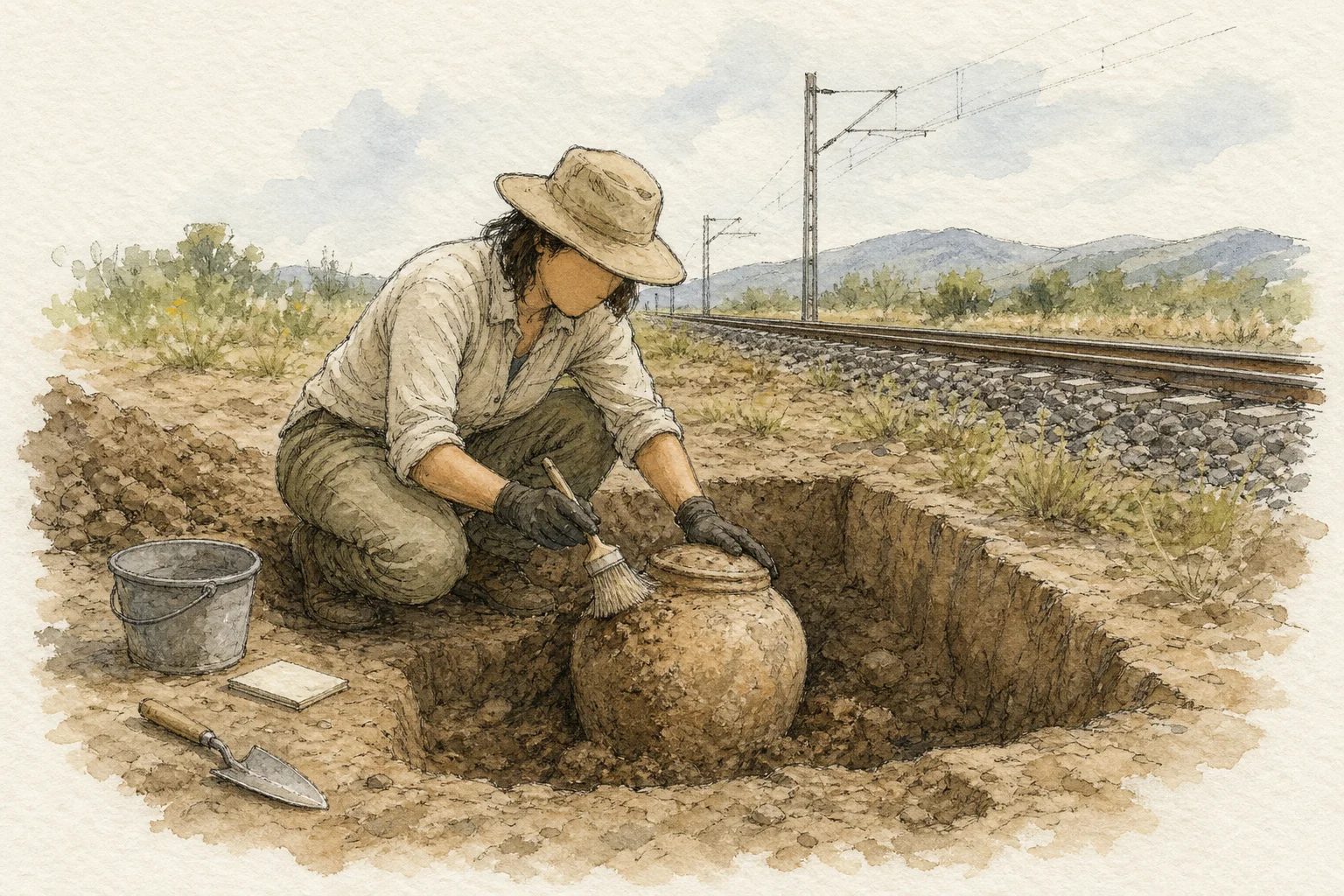
Archaeologists working ahead of railway modernisation in western Romania have uncovered more than 500 Bronze Age cremation graves, creating a substantial new record of prehistoric life in the Banat region. The cemetery at Sacu belongs to the Balta Sărată culture and forms part of 23 archaeological sites identified along the Caransebeș to Lugoj route.
Around 520 archaeological features have so far been documented in the excavated area at Sacu, with more than 500 classified as cremation burials. Human remains were placed either directly in pits or inside ceramic vessels, sometimes with stone tools and flint blades. A fragment of obsidian suggests that local communities had connections with people over considerable distances.
The wider survey has also revealed settlements from the Bronze Age, Roman period, Late Antiquity and early Middle Ages, providing evidence of occupation across more than three millennia. At Căvăran Gară, researchers found more than 30 features, mainly from Late Antiquity, along with pottery, coins, jewellery, glass fragments and Roman-style building materials. Archaeological assessment began in 2025, systematic excavations followed in February 2026, and 22 of the 23 sites are either fully investigated or still under study.
Sources
- AGERPRESTimiș: Descoperiri arheologice pe traseul căii ferate Caransebeș-Lugoj; 23 de situri cu peste 500 de morminte preistorice (GALERIE FOTO)
- Ziua de VestDescoperire arheologică de amploare pe traseul căii ferate Caransebeș-Lugoj. Specialiștii au scos la lumină 23 de situri și peste 500 de morminte preistorice