science and discovery
New brain atlas reveals how cells age differently
Scientists have built the largest map yet of gene activity in the human prefrontal cortex, a brain region that helps us plan, focus and regulate emotions. Drawing on more than 6.3 million cells from nearly 1,500 donated brains, the work creates a detailed reference for studying ageing and brain disorders.
The project, led by the PsychAD Consortium, includes donors with Alzheimer’s disease and several other neurological or psychiatric conditions, alongside people without those disorders. Studying the same region across these groups allows more consistent comparisons.
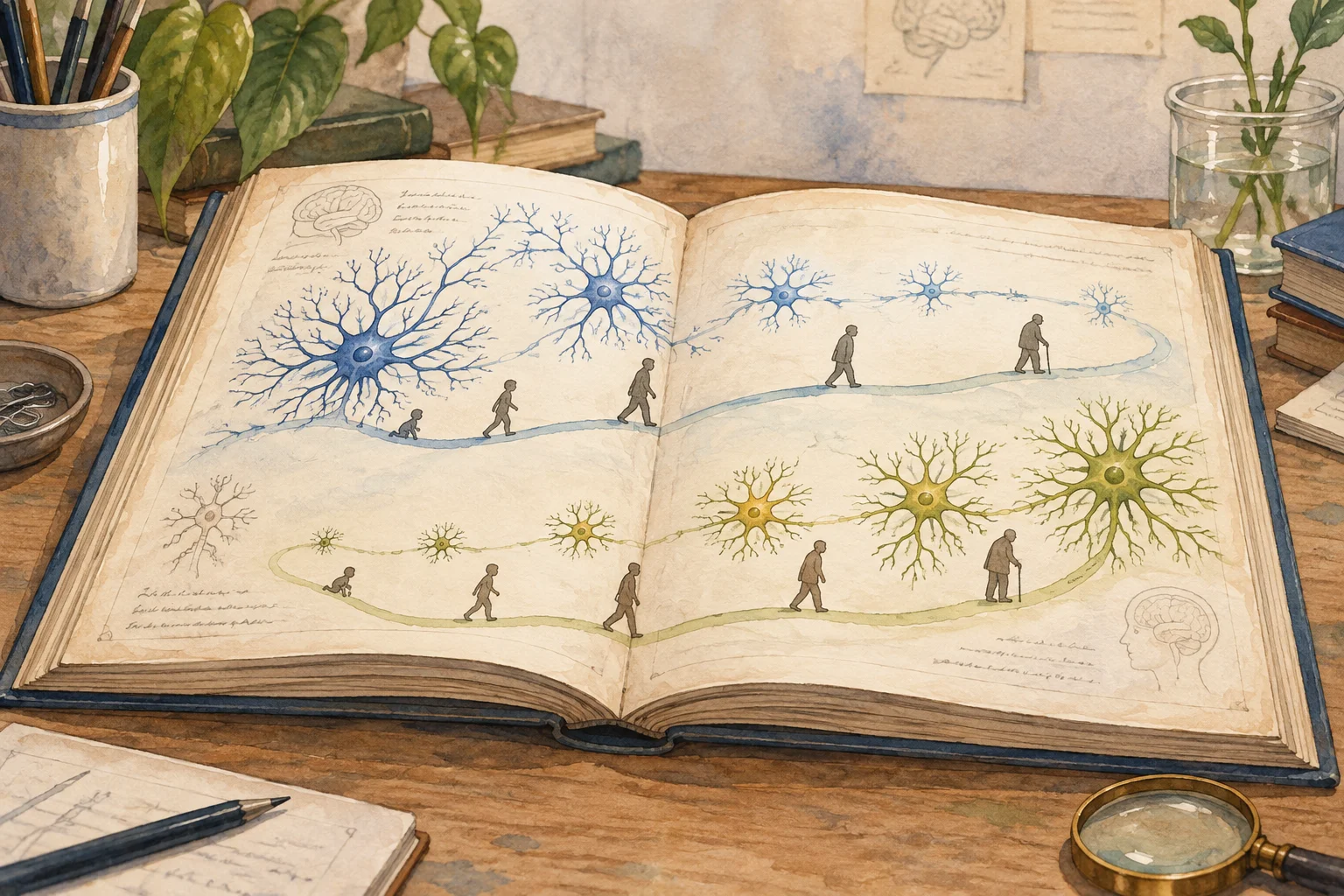
A companion study of healthy brains, spanning infancy to age 97, found extensive changes early in life, relative stability in adulthood and renewed changes from around 65. Early changes were especially pronounced in neurons, the cells that carry messages. Later in life, many of the strongest changes appeared in support cells called glia, including shifts in immune activity and responses to cellular stress.
The results show that brain ageing is not one uniform process: different cell types follow different biological timelines. They also point researchers beyond neurons to the cells that help protect and sustain them.
The atlas is a research resource, not a treatment. It covers only one brain region, so further mapping will be needed to understand the wider picture.