science and discovery
New “devil flower” extends an elusive plant group’s known range into Thailand
Botanists have identified a new species of leafless flowering plant in western Thailand, extending the known range of its wider plant group farther north than previously recorded. Named Thismia daemona, the tiny species was found during surveys of Thong Pha Phum National Park and described in the journal PhytoKeys.
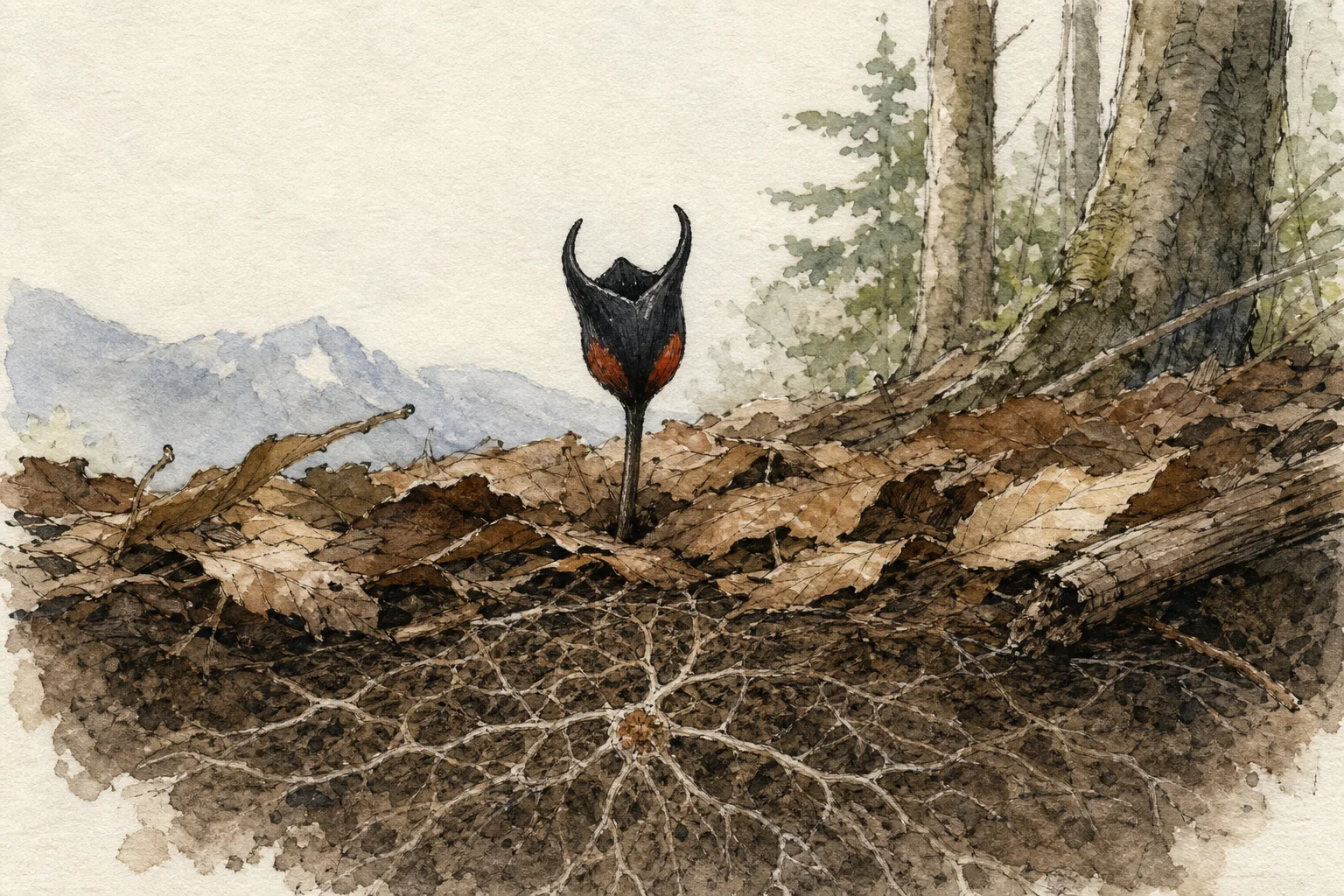
The plant belongs to a genus sometimes called “fairy lanterns.” It has no chlorophyll and cannot make energy through photosynthesis. Instead, it obtains nutrients through underground fungi and spends nearly all its life concealed beneath leaf litter. Researchers found it at an elevation of almost 1,000 metres in a seasonal mountain evergreen forest, an unusually high and comparatively dry habitat for the genus. Its section of the genus had previously been documented only in Peninsular Malaysia, Borneo and Sumatra.
The flower’s mostly black surface, horn-like tips and reddish-orange patches inspired its dramatic common name, “devil flower.” Its discovery brings the number of known Thismia species in Thailand to 16.
The find also creates an urgent conservation opportunity. Only one population has been recorded, with fewer than 50 plants occupying an area smaller than a football pitch. Researchers have provisionally assessed the species as Critically Endangered and say cooperation with nearby communities could help protect its small habitat while supporting carefully managed local ecotourism.