technology and innovation
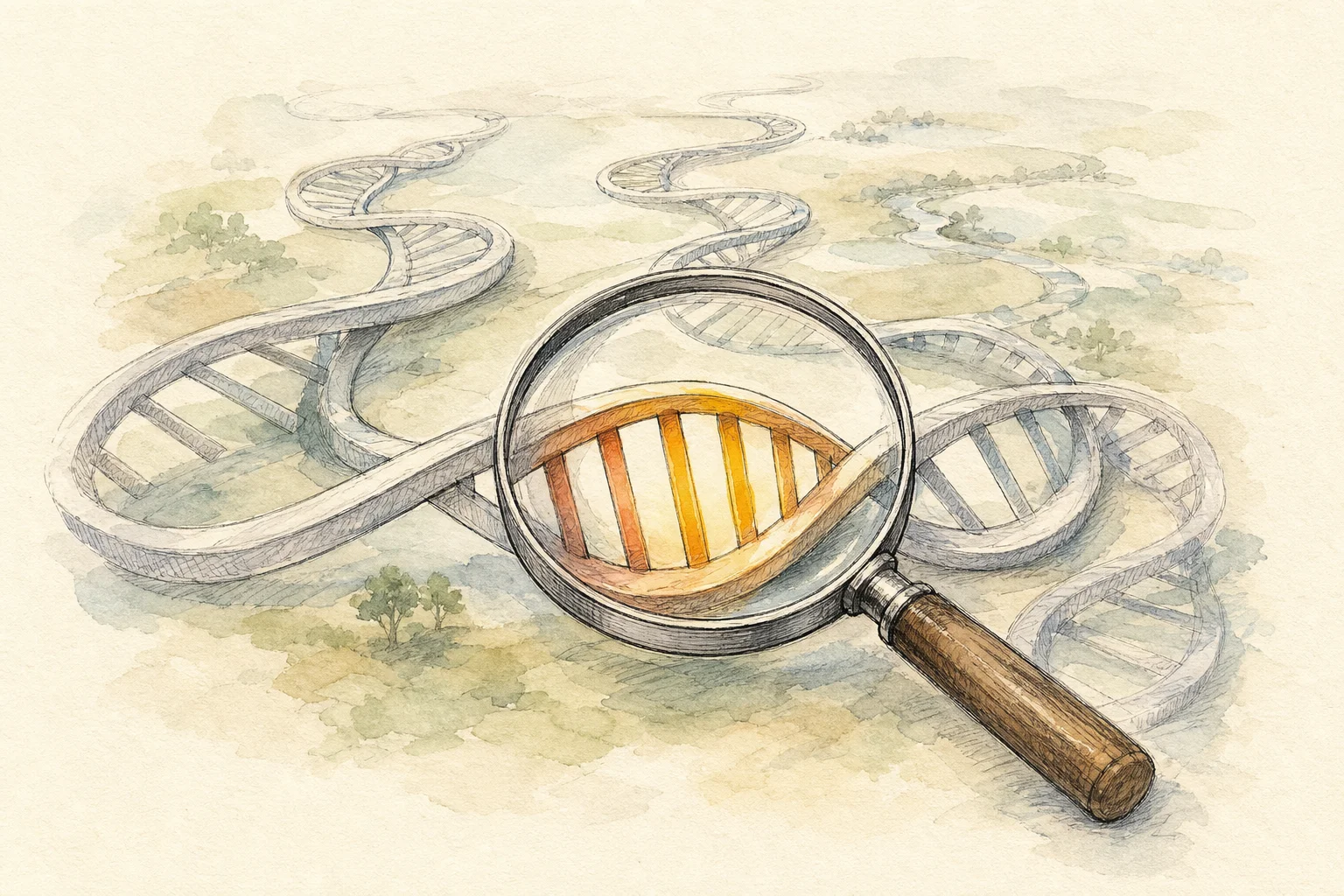
New genome atlas makes 9 billion DNA-change predictions searchable
Researchers around the world can now browse precomputed predictions for every possible single-letter substitution across a reference human genome, without needing to run a demanding AI model themselves. Google DeepMind’s AlphaGenome Atlas covers nine billion changes, representing the three alternative DNA letters at each of roughly three billion positions. The one-petabyte resource is free for non-commercial use through a web portal and programming interface.
Each variant comes with predictions about possible molecular effects, including changes to gene activity, RNA processing and chromatin. A new AlphaGenome Variant Impact score condenses those signals to help researchers decide which candidates deserve closer study. The atlas also includes predictions for more than 100 million short insertions and deletions already observed in human genomes.
This could be especially useful in the roughly 98% of the genome that does not encode proteins and has been much harder to interpret. In early testing, researchers used the atlas to prioritize a non-coding variant linked to severe epilepsy, and laboratory work supported the predicted effect. Other testers narrowed large candidate sets in population studies.
The evidence is still preliminary. The accompanying paper is a preprint, and the model can miss some regulatory effects, has gaps in its training data and cannot fully capture interacting or indirect changes. Its predictions are a guide for experiments, not a replacement for laboratory evidence or individualized clinical assessment.
Sources
- El ConfidencialEl 'Google Maps' más completo del ADN: esta IA abre un nuevo camino para descifrar el cáncer y las enfermedades raras
- NatureDeepMind's new genome 'atlas' charts effects of all 9 billion human gene mutations
- FortuneGoogle DeepMind publishes AI-powered predictions for the effect of all 9 billion possible single-point mutations to human DNA | Fortune