Science and discovery
New map reveals a distant planet’s lopsided atmosphere
Astronomers have mapped the uneven outline of a distant planet’s atmosphere for the first time, using James Webb Space Telescope observations and a new analysis method. The results show that WASP-17b’s atmosphere is roughly circular but slightly egg-shaped, with one side extending farther out than the other.
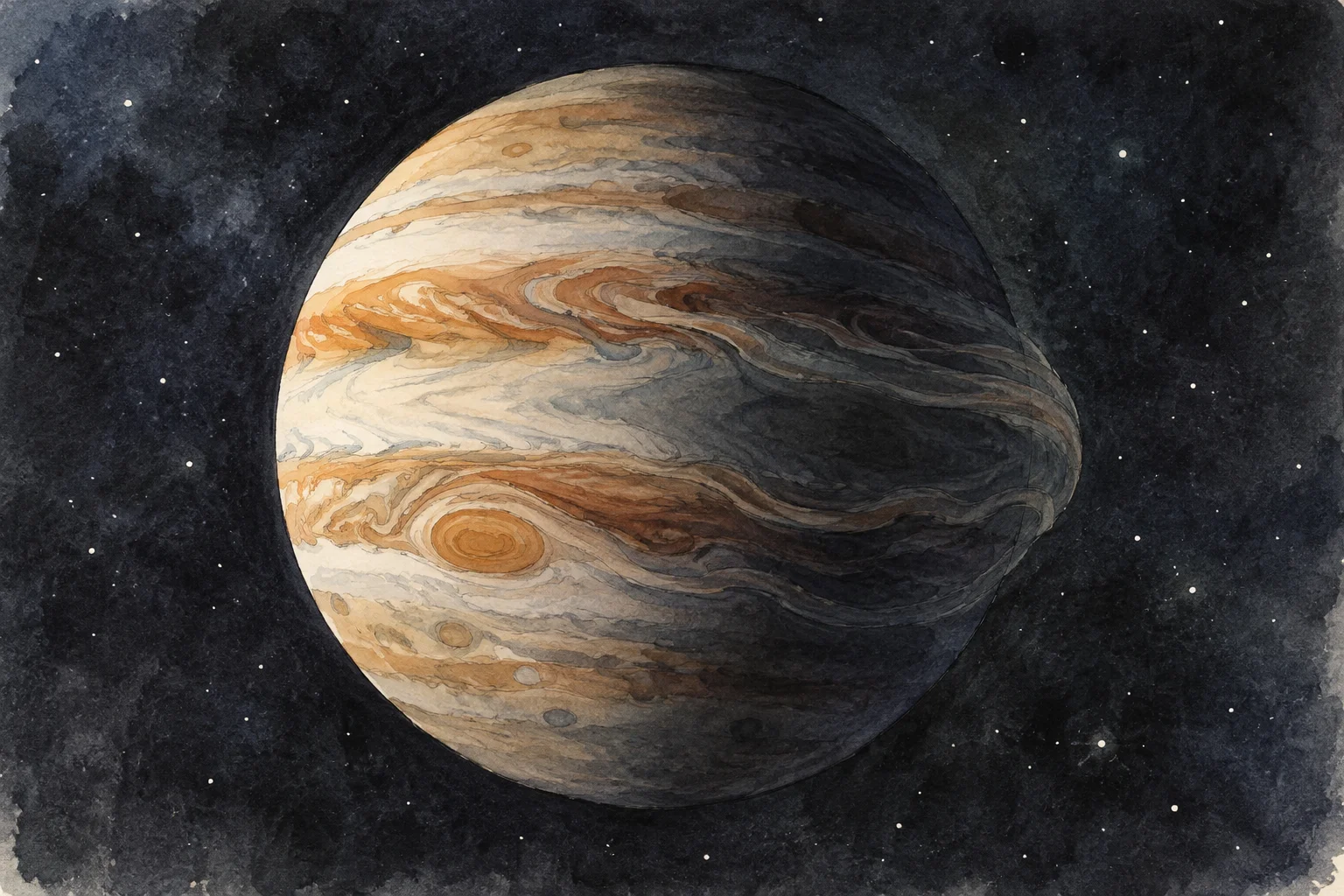
WASP-17b is a gas giant more than 1,000 light-years from Earth. It orbits close to its star, experiencing intense heat and powerful winds. One side remains illuminated while the other stays in darkness.
The Cornell-led international team used a technique called transit mapping to analyse starlight as the planet crossed in front of its star. Instead of averaging measurements around the atmosphere’s entire edge, the method distinguishes conditions at different points along it. The study was published in Nature Astronomy.
The clearest bulge appeared near the equator on the planet’s “evening” side. There, winds carry heat from the permanently sunlit side towards the dark side, expanding the atmosphere more than on the cooler “morning” side. That pattern matches theoretical predictions, giving researchers observational evidence to test their computer models.
The team also found water and carbon dioxide distributed fairly consistently around the atmospheric edge. Together, the findings make WASP-17b a useful reference for studying other planets and demonstrate a method that could eventually help researchers map weather patterns on distant worlds.