science and discovery
Norwegian sheep field reveals rare 3D fossil of 560-million-year-old animal
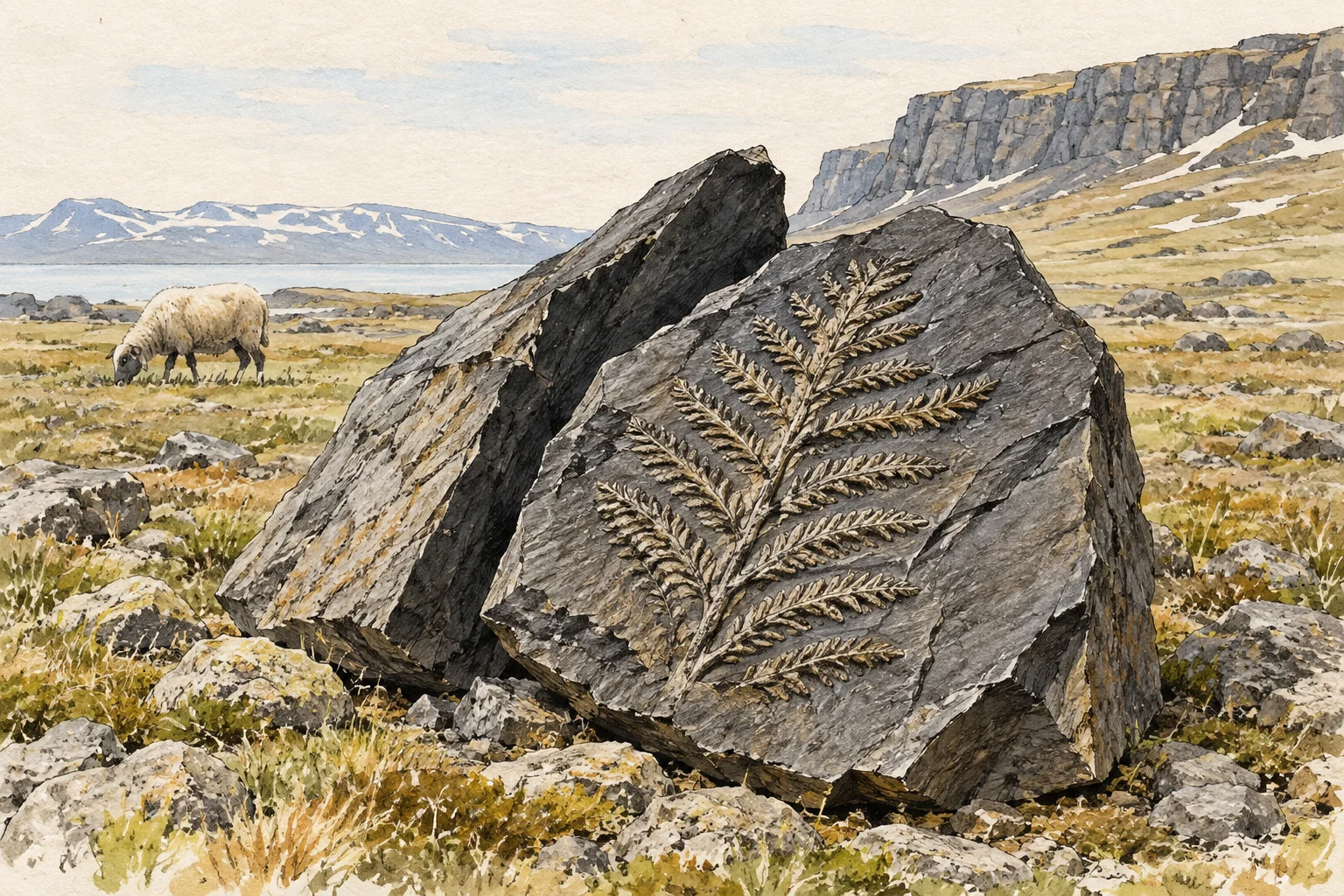
A 560-million-year-old Charnia fossil discovered in a sheep field in Finnmark, northern Norway, has preserved one of Earth’s earliest suspected animals in exceptionally rare three-dimensional detail. It is the first confirmed example of Charnia in Scandinavia and helped identify a major new European site for fossils from the Ediacaran Period, when complex life first emerged.
Unlike the flattened impressions typical of soft-bodied organisms this old, the branching, fern-like creature retained its form after an ancient underwater avalanche swept it up and rapidly buried it. Sediment filled the body before it decayed, leaving researchers with a fuller view of an organism that had no known mouth, organs or visible means of movement. The preservation revealed subtle raised ridges, called keels, along its branches, a feature not detected in flatter specimens.
The fossil appeared after rocks fell from a cliff and split open in the field, close to an outcrop where anchoring traces from ancient seafloor organisms had previously been found. Researchers led by the University of Cambridge also identified other elements of the surrounding fossil ecosystem. Their study, published in Palaeontology, suggests these early organisms may have been more geographically widespread than the small number of familiar fossil sites indicates. Scientists say further work could uncover an entire community of previously unknown forms at the site.