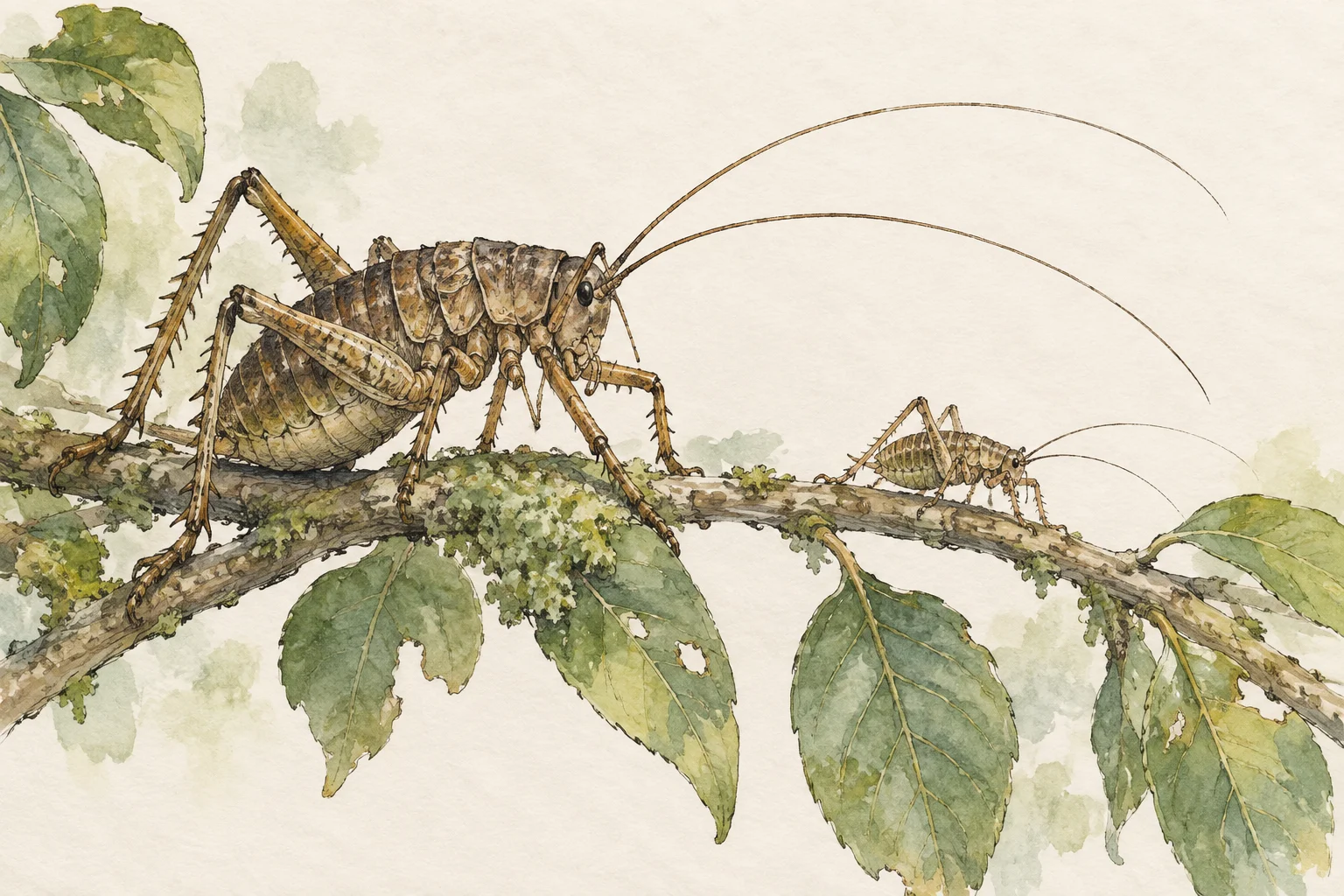
Nature thriving
Once confined to one island, New Zealand’s giant insect is recovering
More than 11,000 wētāpunga, New Zealand’s heaviest insect, have been bred in captivity and released at 10 new sites since 2010. Monitoring on Motuora and Tiritiri Matangi islands suggests at least four generations have now been born in the wild.
The giant, flightless relative of crickets and grasshoppers once lived across parts of the North Island. But introduced predators and forest clearance left it surviving only on Te Hauturu-o-Toi, or Little Barrier Island. Even after rats were removed there in 2004, surveys showed too few insects to support large-scale relocation.
Instead, conservationists collected small groups to establish breeding colonies at Butterfly Creek wildlife park and Auckland Zoo. Keepers refined their methods, eventually raising young insects together in mesh cages. Under the best conditions, up to 80% survived to release.
The programme reached eight predator-free islands and two fenced mainland sanctuaries, with support from Ngāti Manuhiri, the Māori guardians of the species, and community restoration groups. Its results are documented in the New Zealand Journal of Zoology.
The wētāpunga remains threatened and dependent on conservation work, but its national classification changed from Nationally Endangered to Threatened – Nationally Increasing in 2022. The strongest evidence of progress is not simply the number released: it is the generations surviving and reproducing in their new homes.