Technology and innovation
Perseverance sets a new driving record beyond Earth
NASA’s Perseverance rover has driven farther on the surface of another world than any other vehicle, covering 45.2 kilometres (28.1 miles) on Mars since landing in 2021. It surpassed the record set by Opportunity, reaching the mark in five and a half years rather than nearly 15.
That extra reach matters for science. Longer drives allow the team to examine a wider variety of rocks and landscapes, including material around a Martian crater’s rim that is about 4 billion years old.
A key advance is AutoNav, the rover’s self-driving system. While moving, Perseverance photographs the terrain, builds a three-dimensional map of hazards and chooses a path between destinations selected by planners on Earth. Earlier rovers had to pause to process their surroundings before continuing.
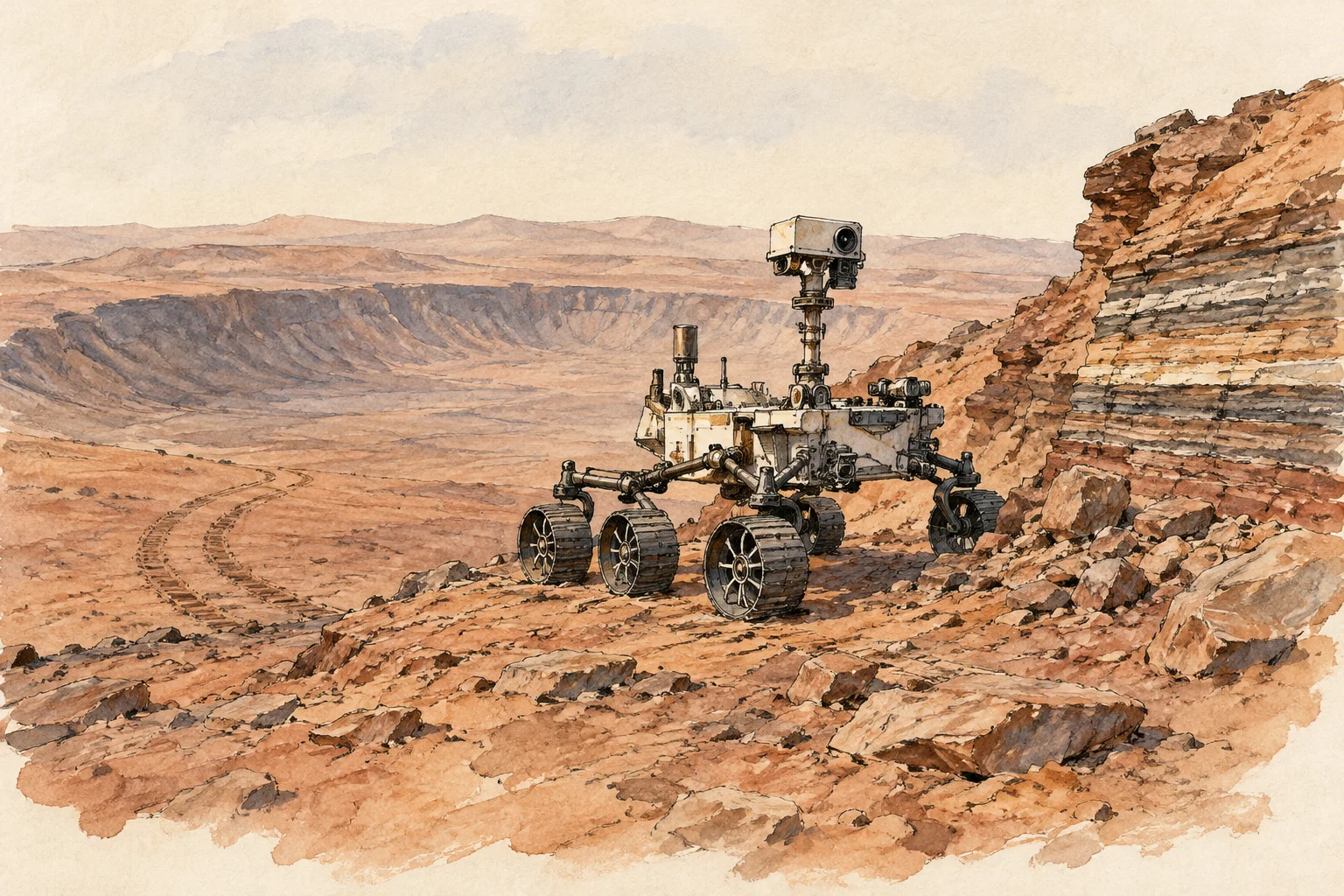
The six-wheeled rover is now exploring near the western rim of Jezero Crater, which once held a lake. It is heading toward an area where scientists hope to find traces of ancient hot groundwater systems, environments that may once have offered conditions suitable for life.
Perseverance has already travelled more than twice the distance envisaged for its original mission. Its mobility systems remain fully operational, and NASA has approved an extension to explore the crater rim through roughly the end of 2028.